Tag: Legal Practice Tips

  • The Duty of Technological Competence: Why Modern Lawyers Must Master Technology to Stay Ethical and Competitive

    The Duty of Technological Competence: Why Modern Lawyers Must Master Technology to Stay Ethical and Competitive

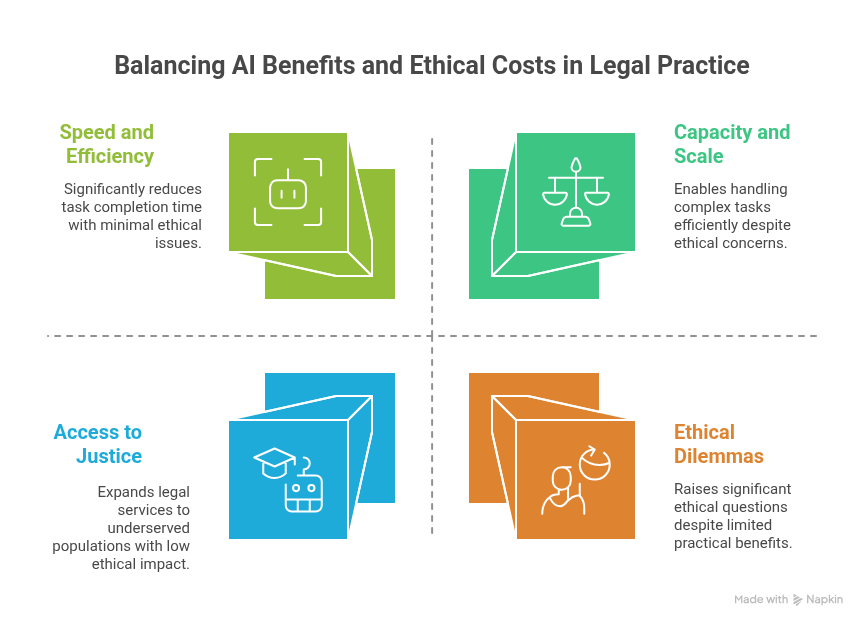
    Technology has changed the very DNA of the legal profession. Once defined by heavy paper files, handwritten notes, and long hours of manual research, law today thrives in a digital ecosystem. From case law databases to AI-powered document review, technology has become a force multiplier for efficiency, precision, and client service. Yet with these advancements comes a growing ethical expectation: that lawyers must understand, adopt, and manage the technologies that shape their work. This expectation is known as the duty of technological competence.

    It is not just a buzzword. It is an ethical and professional obligation that redefines what it means to be a competent lawyer in the twenty-first century.


    What Does the Duty of Technological Competence Mean for Lawyers?

    In essence, the duty of technological competence means that lawyers must not only know the law but also understand the tools that help them practice it effectively. The concept gained prominence after the American Bar Association amended Comment 8 to Model Rule 1.1 of Professional Conduct, which states that a lawyer must “keep abreast of changes in the law and its practice, including the benefits and risks associated with relevant technology.”

    This means that ethical competence now extends beyond legal reasoning. It includes knowing how to safeguard digital data, manage electronic discovery, and use technology responsibly in client communications.

    Many jurisdictions around the world have embraced similar standards. For example, several states in the United States have formally adopted this rule. In the UK, the Solicitors Regulation Authority emphasizes technology’s impact on client care and confidentiality. In Kenya, the Law Society encourages digital transformation and cyber awareness in legal practice. The shift is global, and it signals one truth: ignorance of technology is no longer acceptable for legal professionals.

    Technological competence has become as essential as legal expertise. Without it, lawyers risk falling behind in efficiency, ethics, and credibility.

    Related Blog: The Future of AI in Legal Research: How Smart Tools Are Changing the Game


    Why Is Technological Competence an Ethical Obligation?

    The legal profession is built on trust. Clients depend on lawyers to protect their interests, their data, and their privacy. A lawyer who cannot safeguard client information from a data breach or use technology securely is not fulfilling that trust.

    Ethics rules are evolving to reflect this reality. Consider these examples:

    • Data protection: A law firm handling sensitive personal information must understand encryption, secure cloud storage, and privacy compliance frameworks like GDPR or Kenya’s Data Protection Act.

    • Cybersecurity: A single phishing attack could expose confidential case files. Lawyers have an ethical duty to recognize such risks and mitigate them.

    • AI transparency: As AI tools enter the legal space, understanding their scope and limitations becomes vital. Lawyers must know how to verify AI outputs and avoid overreliance.

    In short, technological ignorance can translate into professional negligence. The modern lawyer’s ethical compass must now point toward digital literacy.

    Related Blog: Understanding Legal Ethics in the Age of Artificial Intelligence


    How Technology Is Redefining Legal Competence

    Legal competence used to mean mastering statutes, case law, and courtroom advocacy. Today, it includes the ability to use digital tools that enhance legal service delivery. Lawyers are no longer just advocates or advisors; they are also digital strategists.

    Here are some ways technology is transforming legal practice:

    1. Document Automation and Drafting
    AI-driven tools like Wansom can automate repetitive legal drafting tasks, reducing hours of manual work to minutes. This allows lawyers to focus on high-impact strategy instead of formatting contracts or proofreading documents.

    2. E-Discovery and Data Review
    Modern litigation often involves massive volumes of digital data. Using e-discovery software, lawyers can filter, categorize, and analyze data efficiently, ensuring accuracy while saving valuable time.

    3. Predictive Analytics and Case Outcomes
    Data-driven tools can identify patterns in past rulings and predict possible outcomes. This helps lawyers craft stronger arguments and manage client expectations with greater confidence.

    4. Virtual Collaboration and Secure Workspaces
    The COVID-19 era proved that remote legal practice is viable. Platforms like Wansom now allow teams to collaborate securely on shared documents, track revisions, and maintain audit trails without compromising client confidentiality.

    Technology is no longer an optional efficiency booster; it is an intrinsic part of the lawyer’s toolkit.

    Related Blog: The Rise of Legal Automation: How AI Streamlines Law Firm Operations


    The Hidden Risks of Falling Behind Technologically

    Failing to embrace technological competence carries real risks. A lawyer who ignores modern tools may not only lose efficiency but also compromise ethics, client trust, and professional standing.

    1. Security Breaches and Data Loss
    When client data is stored in outdated or insecure systems, it becomes a target for cybercriminals. A single breach can cause irreparable damage to a firm’s reputation and may lead to disciplinary action.

    2. Mismanagement of Digital Evidence
    In litigation, failing to handle digital evidence properly can lead to inadmissible or lost data. Lawyers must know how to preserve metadata, manage chain of custody, and verify authenticity.

    3. Reduced Client Confidence
    Clients expect their lawyers to operate with the same digital fluency as other professionals. A lawyer who cannot handle video conferences, secure portals, or digital signatures risks appearing outdated and inefficient.

    4. Regulatory Non-Compliance
    Regulatory frameworks increasingly demand technological awareness. For instance, failing to comply with data protection laws can lead to penalties and ethical violations.

    In short, technological incompetence is no longer harmless. It is a professional liability.

    Related Blog: Why Legal Teams Fail to Adopt AI Tools (And How to Fix It)


    The Intersection of Human Judgment and Artificial Intelligence

    Some lawyers worry that technology, particularly AI, threatens their role. The truth is the opposite. AI enhances legal work by automating repetitive tasks, surfacing insights, and supporting decision-making, but it cannot replace human judgment, empathy, or ethical reasoning.

    For instance, an AI system can identify contract anomalies faster than any human. However, deciding whether a clause serves a client’s best interests still requires human discernment. The lawyer remains the decision-maker, while AI acts as the intelligent assistant.

    This partnership between human intelligence and artificial intelligence defines the future of legal work. Wansom’s collaborative AI workspace embodies this relationship by helping lawyers work faster without compromising the nuance that only a human can bring.

    Technology should never be seen as competition. It is a partner that amplifies capability and accuracy.

    Related Blog: How Lawyers Can Leverage AI Without Losing the Human Touch


    Building a Culture of Continuous Technological Learning

    Technological competence is not a one-time achievement; it is a continuous process. New tools, threats, and regulations emerge constantly, and lawyers must adapt.

    To build a culture of learning within legal teams, consider these strategies:

    1. Continuous Professional Development (CPD)
    Encourage lawyers to take technology-focused CPD courses covering cybersecurity, digital ethics, and AI literacy.

    2. Internal Knowledge Sharing
    Firms can organize regular tech briefings where team members demonstrate new tools or share security updates. This creates a collaborative learning environment.

    3. Tech Partnerships
    Collaborate with legal tech providers to receive customized training and implementation support. For example, teams using Wansom can learn how to automate workflows securely and efficiently.

    4. Cybersecurity Drills
    Simulating phishing attacks or data loss scenarios trains teams to respond effectively and recognize real threats.

    By embedding learning into daily operations, firms ensure that technology becomes an ally rather than a challenge.

    Related Blog: Creating a Future-Ready Law Firm: A Guide to Legal Technology Training


    Global Trends: How Jurisdictions Are Adapting to the Tech Era

    Around the world, regulators and bar associations are updating professional standards to include technology. The shift is not uniform but the message is clear: digital literacy is part of legal competence.

    • United States: Over forty states have formally adopted the ABA’s rule on technological competence.

    • United Kingdom: The SRA emphasizes technology’s role in maintaining service quality and protecting client data.

    • Kenya: The judiciary and Law Society are actively modernizing through e-filing systems, virtual hearings, and digital case management.

    • European Union: GDPR and AI governance frameworks make tech awareness mandatory for legal compliance.

    This trend shows that technological competence is not just an internal best practice. It is becoming a formal requirement embedded in the profession’s global fabric.

    Related Blog: RegTech and Legal Compliance: The Global Shift in Professional Standards


    Practical Steps for Lawyers to Enhance Technological Competence

    Legal professionals can begin improving their technological literacy today. Here are actionable steps:

    1. Audit Your Current Systems
    Identify outdated software, insecure storage methods, or inefficient processes. A technology audit helps pinpoint vulnerabilities and opportunities for automation.

    2. Learn the Basics of Data Security
    Understanding password management, encryption, and secure file transfer can prevent costly mistakes.

    3. Embrace Automation Tools
    Use AI-powered platforms like Wansom to handle document drafting, contract review, and collaboration. These tools save time and reduce errors.

    4. Stay Informed
    Subscribe to legaltech publications and attend webinars to keep up with innovations shaping the industry.

    5. Lead by Example
    Senior lawyers should model technological openness. When leadership embraces innovation, the rest of the firm follows.

    A lawyer who actively pursues technological improvement signals professionalism, adaptability, and ethical awareness.

    Related Blog: Top Digital Tools Every Modern Lawyer Should Know


    How Wansom Aligns with the Duty of Technological Competence

    Wansom was built to help legal teams meet the demands of the modern age. Its secure AI-powered workspace automates routine processes like contract drafting, document review, and version control. By centralizing collaboration, Wansom minimizes risk, improves accuracy, and saves valuable time.

    For law firms, this means more than efficiency. It means compliance with ethical standards of competence and data protection. Lawyers using Wansom are not just working faster; they are working smarter and more ethically.

    In a profession where client trust and data security are paramount, such technology becomes essential to maintaining integrity and competitive advantage.

    Related Blog: Why Secure Collaboration Is the Future of Legal Practice


    Conclusion: The Ethically Competent Lawyer of Tomorrow

    The legal profession is evolving from tradition to transformation. The duty of technological competence is not merely about keeping up with innovation; it is about fulfilling a lawyer’s ethical duty to serve clients with skill, diligence, and care.

    A lawyer who understands technology is not just efficient; they are secure, compliant, and credible. They can navigate the complexities of digital evidence, AI insights, and client confidentiality with confidence.

    Platforms like Wansom demonstrate that technology and ethics can coexist beautifully. They enable lawyers to focus on high-impact legal reasoning while automation handles the repetitive and routine.
    Blog image

    The lawyer of tomorrow is not defined by resistance to change but by mastery of it. Technological competence is no longer the future; it is the foundation of modern legal excellence.


  • The 7 Steps to Finalize Your Insurance Claim Settlement Quickly

    The 7 Steps to Finalize Your Insurance Claim Settlement Quickly

    The insurance claim process is often a game of attrition, with months dedicated to evidence gathering, negotiation, and contentious communication. Yet, for legal professionals, the time spent on the final mile—the drafting, review, and execution of the formal Release and Settlement Agreement—often feels disproportionately long and frustrating. This final phase, while procedural, is fraught with legal risk and is the point where claims are most likely to stall due to document errors, lien disputes, or failed communication.

    In the Middle of the Funnel (MOFU) stage, your legal team has successfully navigated the negotiation and secured a favorable financial settlement. The new challenge is closing the file quickly and securely while ensuring the client is fully protected from future liability. Speed is critical: delayed finalization means delayed client payment, increased administrative costs, and prolonged financial stress for all parties.

    This authority guide, developed by Wansom’s legal content strategists, details the Seven Strategic Steps legal teams can take right now to dramatically accelerate the claim finalization process. This isn't about rushing the negotiation; it's about optimizing the documentation workflow—from codifying the initial handshake to the final, legally binding signature. By implementing these practices, you can cut weeks off your finalization timeline and ensure that the Wansom Insurance Claim Release & Settlement Template is the cornerstone of your rapid, secure closure strategy.


    Key Takeaways:

    • Immediately draft and issue a Binding Term Sheet after a verbal agreement to seize control of the final document's terms and prevent insurer-driven delays.

    • Accelerate the settlement timeline by concurrently finalizing all required financial evidence (liens, W-9s, repair invoices) to prevent bottlenecks in the payment process.

    • Utilize an automated, pre-vetted release template to shift your workflow from laborious drafting to rapid, precise legal review of critical protective clauses.

    • Expedite document review by focusing only on high-risk language, specifically the Release of Unknown Claims and the exact scope of released parties.

    • Overcome final administrative delays by including conditional execution clauses for lien handling and using secure e-signature platforms for immediate final document archival.


    Step 1: Codify the Agreement with a Binding Term Sheet

    The clock starts ticking the moment a settlement amount is verbally or conditionally agreed upon. Any lag between the handshake and the formal initiation of document drafting creates uncertainty, provides an opening for disputes, and needlessly extends the timeline.

    The biggest mistake after a verbal agreement is waiting for the insurer’s attorney to draft the initial, often biased, settlement release. To maintain control and accelerate the process, your team should immediately issue a Binding Term Sheet or Letter of Understanding.

    Strategic Value of the Term Sheet

    A comprehensive term sheet forces clarity and commitment immediately, establishing a controlled baseline for the final document. It should explicitly define:

    • Final Settlement Amount: The exact, undisputed gross dollar figure.

    • Released Parties: Precise legal names of all entities being released (the insurer, the insured, and any relevant third parties).

    • Scope of Release: A clear statement that the release will be limited to claims arising out of the specified incident, setting the stage to resist overly broad "release of unknown claims" language.

    • Payment Timeline: The agreed-upon date or time frame (e.g., "within 15 days of executed Release") for settlement fund disbursement.

    • Lien Responsibility: Who is responsible for identifying, negotiating, and satisfying statutory and contractual liens (e.g., Medicare, Medicaid, private health plan subrogation).

    By sending this document first, your team sets the agenda for the insurer’s drafting process. If the insurer then returns a draft that deviates from the term sheet, you have clear documentation to expedite the correction process, rather than engaging in lengthy negotiation over the release's core terms.

    Step 2: Finalize All Evidence and Damage Verification

    While a settlement is reached based on a body of evidence, the final release document requires specific, verified data points to be complete. Any delay in verifying final figures—especially lien amounts or final repair costs—will freeze the execution process.

    The Critical Need for Final Figures

    Legal teams must work proactively to ensure the following data is locked in concurrent with the final negotiation:

    • Lien Reconciliation: Do not wait for the signed release to begin lien negotiation. Secure preliminary figures and estimates of final lien amounts for Medicare/Medicaid and any relevant third-party payors immediately.

    • Repair Estimates and Invoices: For property claims, obtain final, signed-off repair or replacement cost invoices from all contractors. The exact figures must match the settlement agreement to avoid payment disputes.

    • W-9/Taxpayer ID Verification: Ensure the client’s legal name, Social Security Number (or Taxpayer ID), and current address are verified and ready for the settlement check disbursement, preventing delays with the insurer's accounting department.

    Wansom’s secure workspace is designed for the high-volume review and collaborative annotation of these underlying financial documents, allowing multiple team members (attorneys, paralegals, and financial reviewers) to certify the final figures simultaneously, dramatically reducing internal processing time.

    Step 3: Utilize an Automated, Pre-Vetted Release Template

    The settlement release is the singular, most powerful instrument in the entire claims process. Its legal precision determines whether a case is truly closed or whether the client faces post-settlement liability. Flaws in this document are the number one cause of finalization delays.

    The quickest way to initiate a high-quality release draft is by moving away from proprietary insurer documents and deploying a standardized, battle-tested template.

    Wansom's Template: Speed and Security

    The Wansom Insurance Claim Release & Settlement Template is not a static form; it is a dynamic, legally engineered starting point that dramatically reduces drafting time. By leveraging an expert-vetted template, your team ensures that all necessary jurisdictional clauses and protective language are included by default, eliminating the need to cross-reference multiple prior agreements.

    The power of using a standardized template lies in its speed and its inherent protective structure. It is drafted from the claimant’s perspective, automatically including clauses that:

    • Limit Indemnification: Clearly define and limit the claimant’s financial responsibility to existing liens, shielding them from defending the insurer against related third-party claims.

    • Specify Confidentiality: Include boilerplate confidentiality and non-disparagement clauses, allowing the attorney to quickly confirm or opt-out, rather than drafting them from scratch.

    • Structured Formatting: The template’s structured format guides the drafter through required fields (parties, dates, amounts) using Wansom’s secure collaborative tools, minimizing manual entry errors and speeding up internal review.

    This strategic choice shifts the workload from tedious legal drafting to efficient legal review—a faster and more secure process overall.

    Step 4: Precision in Critical Release Language Review

    The language of the release is where the most common delays and future client liabilities originate. Expedited finalization requires a targeted focus on just two critical sections: the scope of the release and the identity of the released parties.

    Targeted Review for Maximum Protection

    To move quickly, legal teams must train their focus on these clauses:

    • The "Unknown Claims" Clause: The release must explicitly state whether the claimant is waiving the right to claims for injuries or damages that are unknown at the time of signing. If the claimant is releasing unknown claims (which is standard for maximum insurer protection), the agreement must explicitly cite the relevant state statute (e.g., California Civil Code § 1542 waiver), demonstrating the claimant’s informed legal consent. Failure to clearly define this is a primary cause of post-settlement litigation.

    • The Scope of Released Parties: Insurers often use overly broad language to release "affiliates, successors, subsidiaries, and agents." While this is often necessary, the legal team must confirm that this overly broad list does not inadvertently prevent the client from pursuing a separate, valid claim against an unrelated entity that may be loosely associated with the released party (e.g., a maintenance company that shares a parent entity with the insured).

    By using Wansom's document comparison and annotation tools, legal teams can quickly isolate and negotiate changes to these high-risk phrases, ensuring precision without sacrificing speed.

    Step 5: Proactive Lien Identification and Resolution

    Even with a perfectly drafted release, a settlement cannot be finalized until all financial obligations are addressed and the document is legally executed. These administrative steps, if not proactively managed, create major bottlenecks.

    The presence of statutory liens (Medicare, Medicaid) or contractual liens (private health insurance subrogation) is a massive source of delay. If the release is signed before the final lien amount is confirmed, the settlement proceeds are held hostage, delaying the client’s payout.

    The Time-Saving Tactic: Conditional Execution

    Legal teams must initiate the lien resolution process immediately upon the verbal settlement, not wait for the release draft. To accelerate the actual payout:

    • Lien Resolution Clause: Incorporate a clause into the settlement release that allows for conditional execution. This clause stipulates that the settlement amount is paid to the attorney's trust account (IOLTA), and the release is effective upon execution, but the disbursement of the final funds to the client is contingent upon the final resolution and satisfaction of all outstanding liens.

    • Escrow Agreements: For complex Medicare or Medicaid liens, the fastest path is often to establish a specific lien escrow fund from the gross settlement. The insurer pays the full amount, a portion is reserved for the lien, and the client receives the non-lien portion immediately, resolving their financial urgency while the final lien negotiations proceed.

    This proactive legal strategy allows the final release document to move forward, effectively divorcing the document's legal finality from the protracted administrative process of lien negotiation.

    Step 6: Executing the Payment and Indemnification Plan

    A common point of friction is the indemnification clause: the demand that the claimant hold the released parties harmless from any future claims, especially from lien holders. This must be managed precisely to prevent the client from assuming undue liability.

    Controlling Indemnification Exposure

    The speed of finalization is tied directly to the willingness of the insurer to accept a limited indemnification clause. The fastest path is to offer a specific indemnification rather than a general one.

    • Limit to Known Liens: The claimant should only agree to indemnify the insurer for specific, known liens (e.g., the finalized Medicare lien amount). This is a strong, defensible legal position and minimizes the client’s financial risk.

    • Documented Payment Schedule: Ensure the release dictates a clear, non-negotiable payment schedule. Demand payment via wire transfer (ACH) rather than physical check when possible, as wire transfers reduce transit time and eliminate physical handling delays that often plague settlement finalization.

    By leveraging the protective clauses built into the Wansom template, legal teams can quickly secure a limited indemnification clause, satisfying the insurer’s basic need for security without unduly exposing the client to future financial defense costs.

    Step 7: Utilizing Secure Digital Execution and Storage

    The final signature process is often viewed as a simple formality, but antiquated manual processes can introduce delays of several days or even weeks due to scheduling, physical mailing, and notarization requirements. In the modern legal environment, physical signature requirements are a relic that slows down the entire claims industry. The fastest closure process is always a digitally enabled one.

    The Power of E-Signatures and Secure Archival

    Legal teams must establish internal processes to handle e-signature and secure cloud archival immediately upon completion of the release draft.

    • E-Signature Compliance: Confirm your jurisdiction accepts electronic signatures for settlement releases (most do, provided they meet legal standards like the ESIGN Act or UETA). Use a secure, compliant e-signature platform that ensures a verifiable audit trail and timestamps for execution. This eliminates mail delays and prevents the loss of the original document.

    • Centralized Final Document Storage: The moment the release is executed, it must be uploaded to a secure, centralized, and immutable digital archive. This ensures all parties (client, opposing counsel, accounting) can access the certified final document simultaneously, triggering the payment disbursement phase without delay.

    Wansom’s Role in Execution and Archival: Wansom’s secure, AI-powered collaborative workspace is engineered to handle this final, critical phase. Our platform not only allows for the rapid drafting and review of the Insurance Claim Release & Settlement Template but also acts as the central hub for the secure archival and immediate sharing of the final, executed legal instrument. This seamless transition from drafting to execution cuts days off the timeline, providing an unparalleled speed advantage in claims finalization.


    Conclusion: Speed Through Precision

    The fastest way to finalize a settlement is not to rush the negotiation, but to perfect the documentation and execution phases. By adhering to the seven strategic steps outlined in this guide—from pre-drafting a binding term sheet to leveraging digital execution—legal teams can efficiently convert a negotiated sum into a secured, protected, and paid-out settlement.

    Speed in finalization is paramount to client satisfaction and firm efficiency. The bottleneck is always the paperwork, the ambiguity of release language, and the administrative burden of lien resolution.

    Wansom is purpose-built to eliminate these bottlenecks. Our platform enables legal teams to draft, collaborate, and execute the final Insurance Claim Release & Settlement Template with surgical precision, ensuring the document is legally sound, client-protective, and ready for immediate execution. Secure your client’s future by mastering this final stage.

    Take Control: Customize Your Release Today

    Don't let inefficient document workflow continue to stall your client payouts. Accelerate your firm’s closing process and deliver faster results with uncompromised legal security.

    Blog image

    Download Wansom's Insurance Claim Release & Settlement Template and customize it now to ensure your settlement is fair, final, and fully protective of your long-term interests

  • Top 7 Mistakes People Make When Settling Insurance Claims

    Top 7 Mistakes People Make When Settling Insurance Claims

    The insurance claims process is often described as a negotiation, but for the average claimant, it can feel more like navigating an adversarial legal labyrinth. When disaster strikes—be it an auto accident, a major property loss, or a personal injury—policyholders turn to their insurers for financial restitution and support. However, what starts as a simple claim notification quickly escalates into a complex exchange of evidence, statements, and financial offers.

    The core difficulty lies in the inherent conflict of interest. As a policyholder, your goal is to be made whole—to receive full and fair compensation for all damages, both immediate and long-term. The insurance company, on the other hand, is a business legally and fiscally obligated to its shareholders, meaning its primary goal is to settle claims quickly and minimize its payout obligation.

    This structural tension creates a fertile ground for costly, often irreversible, mistakes on the part of the claimant. A single misstep—whether in documenting the loss, communicating with an adjuster, or signing the final release document—can erode the value of your claim by thousands of dollars or, worse, lead to outright denial.

    At Wansom, we understand that for legal teams, the most valuable part of a case often comes down to the precision of the final settlement instrument. But for the policyholder approaching the settlement phase, the journey is fraught with pitfalls. This authoritative guide, crafted by Wansom’s legal content strategists, details the Top 7 Mistakes People Make When Settling Insurance Claims. Understanding these errors is the first step toward securing the compensation you deserve, establishing an iron-clad legal position, and recognizing the critical necessity of using an expert-vetted resource like the Wansom Insurance Claim Release & Settlement Template to finalize your claim correctly.


    Key Takeaways:

    • Always read your full insurance policy to understand exclusions and conditions precedent, treating the document as a binding legal contract, not just a guarantee.

    • Your claim's value hinges on meticulous, time-stamped documentation; insufficient evidence is the fastest way to get a lowball settlement offer.

    • Protect your legal position by never admitting fault or giving a recorded statement until you have fully documented the loss and assessed all potential injuries.

    • Avoid the financial catastrophe of settling too early before you reach Maximum Medical Improvement (MMI) and accurately calculate all future and non-economic damages.

    • The final settlement document is a permanent legal release that must be reviewed for hidden clauses, especially those concerning the release of unknown claims and liability traps.


    Foundational Errors: Preparation & Policy Knowledge

    The first and most damaging category of mistakes happens long before any settlement offer is made. These are the foundational errors that weaken a claim’s legal basis and documentation, giving the insurance company leverage from day one.

    Mistake 1: Not Reading Your Full Policy 

    The single most common error is treating an insurance policy as a guarantee rather than the complex, legally binding contract that it is. Many claimants only discover the intricacies of their coverage when they attempt to file a claim, often to their detriment.

    The Contractual Duty to Know Your Terms

    An insurance policy is hundreds of pages of legal text dictating the precise conditions under which the insurer is obligated to pay. Failing to read and comprehend this document means you are operating blind, unaware of crucial clauses like:

    • Exclusions: What the policy specifically does not cover (e.g., mold damage, earth movement, specific types of negligence). If you claim a loss that falls under an exclusion, your claim will be denied, wasting time and resources.

    • Conditions Precedent: Actions you must take before the insurer is obligated to pay (e.g., providing timely notice, filing a sworn proof of loss statement, cooperating with the investigation). Failure to meet a condition precedent is a legal basis for claim denial.

    • Deductibles and Limits: Understanding your policy limits prevents you from having unrealistic expectations or settling for less than your maximum coverage. Similarly, knowing your deductible helps you decide if filing a claim is even financially worthwhile (Mistake #2 in the search results often refers to filing minor claims that barely exceed the deductible).

    • Subrogation Clauses: This clause grants the insurer the right to step into your shoes and sue a third party responsible for the loss after they have paid your claim. Understanding this is vital in complex third-party claims.

    SEO Insight & Legal Strategy: By failing to understand the legal scope of the coverage, the claimant hands over the interpretive authority entirely to the insurer’s adjusters and legal team. For Wansom, this mistake highlights the fundamental need for legal literacy in claims. Wansom’s AI tools are designed precisely to assist legal professionals in quickly distilling policy ambiguities, but policyholders must still grasp the basics. Legal teams must be prepared to combat the insurer’s interpretation of exclusions if the claimant did not read the policy.

    Mistake 2: Delaying the Claim Report

    Most insurance policies contain language requiring the policyholder to provide "prompt" or "timely" notice of a loss. What constitutes "prompt" is often subjective but is generally interpreted by courts as notice given as soon as reasonably possible. Delaying notification is a critical mistake for several reasons:

    The Doctrine of Prejudice to the Insurer

    In many jurisdictions, an insurer seeking to deny a claim due to delayed notice must prove that the delay caused "prejudice" to their ability to investigate and defend the claim. However, proving a time-related delay is itself detrimental is often easy for the insurer.

    • Loss of Evidence: Witnesses move, accident scenes are cleaned, property damage worsens, and memory fades. A delay of even a few days can destroy crucial, time-sensitive evidence (like video surveillance footage or fresh tire marks).

    • Mitigation of Damages: Policies typically require the claimant to take reasonable steps to mitigate further damages immediately after a loss (e.g., boarding up a broken window, turning off the water supply). Delaying the report can be perceived as delaying mitigation, potentially reducing the final payout for the resulting, preventable damage.

    • Breach of Contract: If the delay is significant, the insurer can argue a breach of the notice clause, leading to claim denial, even if the claim is otherwise valid.

    SEO Insight & Legal Strategy: Prompt action is essential. Policyholders must treat the moment of loss as a legal event, initiating documentation and reporting immediately. This mistake directly connects to the legal profession’s role in ensuring all procedural requirements are met, making Wansom's tools vital for verifying compliance with reporting timelines.

    Mistake 3: Insufficient or Bad Documentation

    An insurance claim is fundamentally an evidence-based argument. If you cannot prove a loss occurred, the extent of the damage, and the reasonable cost of repair or replacement, the insurer will base its offer solely on its own, low estimates. Inadequate documentation is the fastest way to undervalue your own claim.

    Evidentiary Standards for Claims

    Comprehensive documentation goes far beyond a single photo. It requires a meticulous, organized "proof of loss" dossier:

    • Chronological Evidence: Time-stamped photos of the scene before cleanup, video walkthroughs, and detailed journals of symptoms (for injury claims) or daily loss-related activities.

    • Financial Records: Receipts for every expense—medical bills, temporary housing, rental cars, repair estimates from multiple vendors. It is crucial to document both actual cash value (ACV) and replacement cost value (RCV) for property losses.

    • Third-Party Reports: Official police reports, fire department reports, and independent appraisals.

    • Medical and Expert Documentation: Detailed physician’s notes, prognostic statements outlining future care needs, and opinions from structural engineers or vocational experts (in liability cases).

    The Proof of Loss Trap: Many policies require a sworn Proof of Loss statement, often within 60 days. This formal document, signed under penalty of perjury, must accurately detail the loss. If the initial documentation is poor, the claimant is often forced to estimate low on this form, which then locks in a lower claim value.

    SEO Insight & Legal Strategy: This section reinforces the need for systematic, secure, and collaborative document management—the core service of Wansom. By detailing the volume and type of required evidence, we position Wansom as the workspace solution for handling and reviewing this massive inflow of information, making the eventual settlement negotiation—and the drafting of the final release—more straightforward.


    Navigating the Adjuster and Settlement Offer

    Once a claim is reported and documented, the process shifts to communication and negotiation. This is where claimants, operating without legal counsel, frequently make communication-based errors that prejudice their case.

    Mistake 4: Admitting Fault or Speculating

    Immediately following an accident or loss, stress and emotional distress are high. In a moment of panic or politeness, many people apologize or make statements that can be interpreted as an admission of fault ("I’m so sorry, I didn’t see the stop sign"). This is a severe error, particularly in liability claims.

    H4: The Danger to Future Legal Defense

    Insurance policies contain a clause that prohibits the insured from voluntarily assuming any obligation or admitting liability without the insurer's written consent. When a policyholder admits fault, several negative legal consequences can ensue:

    • Breach of Cooperation: The insurer may argue the policyholder breached their duty to cooperate, prejudicing the insurer’s ability to defend against a third-party claim.

    • Judicial Admission: The statement of fault can be presented as evidence against the policyholder in subsequent litigation.

    • Compromising Subrogation Rights: If the insurer pays out, an admission of fault makes it nearly impossible for them to recover their payment from the other party (subrogation), potentially leading to the insurer denying coverage.

    The Rule: A claimant should only provide facts about what happened (who, what, where, when) and never offer opinions, conclusions, or admissions of fault. Determination of legal fault is for the authorities, adjusters, or courts, not the claimant.

    SEO Insight & Legal Strategy: This mistake is about controlling the narrative and protecting legal rights. Wansom is positioned as the platform where legal teams develop the precise, factual narrative required, avoiding the emotional or speculative language that sinks claims.

    Mistake 5: Giving a Recorded Statement Too Soon

    The insurance adjuster will almost certainly request a recorded statement early in the claims process. They often present this as a necessary, routine part of opening the file. While cooperation is required, the timing of this statement is critical.

    Locking in Testimony Before Discovery

    The primary purpose of a recorded statement, from the insurer's perspective, is to lock the claimant into a specific version of events before all evidence (medical reports, repair estimates, witness statements) has been fully gathered and analyzed. The adjuster is trained to ask open-ended or slightly leading questions to elicit favorable responses that can be used later to:

    • Find Inconsistencies: If your later documentation (medical reports, police reports) contradicts your early, unscripted statement, the insurer will use this to challenge your credibility.

    • Minimize Injuries: For personal injury claims, adjusters often ask about your health immediately after the accident. If you say, "I felt fine," that statement can be used to argue that your later-diagnosed severe injuries (like whiplash or concussions) were not related to the incident.

    • Establish a Low Baseline: By guiding your testimony toward minimal loss, they set a low psychological and financial baseline for the ensuing negotiation.

    The Right to Refuse: A claimant has the right to refuse a recorded statement until they have consulted with legal counsel and fully prepared their evidence. It is always better to wait until you are fully recovered or have the final prognosis on your injuries before giving a definitive account.

    SEO Insight & Legal Strategy: The need for strategic communication during the claim process reinforces the value of expert guidance. Wansom's document drafting tools can help legal teams prepare clients for depositions and recorded statements by crafting precise, legally vetted narratives based on objective evidence.

    Mistake 6: Settling Too Early or Accepting the First Offer

    This is perhaps the most financially devastating mistake. Insurance companies are highly motivated to offer a low, fast settlement (a "lowball offer")—especially for personal injury claims—because they know that if a claimant accepts and signs the final release, the case is closed forever.

    Failing to Calculate Full Long-Term Damages 

    An initial offer often only covers the most obvious, immediate costs (e.g., initial emergency room visit, cost of a totaled car). What is routinely missed are the significant, long-term damages:

    • Future Medical Expenses: Physiotherapy, follow-up surgeries, long-term medication, and permanent mobility aids. These costs can be astronomically high and must be projected by medical experts.

    • Lost Earning Capacity: Not just lost wages for time missed, but the difference between what the claimant could have earned over their lifetime versus what they will earn due to permanent disability or impairment.

    • Non-Economic Damages: Pain and suffering, emotional distress, and loss of consortium or enjoyment of life. These are intangible but represent a significant portion of a full settlement value.

    The Finality of the Release: Accepting an early, inadequate offer and signing the settlement agreement means the claimant cannot go back for more money if a more serious injury manifests six months later. The settlement release forever bars any future claim related to that incident. Waiting until you have reached Maximum Medical Improvement (MMI) or have final, comprehensive estimates is essential before engaging in final settlement discussions.

    SEO Insight & Legal Strategy: This section directly addresses the high stakes of the settlement stage, emphasizing the permanence of the final document. The mention of MMI, lost earning capacity, and non-economic damages positions the content as high-level legal guidance, naturally leading to the solution: the Wansom Insurance Claim Release & Settlement Template, which is designed to codify the full negotiated value.

    The Final Step: Signing the Release Agreement

    All the previous mistakes lead to the final, most critical, and legally complex point in the entire claims process: the execution of the settlement agreement and the signing of the release. This is where the claimant transitions from negotiation to a binding legal closure.

    Mistake 7: Signing a Release Without Reviewing Terms

    The document the insurer provides is often called a Release of All Claims or a Settlement and Release Agreement. It is not a receipt for payment; it is a legally enforceable contract. It is almost always drafted by the insurance company’s legal team and is therefore structured to provide maximum legal protection for the insurer and the released party, often at the claimant’s expense.

    Signing this document without meticulous legal review of its clauses is the single most significant mistake a claimant can make, as it seals the claim's fate and can create future liability.

    Key Pitfalls in a Settlement Release 

    The language within a settlement release can contain devastating hidden clauses:

    1. Release of Unknown Claims: This is the most dangerous clause. It states that the claimant releases all claims related to the incident, whether those injuries or damages are known or unknown at the time of signing. If your back injury worsens a year later, this clause prevents any further compensation.

    2. Overly Broad Scope of Release (Released Parties): Insurers often try to release not just the at-fault party and the insurance company, but also their "agents, employees, directors, successors, affiliates, and contractors." This broad language can prevent the claimant from pursuing a legitimate claim against a separate, potentially liable entity (e.g., a specific maintenance company or manufacturer).

    3. Indemnification and Hold Harmless Clauses: This clause is a severe financial trap. It can require the claimant (the person receiving the money) to legally defend and pay back the insurance company or the released party if a third party tries to sue them later regarding the same accident. This is often used to ensure the claimant pays all medical liens, but if worded poorly, it creates massive, unforeseen liability for the claimant.

    4. Failure to Properly Address Liens (Medical or Government): Liens (such as those from Medicare, Medicaid, or workers' compensation) have a statutory right to reimbursement from the settlement proceeds. If the release fails to clearly define who is responsible for paying these liens, the claimant can be left legally liable to pay the government entity out of their own pocket, even after the settlement funds are gone.

    5. Factual Errors: Simple mistakes in the document—incorrect names, dates of loss, or the final settlement amount—can render the agreement void or require costly legal action to correct.

    The Wansom Imperative: The complexity and finality of the settlement release document make expert review non-negotiable. This is the precise point in the claims life cycle where Wansom’s secure, AI-powered platform provides indispensable value. Legal teams leverage our tools to ensure that the document accurately reflects the negotiated terms, protects the client from indemnity traps, and properly manages the critical "release of claims" language, turning a complex, high-risk document into a legally sound contract.

    Conclusion

    Securing a fair insurance payout is never automatic; it is the direct result of diligence, evidence, and legal precision. The seven costly mistakes detailed in this guide—from failing to read the policy's fine print to the severe legal trap of signing a flawed release—demonstrate the imbalance of expertise between the claimant and the insurer.

    Successfully navigating this process requires a fundamental shift in perspective: view the entire claims journey not as a customer service interaction, but as a formal legal proceeding. By meticulously documenting every loss, controlling your communication, and refusing to settle before understanding the full extent of long-term damages, you reclaim control of the financial narrative.

    The final act of the claims process is also the most critical: executing the Release of All Claims. This single legal document determines the permanence of your settlement and protects your rights, or forever bars them. Ensuring this instrument is free from hidden clauses, indemnity traps, and errors is the essential last step toward financial recovery and peace of mind. For legal teams focused on protecting their clients at this critical juncture, Wansom provides the tools to ensure this final legal document is perfect.

    Take Control: Customize Your Release Today

    Don't let the stress of a claim lead you to the most expensive mistake of all: accepting a low offer and signing an inadequate release. Empower your final settlement with the precision of Wansom's AI-driven platform. Protect your financial recovery and secure the peace of mind that comes with a legally sound closure.

    Blog image

    Download Wansom's Insurance Claim Release & Settlement Template and customize it now to ensure your settlement is fair, final, and fully protective of your long-term interests.

  • How to Ensure Your Insurance Proposal Form Meets Legal Standards [Free Template]

    How to Ensure Your Insurance Proposal Form Meets Legal Standards [Free Template]

    The Insurance Proposal Form is not merely an intake document; it is the single most critical legal instrument that determines the enforceability and validity of a future life insurance policy. For legal counsel, compliance officers, and underwriting teams, the integrity of this form dictates the carrier's exposure to regulatory penalties, costly litigation, and significant financial losses due to voided policies.

    Mismanagement of the proposal form—from outdated jurisdictional clauses to failures in documenting the proposer's disclosure—is the primary vulnerability in any insurance carrier’s contract portfolio. Without absolute accuracy and auditable compliance, the bedrock principle of insurance law, uberrimae fidei, is compromised, leaving the policy open to challenge during the perilous Contestability Period.

    This prescriptive, authoritative guide provides a detailed, tactical checklist for legal professionals responsible for policy creation. We will move beyond defining terms to establishing concrete standards for drafting, compliance, and legal due diligence, ensuring your proposal form stands up to the most rigorous judicial scrutiny.


    Key Takeaways:

    1. The Insurance Proposal Form is a high-stakes legal offer that becomes the foundational, legally-binding document used to judge the validity of the entire policy contract.

    2. Legal teams must strictly enforce the principle of uberrimae fidei (utmost good faith) by drafting unambiguous questions that compel full disclosure of material facts.

    3. Manual version control exposes carriers to extreme legal risk, as using an obsolete or non-compliant form can lead to a policy being voided during the Contestability Period.

    4. Legally enforceable e-signatures require stringent digital execution protocols to capture the proposer's clear intent to sign and create an immutable audit trail.

    5. AI-powered collaborative platforms like Wansom eliminate drafting risk by dynamically generating 50-state compliant clauses and securing the entire document lifecycle with verifiable auditability.


    Can your proposal enforce Uberrimae Fidei and define Material Fact?

    The core function of the proposal form is to shift the legal status from a preliminary inquiry to a formal offer, predicated on the applicant’s declaration. Legal teams must ensure the form perfectly captures this transition, managing the flow of information to satisfy the highest standards of contract law.

    Drafting must enforce Uberrimae Fidei for mandatory applicant disclosure.

    Insurance contracts are contracts of utmost good faith (uberrimae fidei), placing a heavier burden of disclosure on the applicant than standard commercial contracts. For legal drafters, the proposal form must be engineered to compel this disclosure, leaving no room for ambiguity or accidental omission.

    Actionable Drafting Standards to Meet Uberrimae Fidei

    1. Clear, Direct Questioning: Avoid open-ended or vague questions. Questions must be structured to demand binary, definitive answers, minimizing the applicant's ability to claim misinterpretation (e.g., instead of "Are you generally healthy?" use "Have you been diagnosed with, or received treatment for, any circulatory condition in the last five years?").

    2. Mandatory Disclosure of Declinations: A specific section must require disclosure of any previous insurance application that was declined, postponed, rated, or had special terms imposed. Failure to disclose this information is nearly always considered material misrepresentation.

    3. The Affirmation Clause (The 'Knowledge and Belief' Standard): The final declaration must explicitly state that the proposer warrants the information is true to the best of their knowledge and belief and understands that any material misrepresentation or non-disclosure can lead to the policy being voided. This clause must be prominently displayed immediately above the signature line.

    Define "Material Fact" precisely to withstand legal scrutiny.

    A misstatement or omission only voids a policy if it is "material." Legal teams must draft the proposal questions to focus exclusively on facts that meet this standard—those that would genuinely influence an underwriter's decision regarding premium rates or acceptance of the risk.

    Prescriptive Measures for Defining Materiality in the Form:

    • Quantitative Metrics: Questions about height, weight, income, and driving history should use specific thresholds relevant to actuarial tables, thereby establishing quantifiable materiality.

    • Time-Bound Medical History: Limit medical history look-back periods (e.g., 5 years for general history, 10 years for major diseases) to prevent over-disclosure of irrelevant, distant facts, which can muddy a later legal defense.

    • Lifestyle Specification: Questions concerning lifestyle (e.g., hazardous hobbies, smoking) must be specific enough to capture risk (e.g., specifying frequency, duration, or equipment used for extreme sports), transforming general lifestyle choices into material underwriting data.

    Always vet the relationship to prove insurable interest and prevent speculation.

    The form must correctly identify the three core parties: the insurer, the Proposer (the policy owner/payer), and the Life Assured (the person whose life is covered). Errors in documenting these roles can lead to challenges concerning insurable interest—the foundational legal requirement that the policyholder stands to suffer a genuine financial or personal loss upon the insured's death.

    Drafting Requirements for Insurable Interest:

    1. Relationship Documentation: If the Proposer and Life Assured are different (common in business or estate planning), the form must require a legal description of the relationship (e.g., employer-employee, creditor-debtor, spouse).

    2. Financial Justification: For high-sum-assured policies, the form must collect verifiable financial data (income, net worth) to prove that the requested coverage is commensurate with the financial risk (e.g., key-man insurance must be justified by the executive's economic value to the firm). This proactive step prevents policy challenges based on illegal speculation.


    Drafting for Litigation: Securing Non-Repudiation During the Policy Contestability Period

    The Contestability Period—typically the first two years of a policy—represents the insurer's window to investigate and challenge the declarations made in the proposal form. Drafting the proposal with an eye toward future litigation is the single most effective risk mitigation strategy for legal and compliance teams.

    Mitigate significant risk in the two-year Contestability Period audit window.

    During the Contestability Period, the burden of proof for misrepresentation falls on the insurer. If the insured dies, legal teams face intense scrutiny of the initial proposal. The document must function as a self-contained defense, providing clear evidence of the proposer's declarations.

    Key Drafting Principle: Every question and answer must be treated as a legally attested exhibit. Ensure the proposal form's internal structure and section numbering remain inviolate throughout the digital and physical execution process to maintain the chain of custody for all disclosed information.

    Deploy strict protocols to secure non-repudiation in claims litigation.

    To withstand a legal challenge, the signing process must ensure non-repudiation—meaning the proposer cannot legally deny that the statements were made or that the form was signed. This requires robust language and stringent execution protocols.

    Best Practices for Execution Clauses:

    • Dual-Signature Requirement: If the Proposer and Life Assured are separate, the form should require signatures from both parties in all material sections (especially the medical/lifestyle section) to ensure both are legally bound by the declarations.

    • Incorporation by Reference: The final Declaration clause should explicitly state that the proposer acknowledges that the application, including all statements, answers, and declarations contained therein, forms an integral part of the policy contract. This solidifies the proposal's status as part of the executed agreement.

    • Consent for Information Access: The consent clauses (e.g., for accessing MIB data or medical records) must be drafted in a manner that is legally valid across all applicable jurisdictions (e.g., meeting specific state requirements for HIPAA consent language).

    Achieve precision in wording to strengthen your claims defense.

    Ambiguous wording in the proposal form is a common loophole exploited during claim litigation. When questions are open to interpretation, courts often rule in favor of the insured or beneficiary.

    Prescriptive Wording Tactics:

    1. Use of Defined Terms: For complex medical terms (e.g., "recurrent headaches," "high blood pressure"), provide simple, legally-vetted definitions or context within the question or glossary to ensure consistent interpretation.

    2. Avoid Jargon: Do not use internal underwriting jargon. The form must be readable and understandable by a layperson; if a court finds the language confusing, it weakens the claim of misrepresentation.

    3. Affirmative Declarations: Frame questions to require affirmative disclosure. Instead of "List all medications," use "Are you currently taking any prescription or non-prescription medications? Yes/No. If Yes, list them below." This structure forces a definitive legal answer.

    Eliminating Version Risk: 50-State Compliance and Legally Enforceable E-Signatures

    For national insurance carriers, the greatest ongoing risk is the fragmentation of regulatory requirements across dozens of jurisdictions. The manual management of master proposal form templates across all 50 states is operationally infeasible and legally dangerous.

    Tracking 50-state compliance demands a dynamic management system.

    Insurance regulation is a state-by-state patchwork. Legal teams must track and implement jurisdiction-specific mandates for everything from policy language to disclosure formats.

    Critical Compliance Points Requiring Dynamic Adaptation:

    • Anti-Fraud Warnings: Many states (e.g., Florida, Pennsylvania) mandate specific anti-fraud warning paragraphs that must appear verbatim on the application. Using the wrong state's warning or missing one entirely renders the form non-compliant.

    • Contestability Periods: While two years is common, some states have specific nuances or variations (particularly concerning reinstatement). The form's internal references to the contestability period must dynamically reflect the state of issuance.

    • Notice of Policy Replacement: If the new policy replaces an old one, state regulations often require specific, conspicuous disclosures on the proposal form itself, a mandate that requires a dynamic drafting solution.

    Strict digital protocols ensure e-signatures are legally enforceable.

    The shift to electronic proposals (e-Apps) and digital signatures increases administrative efficiency but introduces legal risk if execution protocols are not strictly compliant with the relevant state and federal electronic signature laws (such as UETA and E-SIGN Act).

    Legal Requirements for Digital Proposal Execution:

    1. Intent to Sign: The digital platform must clearly demonstrate and capture the signer's intent to sign and agree to the declarations. Simple clicks are often insufficient; multi-step consent is necessary.

    2. Signature Association: The system must irrevocably link the signature to the specific document version (including all attached disclosures) at the time of signing, creating an unassailable audit trail.

    3. Retention of Record: The executed electronic form must be retained in a format that accurately reproduces the document and can be verified by a court or regulator. This mandates immutable, time-stamped records.

    Obsolete forms from manual control threaten policy validity.

    Manual or simple shared drive version control inevitably leads to catastrophic errors. A single change in state law requires dozens of documents to be updated, approved, and immediately deployed. If a sales agent uses a template that is only one week out-of-date, the resulting policy could be non-compliant, leaving the carrier legally exposed for the entire life of the contract. The only mitigating measure is a centralized, controlled, and automated document generation system.

    Legal Due Diligence: Vetting High-Value Policies and Creating an Immutable Audit Trail

    Vetting the initial proposal is the final defense before underwriting acceptance. Legal and compliance personnel must establish internal protocols to cross-check the information and ensure the document itself is legally sound.

    Establish protocols to verify accuracy against external documentation.

    The legal team must establish strict rules for cross-referencing information within the proposal against external records to verify the declaration's accuracy.

    • Financial Cross-Check: For large policies, a mandatory comparison between the income/net worth stated in the proposal and verifiable documentation (tax returns, financial statements) prevents fraud and ensures the policy is not speculative.

    • In-Form Consistency Check: The proposal should be checked for internal inconsistencies. For example, if the proposer answers "No" to the question "Do you use tobacco products?" but lists a prescription for a smoking cessation aid under medications, the discrepancy must be flagged for immediate resolution before policy issuance.

    Enhanced due diligence is mandatory for high-value policies.

    High-net-worth policies carry specialized legal risk, particularly concerning money laundering and illegal speculation. The proposal form must provide the data points necessary for the legal team to perform enhanced due diligence (EDD).

    • Source of Wealth Documentation: For policies exceeding a high threshold (e.g., $5 million), the form should collect documentation on the source of the funds used to pay the premium.

    • Purpose of Insurance Clause: Requiring a clear statement of the policy’s purpose (e.g., "Estate Tax Liquidity," "Business Succession Planning") helps establish both insurable interest and legitimate financial intent, preempting anti-speculation regulatory concerns.

    Defensibility requires an immutable time-stamped audit trail.

    In litigation, the document's history is often as important as its final content. The legal team must ensure every proposal moves through a system that guarantees the auditability of the document lifecycle.

    • Version Pinning: Every executed proposal must be permanently linked to the master template version that was legally approved at the time of signing.

    • Time Stamping: Precise time stamps for drafting, review, internal approval, and final electronic execution are essential for proving compliance in regulatory examinations or court proceedings. Without an immutable, verifiable audit trail, the policy's defense rests on fragile administrative claims rather than concrete, digital evidence.

    Future-Proofing Compliance: AI Automation for Regulatory Updates and Risk Mitigation

    The sheer administrative volume, coupled with the critical legal risks detailed in Sections 3 and 4, demonstrates that manual or legacy document processes are untenable for modern legal teams. The definitive solution lies in utilizing secure, AI-powered document generation platforms. This is where Wansom, a collaborative workspace designed specifically for legal and compliance teams, streamlines your entire document risk profile.

    Dynamic drafting instantly generates 50-state compliant forms.

    Wansom eliminates the risk of human error and version control nightmares. Our template for the Insurance Proposal Form uses a dynamic clause engine, managed by your legal team. This feature automatically generates the correct, state-mandated disclosures, anti-fraud warnings, and specific regulatory language simply by selecting the state of issuance. The result is a legally compliant form in seconds, rather than weeks of manual legal review.

    Integrate regulatory intelligence for real-time compliance.

    The platform provides a single source of truth for all legal documents. When a regulatory change occurs, your legal counsel updates the master clause once within Wansom. That change is immediately propagated across all active and future templates, ensuring that every proposal generated from that moment forward uses the correct, most recent legal language, effectively eliminating the risk of obsolete forms.

    Utilize AI-secured documents for verifiable defense.

    Wansom automatically creates an immutable audit trail for every single document. From the moment the proposal is drafted to the final digital signature, every action is logged, time-stamped, and linked to the master, approved legal text. This secure, verifiable history provides your legal department with irrefutable evidence of compliance and non-repudiation, giving you the strongest possible legal defense during the Contestability Period.

    Conclusion: Secure Your Contract, Protect Your Clients

    The complexity of the Insurance Proposal Form requires a technological solution rooted in legal expertise. Manual management is no longer a sustainable option for high-volume carriers and is too risky for high-net-worth estate planning attorneys. The strategic advantage lies in automating compliance and ensuring legal integrity from the very first draft.

    By adopting a secure, AI-powered drafting solution, your legal team moves from reactive compliance to proactive risk mitigation, allowing counsel to focus on strategy instead of document version control.

    Take the Next Step: The easiest way to ensure your Insurance Proposal Form meets every legal standard is to start with a template designed by legal experts and governed by AI-powered compliance.

    Blog image

    Customize and Download Wansom’s Authority-Grade Insurance Proposal Form Template Instantly to see how our platform transforms compliance and drastically reduces your drafting risk. Start building smarter, more secure legal documents today.

  • What Is an Insurance Proposal Form and Why You Need One?

    What Is an Insurance Proposal Form and Why You Need One?

    The legal and financial landscape of life insurance is built upon one single, foundational document: the Insurance Proposal Form. Far from being a mere administrative checklist, this form is a high-stakes legal instrument that dictates the validity of the future contract, determines the premium structure, and serves as the primary legal defense for the insurer in the event of a claim dispute.

    For legal teams supporting insurance carriers, compliance officers, and wealth management attorneys, understanding the precise legal weight and inherent risk of the Life Insurance Proposal Form is paramount. Its complexity, combined with ever-shifting regulatory requirements, makes its drafting and review a critical task.

    In this authoritative guide, we will conduct an exhaustive analysis of the Insurance Proposal Form, exploring its crucial role in the underwriting process, the strict legal principles that govern its execution, the administrative burden it places on legal departments, and how advanced platforms are leveraging AI to automate compliance and mitigate significant legal exposure.


    Key Takeaways:

    • The Insurance Proposal Form is a high-stakes legal offer that becomes the foundational, legally-binding document used to judge the validity of the entire life insurance contract.

    • All insurance contracts are governed by the principle of Uberrimae Fidei (Utmost Good Faith), which legally mandates the applicant's full disclosure of every material fact in the proposal.

    • Errors, non-disclosures, or misrepresentations in the proposal form are the insurer's primary legal grounds for investigating and potentially voiding the policy during the two-year Contestability Period.

    • Manually managing state-specific regulatory compliance and version control for the proposal form creates an unacceptable level of administrative burden and legal risk for high-volume carriers.

    • AI-powered collaborative platforms like Wansom automate dynamic clause generation and audit trails, drastically mitigating the compliance and legal exposure inherent in traditional proposal drafting.


    What is an Insurance Proposal Form?

    The Insurance Proposal Form is the definitive, mandatory legal document used by an applicant to formally apply for an insurance policy. It serves as the applicant's legal offer to enter into a contract with the insurance carrier. This form is the basis upon which the carrier performs its risk assessment, known as underwriting, and decides whether to accept the risk, and if so, at what price (premium).

    Its legal significance is profound because it initiates the doctrine of Uberrimae Fidei (utmost good faith). By signing the proposal, the applicant warrants that all information provided—covering health, financial status, and lifestyle—is true and complete to the best of their knowledge. If the insurer agrees to the terms and issues of the policy, the completed and signed proposal form is permanently incorporated as a legal part of the final insurance contract. Any material misstatement or omission within this form, which would have changed the insurer's decision, provides grounds for the insurer to later challenge or void the policy during the Contestability Period. Therefore, the proposal is the most important legal instrument for establishing policy validity and determining future claim defensibility.

    Related Template: Insurance Proposal Form: Customize and Download Instantly with Wansom.ai

    What Are the High-Stakes Sections of the Proposal Form?

    In contract law, an offer must be clear, unambiguous, and communicated. The Insurance Proposal Form serves as the prospective insured’s formal offer to enter into a contract with the insurance company. The information contained within it is taken as a solemn declaration, forming the basis of the future policy.

    1. Form vs. Policy: Understanding the Offer and Acceptance

    The distinction between the Insurance Proposal Form and the resulting policy is fundamental to legal analysis:

    • The Proposal Form (The Offer): This document details the prospective insured’s information and declares their desire for specific coverage (the Sum Assured). The act of submitting the completed form, often accompanied by the first premium payment, constitutes the formal offer.

    • The Insurance Policy (The Acceptance): This is the final, executed contract. It represents the insurer’s acceptance of the proposer's offer, sometimes with modifications (e.g., charging a higher premium or excluding certain risks) based on their risk assessment (the underwriting process).

    Critically, once the policy is issued, the proposal form is legally deemed part of the contract. This incorporation means any statement within the form—even those seemingly minor—can be cross-referenced against a later claim. The law views the entirety of the form as the foundational representation upon which the insurer relied when accepting the risk.


    2. Key Sections of a Life Insurance Proposal:

    For legal and compliance professionals, managing the Life Insurance Proposal Form requires granular attention to its constituent parts, each serving a unique legal or actuarial purpose.

    i. Personal and Policy Details: Identifying the Parties and Scope

    The initial sections define the contract’s scope and participants.

    1. Identity of Proposer and Life Assured: While often the same person, clarity is required if a corporation or relative is the Proposer (the person offering to pay the premiums and enter the contract) and another person is the Life Assured (the person whose life is covered). This distinction is vital for establishing Insurable Interest (discussed below).

    2. Sum Assured and Term: These details set the limits of the insurer’s financial liability. The Sum Assured (the payout amount) and the Policy Term (duration) are direct inputs into actuarial premium calculation.

    3. Nomination and Beneficiary Information: This legally crucial section determines the recipient of the proceeds. Errors here can lead to costly probate disputes. The rules governing a valid Nomination are strictly defined by jurisdictional law and must be compliant from the outset.

    ii. Financial and Occupational Information: Assessing Risk Exposure

    Insurance is predicated on the financial stability and risk profile of the insured.

    1. Occupation: The occupation directly influences the premium. A high-risk profession (e.g., deep-sea fishing, pilot) represents a higher mortality risk than a low-risk office environment. The proposer must disclose the exact nature of their duties, not just a broad job title.

    2. Income and Financial Standing: This information, particularly important for high-value policies, is used to justify the Sum Assured. Insurers must ensure the policy is commensurate with the applicant’s financial need (a concept known as Financial Underwriting), preventing illegal speculative insurance contracts.

    3. Existing Insurance and Declined Proposals: Disclosure of existing coverage (especially disability or critical illness policies) helps prevent over-insurance. Disclosure of previously declined proposals provides underwriters with necessary context regarding undisclosed risks.

    Medical and Lifestyle History: The Foundation of Risk Assessment

    This is the most scrutinized and legally sensitive section, designed to prevent Adverse Selection—the tendency of those in poor health to seek more coverage.

    1. Current Health Status: Requires detailed answers on present illnesses, treatment, and medications.

    2. Past Medical History: Must account for serious ailments, surgeries, or hospitalizations over a specified look-back period (often 5 to 10 years).

    3. Family Health History: Details on major hereditary diseases (e.g., certain cancers, heart conditions) within immediate family members, which informs genetic risk modeling.

    4. Lifestyle Habits: Critical questions regarding smoking status, alcohol consumption, high-risk hobbies (e.g., mountaineering), and travel to volatile regions.

    The Declaration and Signature: The Point of Legal Vulnerability

    The final section transforms the document from an informational sheet into a binding legal representation.

    1. The Affirmation: The proposer affirms that all statements are true and complete to the best of their knowledge and belief.

    2. Consent Clauses: Often includes clauses granting the insurer permission to access medical records (HIPAA Authorization) and to share information with reinsurers or mortality databases.

    3. Signature: The signature legally binds the proposer to the declarations, establishing the document as the basis of the insurance contract legal basis.


    Why is the Proposal Form Non-Negotiable?

    The fundamental necessity of the Life Insurance Proposal Form is rooted in two bedrock principles of insurance law and economics: the doctrine of uberrimae fidei and the challenge of asymmetric information.

    1. The Doctrine of Utmost Good Faith (Uberrimae Fidei )

    Unlike most commercial contracts, where the principle is caveat emptor (let the buyer beware), insurance contracts are contracts of uberrimae fidei. This doctrine mandates that the applicant has an affirmative duty to disclose every material fact that they know, or ought to know, and which may influence the insurer's decision.

    This is a higher standard of disclosure than in general contract law. The Proposal Form is the instrument that satisfies this legal mandate. By signing the declaration, the proposer affirms they have acted in utmost good faith. Failure to do so—even if unintentional—can breach this essential legal principle.

    2. The Problem of Asymmetric Information in Insurance Law

    Asymmetric information occurs when one party to a transaction (the applicant) holds crucial information that the other party (the insurer) does not. In life insurance, the applicant knows their true health status and personal habits better than anyone else.

    If insurers simply took every applicant at face value, two market failures would occur:

    1. Moral Hazard: Applicants might engage in riskier behavior after obtaining the policy, knowing the payout is secured.

    2. Adverse Selection: Individuals with known, high-risk health conditions would be the most eager to purchase insurance, disproportionately increasing the risk pool and potentially collapsing the entire actuarial model.

    The Insurance Proposal Form is the underwriter’s defense against adverse selection. It forces the disclosure of material facts, allowing the insurer to accurately perform the underwriting process life insurance requires and set a fair premium for the actual risk level, thus maintaining the financial solvency of the risk pool.

    3. Financial Justification: Insurable Interest and Sum Assured

    A life insurance contract is not valid unless the proposer possesses insurable interest in the life of the person being insured. This is a critical legal requirement designed to prevent betting or speculative contracts on human life.

    The proposal form addresses this by asking about the relationship between the proposer and the life assured, and by requiring detailed financial information.

    • Establishing Interest: A spouse has an interest in their partner, and a business has an interest in a key executive. The form legally documents this relationship.

    • Proportionality: The insurer analyzes the requested Sum Assured against the proposer’s income, net worth, and liabilities. If a low-income individual applies for a vastly disproportionate death benefit (e.g., $10 million), the underwriter must legally flag it as potential speculation, fraud, or a money-laundering risk. The form provides the data for this essential due diligence.


    The Legal Side of Insurance Proposal Form

    The most significant legal risk associated with the Life Insurance Proposal Form revolves around the concept of disclosure. Mistakes in this document are not merely clerical; they are potential breaches of contract that can invalidate a policy when the beneficiaries need it most.

    1. Defining Material Misrepresentation: The Legal Standard

    Material misrepresentation in insurance is the act of providing false information, or omitting a fact, that would have changed the insurer’s decision to issue the policy or the terms on which it was issued.

    The burden of proof often lies with the insurer, who must typically demonstrate three things:

    1. Falsity: The statement made in the proposal form was, in fact, untrue.

    2. Materiality: The correct information would have significantly influenced the insurer’s decision (e.g., they would have declined the policy or charged a much higher premium).

    3. Reliance: The insurer genuinely relied on the false information when issuing the policy.

    The critical term here is material. If an applicant incorrectly stated their weight by two pounds, it is false but likely not material. However, if they failed to disclose a diagnosis of chronic heart failure three months prior, it is highly material and provides grounds for the insurer to void the contract ab initio (from the beginning).

    2. The Contestability Period: The Legal Window of Vulnerability

    Nearly all life insurance policies include a Contestability Period, typically lasting the first two years after the policy is issued. This period is the legal window during which the insurer may investigate and challenge the validity of the policy based on alleged misstatements in the Insurance Proposal Form.

    • Death During the Period: If the insured dies during this two-year window, the insurer is legally entitled—and often required—to conduct a full investigation into the representations made in the proposal form. They will scrutinize medical records, pharmacy databases, and lifestyle claims.

    • Post-Contestability: After the period expires, most policies become legally incontestable. At this point, the insurer generally loses the right to challenge the policy’s validity based on prior misrepresentations (exceptions often exist for outright fraud).

    For legal teams managing high-value policies, the integrity of the proposal form is the primary focus during this two-year period, as it represents the highest point of legal vulnerability for the policy’s payout.

    3. Implications for Legal Teams: Vetting the Initial Proposal

    Attorneys specializing in estate planning, trusts, and corporate succession often advise their clients on life insurance purchases. Their due diligence must extend to vetting the proposal itself, not just the policy terms.

    1. Disclosure Review: Legal counsel should work with the client to systematically review every declaration in the proposal form, cross-referencing against available medical and financial records to ensure absolute accuracy.

    2. Proposer Identity: Confirming that the Proposer has a legally recognized Insurable Interest in the Life Assured prevents a future challenge based on lack of legal standing.

    3. Documentation Integrity: Ensuring that the final, signed version of the form is legally executable and that all requisite jurisdictional disclosures were attached is a compliance mandate that cannot be outsourced to non-legal staff. The risk of the client's family facing a claim denial is too great.


    What Legal Professionals Need to Know about Insurance Proposal Form

    The legal complexities of the Insurance Proposal Form translate directly into massive administrative and compliance overhead for the legal departments tasked with its creation, maintenance, and deployment. This is the operational bottleneck that requires a strategic technological solution.

    1. Jurisdiction and Regulatory Compliance Challenges

    For carriers operating across multiple states or international borders, the creation and management of the master Insurance Proposal Form template is a Sisyphean task.

    • State-Specific Amendments: Contestability period lengths, required disclosure language, and anti-fraud warnings are often mandated at the state level. A carrier must maintain dozens, if not hundreds, of slightly modified, yet legally distinct, master forms.

    • Data Privacy (HIPAA/GDPR): The medical and financial data collected by the form is highly sensitive. The consent and disclosure clauses in the proposal must be perpetually updated to comply with the latest data governance mandates (such as specific language concerning patient medical record access permissions).

    • Digital Execution Compliance: As carriers shift to electronic proposals (e-Apps), the legal team must ensure that the digital signature capture process and the electronic audit trail meet the stringent legal requirements for non-repudiation and enforceability, equivalent to a physical legal document review automation process.

    2. The Cost of Manual Drafting: Human Error and Version Control Risk

    In traditional legal workflows, the management of proposal forms is slow, manual, and introduces unacceptable levels of risk.

    • Drafting Bottlenecks: When a new regulatory rule is published, legal teams must manually update the master template, which involves legal research, drafting new clauses, internal review cycles, and final approval. This process can take weeks, leaving the business exposed to compliance risk in the interim.

    • The Version Control Nightmare: A single master document can splinter into dozens of unmanaged versions as different departments (Underwriting, Sales, Compliance) make edits. The risk of an agent mistakenly using an obsolete form—one lacking a crucial, recently mandated disclosure clause—is extremely high, and the resulting non-compliant contract could jeopardize an entire portfolio.

    • Time Allocation: Legal counsel are forced to dedicate valuable time to the repetitive, low-value work of verifying boilerplate language and managing version control, diverting resources away from strategic functions like complex litigation or new product development.

    This administrative burden highlights a critical need not just for templates, but for a dynamic, intelligent system that can automatically manage the legal accuracy of high-volume documentation.


    The Future of Proposal Drafting: Security and Automation with AI

    The complexity, volume, and inherent legal risk associated with the Insurance Proposal Form make it an ideal candidate for strategic automation. This is the core problem Wansom, a secure, AI-powered collaborative workspace for legal teams, is designed to solve.

    1. Wansom’s Approach: Automating Legal Accuracy and Compliance

    Wansom transforms the creation of high-stakes documents from a static, error-prone manual process into a dynamic, compliant workflow. Our system is built to serve the legal team first, providing a secure platform to manage document intelligence.

    • Dynamic Clause Engine: The Wansom template for the Insurance Proposal Form: Customize and Download Instantly with Wansom is powered by a dynamic clause library. This engine allows the legal team to set logic-based rules: selecting "Life Insurance, Term, State: Texas" automatically generates the Texas-specific disclosure and contestability language, ensuring 100% compliance without manual intervention. This represents true AI document drafting tailored for legal precision.

    • Real-Time Regulatory Intelligence: The platform facilitates seamless integration of the latest regulatory data. When a state revises its required policy language, in-house counsel can update the master clause in Wansom, and the change is immediately propagated across all active templates, eliminating version control risk.

    • Streamlined Legal Research Integration: Wansom’s AI legal research capabilities allow legal professionals to instantly verify the statutory authority underlying a specific clause within the proposal form. Instead of leaving the drafting environment to search for case law or legislative text, the legal context is at their fingertips, accelerating the legal document review automation cycle.

    2. Beyond Templates: Secure, Collaborative Document Integrity

    The value of a platform like Wansom extends far beyond simple template generation; it addresses the critical need for security and collaborative integrity in handling highly sensitive documents.

    • Single Source of Truth: All legal documents, from the master Insurance Proposal Form to every executed policy, reside in a secure, central workspace. This eliminates fragmented files and ensures that every team member (Legal, Compliance, Underwriting) is working from the single, latest, legally approved version.

    • Enhanced Auditability and Non-Repudiation: For every proposal form drafted and finalized in Wansom, the system generates an immutable audit trail. This log records every edit, every reviewer, and the final electronic execution metadata. In the event of a claim dispute, the legal team has irrefutable evidence that the form used was legally compliant at the time of signing and that the declarations were properly presented and signed by the proposer.

    • Secure Data Handling: The platform is built with institutional-grade security protocols, ensuring that the sensitive medical and financial information collected during the proposal process is handled in a manner compliant with the highest data governance standards, mitigating exposure to data breach or privacy violation claims.


    Conclusion

    The Insurance Proposal Form is the most crucial document in the life insurance cycle. Its integrity directly impacts the solvency of the carrier and the financial security of the insured’s family. For legal teams, the manual management of these forms represents a colossal expenditure of time, a constant threat of regulatory non-compliance, and an unacceptable risk of material error that could lead to costly litigation.

    Modern legal strategy demands a shift from reactive document management to proactive, secure automation. By adopting an AI-powered collaborative workspace, legal teams can ensure that every Life Insurance Proposal Form they deploy is legally accurate, instantly compliant, and defensible in any court.

    If your legal team is still struggling with version control, manual compliance checks, or lengthy document review cycles, it’s time to modernize your workflow.

    Blog image

    The complexity of the Life Insurance Proposal Form is no match for Wansom’s secure, AI-powered document drafting capabilities.

    Customize and Download Wansom’s Authority-Grade Insurance Proposal Form Template Instantly to see how our platform transforms compliance and drastically reduces your drafting risk. Start building smarter, more secure legal documents today.

  • The Ethical Playbook: Navigating Generative AI Risks in Legal Practice

    The Ethical Playbook: Navigating Generative AI Risks in Legal Practice

    The legal profession is defined by trust, confidentiality, and the duty of competence. For centuries, these principles have remained fixed, but the tools we use to uphold them are changing at warp speed. Generative AI represents the most significant technological disruption the practice of law has faced since the advent of the internet. It promises unprecedented efficiency in document drafting, legal research, and contract review, yet it simultaneously introduces profound new risks that touch the very core of professional responsibility.

    For every legal firm and in-house department, the question is no longer if they should adopt AI, but how they can do so ethically and compliantly. Failure to integrate these tools responsibly risks not only a breach of professional conduct rules but also the permanent erosion of client trust. This comprehensive guide, informed by the principles outlined by bar associations nationwide, provides a practical playbook for establishing an ethical AI framework and discusses how secure platforms like Wansom are purpose-built to meet these new standards.


    Key Takeaways:

    • The lawyer's duty of Competence (Model Rule 1.1) requires mandatory, independent verification of all AI-generated legal research to mitigate the profound risk of hallucination (falsified case citations).

    • Preserving Client Confidentiality (Model Rule 1.6) mandates the exclusive use of secure, walled-off AI environments that guarantee client data is never retained or used for model training.

    • Firms must establish clear policies requiring Transparency and Disclosure to the client when AI substantially contributes to advice or documents to preserve attorney-client trust.

    • The risk of Algorithmic Bias requires attorneys to actively monitor and audit AI recommendations to ensure the tools do not perpetuate systemic unfairness, violating the duty to the administration of justice (Model Rule 8.4).

    • To uphold ethical billing, firms must implement automated audit trails to log AI usage, supporting a transition from the billable hour to Value-Based Pricing (VBP).


    Does AI Demand a New Playbook in the New Ethical Frontier?

    Traditional rules of professional conduct—such as Model Rules 1.1 (Competence), 1.6 (Confidentiality), and 5.3 (Supervision)—remain binding. However, their application must be interpreted through the lens of machine intelligence. Generative AI in law introduces three unique variables that challenge conventional oversight:

    1. Velocity: AI can generate thousands of words of legal analysis or draft clauses in seconds, compressing the time available for human review and supervision.

    2. Opacity (The Black Box): The underlying mechanisms of large language models (LLMs) are often opaque, making it difficult to trace why an output was generated or to definitively spot hidden biases.

    3. Data Ingestion: Most publicly available AI models (the ones used by consumers) are trained by feeding user prompts back into the system, creating a massive, inherent risk to client confidentiality.

    Navigating this frontier requires proactive technological and governance solutions. The ethical use of legal AI is fundamentally about establishing a secure, auditable, and human-governed workflow.


    Pillar 1: Maintaining Absolute Confidentiality and Privilege (Model Rule 1.6)

    The bedrock of the legal profession is the promise of attorney-client privilege and the absolute duty to protect confidential information. In the age of generative AI, this duty faces its most immediate and critical threat.

    The Risk of Prompt Injection and Data Leakage

    The most common ethical pitfall involves lawyers using publicly available AI models (like general consumer chatbots) and pasting sensitive client data—including facts of a case, contract details, or proprietary information—into the prompt box.

    • The Problem: Most public models explicitly state that user inputs are logged, retained, and potentially used to further train the AI. A legal professional submitting a client's secret business strategy or draft complaint is effectively releasing that confidential data to a third-party company and its future users.

    • The Ethical Breach: This constitutes a direct violation of the duty to protect confidential information (Model Rule 1.6). Furthermore, it could breach the duty of technological competence (Model Rule 1.1) by failing to understand how the chosen tool handles sensitive data.

    The Solution: Secure, Walled-Off Environments

    Ethical adoption of AI hinges on using systems where data input is guaranteed to be secure and non-trainable.

    1. Private LLMs: Utilizing AI models that are hosted in a secure cloud environment where your data is never used for training the foundational model. This is the difference between contributing to a public knowledge pool and using a dedicated, private workspace.

    2. Encryption and Access Controls: All data transmitted for AI processing must be encrypted both in transit and at rest. Access should be restricted only to authorized personnel within the firm or legal department.

    3. Prompt Sanitization: Establishing protocols to ensure attorneys only submit anonymized or necessary data to the AI.

    How Wansom Eliminates Confidentiality Risk

    Wansom is architected around this non-negotiable principle. When you use Wansom for AI document review or document drafting:

    • Zero-Retention Policy: We utilize private API endpoints that enforce a strict zero-retention policy on all client inputs. Your data is processed for the immediate task and then discarded—it is never stored, logged, or used to improve the underlying model.

    • Secure Workspace: Wansom provides a collaborative workspace that acts as a digital vault, separating client data from the public internet. This ensures that all legal document review and drafting remains fully privileged and confidential.


    Pillar 2: The Duty of Competence and the Hallucination Risk (Model Rule 1.1)

    Model Rule 1.1 mandates that lawyers provide competent representation, which includes the duty to keep abreast of changes in the law and its practice, including the benefits and risks associated with relevant technology. When using AI, the primary threat to competence is the phenomenon of AI hallucinations.

    The Peril of Falsified Outputs

    AI hallucinations are outputs that are generated with confidence but are entirely fabricated, incorrect, or based on non-existent sources. The now-infamous examples of lawyers submitting briefs citing fake case law have highlighted this risk.

    • The Problem: An attorney may ask an AI to summarize relevant case law or draft a specific contractual clause. The AI, designed to predict the most probable next word, may invent a case, cite an irrelevant statute, or misstate existing legal precedent. If the attorney fails to verify the legal research through independent sources, they violate their duty of competence.

    • The Ethical Breach: The supervising attorney remains liable for the work product, regardless of whether it was generated by a junior associate or an algorithm. Delegating work to AI does not delegate accountability.

    The Solution: Grounded AI and Mandatory Verification

    Competent use of AI requires a structured, multi-step process that places the human lawyer as the final, necessary check.

    1. Grounded AI: AI must be "grounded" in reliable, authoritative sources. For legal research, this means the AI should only pull information from verified legal databases, firm precedents, or jurisdiction-specific rules, providing a direct, auditable citation trail for every claim.

    2. Human-in-the-Loop: Every single output from a generative AI model—whether it’s a proposed clause for a merger agreement or a summary of a regulatory change—must be manually reviewed, verified against its source citations, and approved by a competent attorney.

    3. Prompt Engineering Competence: Lawyers must develop the skill to write highly precise, contextualized prompts that minimize the possibility of hallucination and maximize the relevance of the output.

    How Wansom Enforces Competence

    Wansom is built to transform high-risk, ungrounded AI tasks into low-risk, verifiable workflows:

    • Grounded Legal Research: Wansom’s research features are explicitly engineered to reference your firm’s private knowledge base or verified external legal libraries. The output doesn't just provide a summary; it provides traceable, direct links to the source documents, making human verification swift and mandatory.

    • Mandatory Review Gates: Our AI document review tools integrate with firm-wide workflows, allowing compliance teams to require a documented sign-off on any document drafted or substantially revised by AI before it can be finalized or exported.


    Pillar 3: Billing, Transparency, and Attorney-Client Trust (Model Rules 1.4 & 1.5)

    The integration of AI automation into legal services impacts how attorneys charge for their time (Rule 1.5) and how they communicate with clients about the work being done (Rule 1.4).

    The Risks of Block Billing and Ghostwriting

    If a task that previously took an attorney two hours—like reviewing a stack of leases—now takes five minutes using AI, billing the client for the full two hours is ethically questionable, potentially violating the prohibition against unreasonable fees.

    • The Problem: Clients are paying for the lawyer's judgment, experience, and time. If the time component is drastically reduced by technology, billing practices must reflect that efficiency. Transparency around the use of AI is paramount to preserving the attorney-client relationship.

    • The Ethical Breach: Failing to disclose the use of AI when the work product is essential to the representation can be viewed as misleading (ghostwriting). Over-billing for tasks largely performed by a machine can violate the duty of reasonable fees.

    The Solution: Disclosing, Logging, and Value-Based Pricing

    The ethical path forward involves embracing transparency and shifting the focus from time-based billing to value creation.

    1. Informed Consent: Firms should develop a clear, standardized policy on when and how to disclose the use of AI to clients. This ensures the client provides informed consent to the technical methods being used.

    2. Automated Audit Trails: Every interaction with the AI—the input, the output, and the human modifications—must be logged. This provides an indisputable audit trail for billing inquiries and compliance checks.

    3. Value-Based Model: Instead of charging by the minute for tasks performed by AI, firms can adopt fixed fees or value-based pricing, translating AI efficiency into predictable, competitive rates for the client.

    How Wansom Ensures Transparency and Trust

    Wansom is designed to track AI usage with the same rigor traditionally applied to human billable hours:

    • Usage Logging: The platform automatically logs which user executed which AI command (e.g., “Summarize document,” “Draft arbitration clause”) on which document and the precise time it took. This provides the data necessary for granular, ethical billing.

    • Auditability: Every document created or reviewed in Wansom includes metadata showing when and how AI was utilized, allowing compliance teams to easily generate a full accountability report for internal and external auditing. This level of detail builds attorney-client trust.


    Pillar 4: Bias, Fairness, and Access to Justice (Model Rule 8.4)

    Model Rule 8.4 prohibits conduct prejudicial to the administration of justice. In the context of AI, this relates to the risk of algorithmic bias perpetuating historical inequalities in the legal system.

    The Risk of Embedded Bias

    Generative AI models are trained on massive datasets of historical legal documents, court opinions, and legislation. If those historical documents reflect systemic biases—for example, language used in criminal sentencing or immigration rulings that disproportionately affects certain demographic groups—the AI will learn and amplify those biases.

    • The Problem: When an AI is used to predict case outcomes, assess flight risk, or assist in jury selection, a biased model can lead to discriminatory legal advice and perpetuate unfair outcomes, thereby prejudicing the administration of justice.

    • The Ethical Duty: Legal professionals have a duty to ensure that the tools they use do not exacerbate existing inequities. This means understanding the training data, seeking out AI solutions committed to fairness in AI, and validating outputs for biased language or recommendations.

    Mitigation Strategies

    The fight against bias in AI for legal teams is ongoing, but clear strategies exist:

    1. Audited Training Data: Opt for AI vendors (like Wansom) that prioritize clean, diverse, and verified legal datasets, actively working to filter out discriminatory or irrelevant historical data that could skew results.

    2. Human Oversight and Override: Ensure that any AI-driven decision or prediction is treated as a recommendation, not a mandate. The human lawyer must always retain the authority and mechanism to override an algorithmically biased recommendation.

    3. Continuous Monitoring: Establish internal committees or procedures to regularly review the outcomes of AI use cases, looking specifically for disproportionate impacts across different client segments or case types.


    Building the Ethical AI Workspace: Wansom's Blueprint

    The ethical risks of generative AI are not abstract problems; they are architectural challenges that demand architectural solutions. Wansom was designed from the ground up to solve these four ethical pillars, offering a secure environment where legal professionals can leverage AI’s power without compromising their professional duties.

    1. The Confidentiality Solution: Isolated Cloud Infrastructure

    Wansom operates entirely within a secure, single-tenant or segregated cloud environment. This means:

    • Data Separation: Your client files and prompts are isolated. They never mix with data from other firms or the public internet.

    • Secure Prompting: The moment an attorney asks the AI to review a document or conduct research, that interaction stays within the Wansom "walled garden," ensuring compliance with Model Rule 1.6.

    2. The Competence Solution: Grounded and Verifiable Outputs

    By focusing on Grounded AI, Wansom transforms the risk of hallucination into a verifiable workflow:

    • Private Knowledge Base: The AI is grounded in your firm’s approved precedents, style guides, and validated legal libraries, dramatically reducing the potential for external, fabricated information.

    • Citation Confidence Scores: For every piece of generated legal analysis or contract review insight, Wansom provides a clear confidence score and the source link, requiring the attorney to actively click and verify the foundational material before finalizing the work.

    3. The Transparency Solution: Mandatory Audit Trails

    To support ethical billing and supervisory duties (Model Rule 5.3):

    • Usage Logs and Reporting: Wansom provides supervisors with a comprehensive dashboard that tracks which AI tools were used, on which matters, and by whom. This supports meticulous and honest billing.

    • Version Control: Every AI-assisted edit, from a minor clause revision to a major document draft, is logged in the document’s version history, providing full traceability and accountability for the final work product.

    4. The Fairness Solution: Focused and Audited Models

    Wansom focuses its AI models on specific, high-value legal tasks (drafting, review, research). This focused approach allows for smaller, more thoroughly audited training datasets, reducing the systemic bias that plagues general-purpose models.

    • Mitigating Bias: By restricting the AI’s operating domain to specific document types, we can actively test for and mitigate biased outcomes, ensuring the platform supports the impartial administration of justice.


    Conclusion

    The adoption of generative AI in legal practice is not merely an efficiency measure; it is a fundamental shift in professional conduct. Lawyers must now be tech-literate fiduciaries, responsible not only for the law but for the algorithms they use to practice it. The ethical mandate is clear: Embrace innovation, but do so with architectural rigor.

    Firms that recognize that AI compliance requires secure infrastructure, grounded research, and transparency tools will be the ones that thrive. They will reduce risk, build deeper client trust, and ultimately provide faster, better service.

    If you’re ready to move beyond the fear of hallucinations and confidentiality breaches and implement a secure, ethical AI-powered collaborative workspace, it's time to explore Wansom.

    Blog image

    To see how Wansom provides the auditability and security needed to meet the highest standards of professional conduct in AI document drafting and legal research, book a private demo today.

  • Should Lawyers Fear AI or Embrace It?

    The top AI Legal Trends defining LegalTech 2025 prioritize secure governance and strategic financial restructuring over mere efficiency gains. Firms are migrating Generative AI usage from public models to secure, integrated workspaces to uphold the ethical duty of client confidentiality and mitigate data leakage risks. This necessitates strengthening data governance and creating roles focused on Legal Data Engineering. Furthermore, AI's ability to automate core tasks like E-Discovery makes hourly billing competitively non-viable, accelerating the mandatory market shift to Value-Based Pricing (VBP). Ultimately, the successful firm of 2025 will adopt a unified technology stack that ensures compliance and provides the necessary data for confidently setting profitable VBP fees.


    Key Takeaways:

    • In 2025, firms must transition from public, fragmented AI tools to secure, closed-loop systems to uphold the ethical and professional duty of client confidentiality.

    • The internal risk of unsupervised AI use makes data governance a top litigation concern, necessitating the development of new roles focused on Legal Data Engineering.

    • Technological competence is now an ethical requirement, meaning that failing to use AI for efficient tasks like E-Discovery exposes the firm to malpractice liability.

    • AI's ability to automate core functions forces an immediate market shift away from the billable hour toward more competitive Value-Based Pricing (VBP) models.

    • Successfully navigating these AI Legal Trends requires the consolidation of fragmented technology into a single, secure, unified collaborative workspace.


    Is 2025 The Year of Operational Strategy?

    The integration of Artificial Intelligence (AI) into the legal profession has officially moved past the experimental phase. 2023 was defined by fascination, and 2024 by fragmented adoption. 2025 will be the year of strategic consolidation. The competitive advantage will no longer lie in having AI tools, but in how securely and comprehensively a firm integrates them into its core workflows and financial model.

    For law firm leaders, the challenge is shifting from simply understanding the technology to successfully mitigating the associated ethical risks, managing data security, and fundamentally restructuring compensation models. The top AI Legal Trends to watch in 2025 are not purely technological; they are organizational, ethical, and financial.

    This comprehensive guide, designed for strategic leaders, breaks down the critical shifts expected in the coming year. We will explore how Generative AI transitions into regulated environments, why legal data management becomes a boardroom issue, and how this convergence will finalize the move toward Value-Based Pricing (VBP). Ultimately, these trends underscore the critical need for a secure, unified workspace—a solution provided by platforms like Wansom—to maintain compliance, profitability, and competitive advantage.

    Trend 1: Generative AI Shifts from Novelty to Governance

    Generative AI (GenAI)—the technology behind automated drafting, research synthesis, and idea generation—has proven its power. However, 2025 will mark the mandatory migration of this power from open-source, generalist platforms (which carry unacceptable risks) to closed-loop, governed systems.

    The Ethical Imperative of Closed-Loop AI

    The most significant headwind facing GenAI adoption in legal practices is the unnegotiable duty of client confidentiality (ABA Model Rule 1.6). Using public-facing models exposes confidential client data, risks privilege waiver, and invites sanctions.

    The Rise of the Secure, Integrated Workspace

    In 2025, firms will not survive with fragmented AI tools. They will require a single, secure collaborative workspace that satisfies three criteria:

    1. Data Isolation: All client data must remain within the firm's private cloud, ensuring that no confidential information is inadvertently used to train a public model.

    2. Integrated Workflow: The AI must be embedded directly into the drafting and research process, eliminating the security risk of manually copying and pasting information between external tools.

    3. Auditability and Explainability: The system must provide a clear audit trail showing how the AI processed and generated content, satisfying client and regulatory scrutiny.

    This strategic pivot is the core value of Wansom. By offering a secure, AI-powered collaborative environment, Wansom enables firms to utilize the drafting and research efficiency of GenAI without violating the foundational principles of legal practice. The trend for 2025 is clear: Secure, integrated GenAI will replace fragmented, public models.


    Trend 2: Legal Data Security Becomes a Top Litigation Risk

    Historically, the biggest threat to client data was external (hacks, phishing). In 2025, the internal risk associated with unsupervised AI usage—the unintentional leaking of privileged information—will dominate the litigation risk profile of law firms.

    Data Governance and the Legal Data Engineer

    As AI models become custom-trained on a firm’s proprietary data (its precedents, successful motions, and unique client agreements), that data transforms from passive archival material into the firm’s most valuable intellectual property. Managing this training data—ensuring its accuracy, security, and proper partitioning—will be a strategic function.

    In 2025, law firms will see the emergence of roles focused purely on Legal Data Engineering and AI governance. These professionals will be responsible for:

    • Data Vetting: Ensuring that only high-quality, non-privileged, and firm-approved documents are used to train the internal AI models.

    • Security Segmentation: Partitioning client-specific data to prevent cross-contamination or unauthorized access within the workspace.

    • Regulatory Alignment: Monitoring evolving data privacy laws (like CCPA, GDPR) and ensuring the AI’s handling of personal identifiable information (PII) remains compliant.

    The Wansom Platform Advantage

    This trend highlights a major operational challenge: traditional document management systems (DMS) are not built for AI governance. Wansom’s architecture solves this by providing native data-tagging and access controls built specifically for machine learning inputs, ensuring security and compliance from the ground up.


    Trend 3: AI-Driven Litigation Risk and the Ethical Duty of Competence

    The integration of AI into litigation will create two massive challenges in 2025: the rise of defensive litigation technology and a renewed scrutiny of the lawyer's ethical duty of technological competence.

    AI Litigation: Defending Against the Machine

    As AI-generated content (emails, contracts, social media posts, deepfake videos) enters the discovery process, the verification of authenticity becomes complex. New litigation challenges in 2025 will focus on:

    1. Authentication of AI-Generated Evidence: How does a firm prove an AI-generated document was authorized or intended by a human client?

    2. Detection of Deepfakes: The proliferation of AI-generated audio and video evidence will require specialized forensic tools to verify authenticity, adding a new layer of complexity to the discovery process.

    3. Proportionality and TAR: Judges will continue to enforce the proportionality requirements of the Federal Rules of Civil Procedure (FRCP Rule 26(b)(1)). Failing to use Technology-Assisted Review (TAR) or other forms of E-Discovery Automation will increasingly be viewed as an inefficient, disproportionate, and costly practice.

    The Inescapable ABA Mandate

    The ABA Model Rule 1.1, Comment

    states that lawyers must remain competent regarding the benefits and risks of "relevant technology." In 2025, this duty will expand. Firms that lose a case because they failed to use AI-powered research tools to find key precedent, or because they incurred excessive costs due to manual E-Discovery, face potential malpractice liability or fee disputes.

    The trend is that technological competence is no longer optional; it is an ethical requirement. Firms must invest in training and provide mandatory, secure platforms like Wansom, which guide lawyers in the appropriate and ethical application of AI tools within their daily workflow.


    Trend 4: Alternative Fee Arrangements (AFAs) Become the Default

    The most profound financial trend driven by AI is the permanent shift away from the billable hour toward Value-Based Pricing (VBP) and other AFAs. AI dissolves the time-cost calculation, making the hourly fee ethically problematic and competitively dangerous.

    Using AI Metrics to Predictably Price Legal Work

    VBP's primary challenge has always been risk management: how can a firm confidently set a fixed price without accurately knowing the internal cost of delivery?

    This is where AI becomes indispensable in 2025:

    1. Standardized Cost Metrics: AI automation provides stable, predictable data on the true internal cost of service delivery. For example, if AI Contract Review consistently reduces the review time for a standard M&A document set from 80 hours to 4 hours of human QA, the firm can confidently set a fixed price based on the value delivered, capturing a much larger profit margin.

    2. Scope Precision: AI's ability to quickly and accurately scope out complex projects (e.g., assessing the volume of documents for E-Discovery, identifying complex contractual anomalies) reduces the risk of scope creep, enabling more secure flat-fee proposals.

    3. Client Alignment: In 2025, firms will use AI-generated efficiency reports to justify AFAs, assuring clients they are paying for rapid outcomes and strategic advice, not inefficiency.

    The Financial Mandate: Profitability Through Value

    The firms that thrive in 2025 will be those that realize the value is in the result and the speed, not the hours. They will leverage integrated platforms that automate the back end (like Wansom) to confidently set profitable AFAs, securing better client relationships and superior margins.


    Trend 5: Consolidation of the Legal Technology Stack

    In the early stages of adoption (2023–2024), many firms adopted a patchwork of single-function AI tools: one for research, one for contract review, one for time-tracking. This fragmented approach creates data silos, security vulnerabilities, and workflow friction.

    The Demand for the Unified Collaborative Workspace

    The top AI legal trends to watch in 2025 dictate that firms will move away from this fragmented stack toward unified, secure collaborative workspaces. Firms need one platform that handles the entire legal lifecycle:

    Fragmented Tool

    Unified Wansom Functionality

    Benefit in 2025

    External GenAI Tool

    Secure Drafting & Research Synthesis

    Eliminates privilege risk and external data exposure.

    Time Tracking App

    Billable Time Tracking AI

    Captures 100% of billable time for accurate VBP modeling.

    Separate Contract Reviewer

    Integrated Contract Review AI

    Streamlines due diligence within the secure matter file.

    Basic DMS

    AI-Powered Knowledge Retrieval

    Turns firm precedent into an instantly searchable asset.

    Consolidating the technology stack under a secure, integrated umbrella drastically reduces compliance overhead, increases attorney adoption rates due to a better user experience, and provides the centralized data required for operational reporting and VBP strategy.

    Relate Blog: This is the ultimate trend for 2025: Integration is the new Innovation.


    Conclusion.

    The top AI legal trends to watch in 2025 are not predictions of futuristic sci-fi; they are the strategic mandates that will define who leads the legal market and who falls behind. The shift is systemic: moving from manual labor to machine efficiency, from data risk to data governance, and from time-based billing to value-based outcomes.

    Law firm leadership must treat these trends not as IT projects, but as core business transformation initiatives. Successfully navigating 2025 requires immediate investment in:

    1. A secure, integrated AI workspace that satisfies ethical and data security obligations.

    2. Training and policy updates to ensure the ethical competence of all lawyers.

    3. A clear, data-driven strategy for transitioning key practice groups to Value-Based Pricing.

    Wansom is purpose-built to be the secure, collaborative intelligence layer for the modern law firm. We provide the unified environment and essential automation tools required to manage the risks and capitalize on the efficiency gains of GenAI, empowering your firm to confidently lead the legal landscape of 2025.

    Blog image

    Don't wait for your competition to redefine value. Take the first step today to secure your firm's profitability and competitive edge.

  • Top AI Legal Trends to Watch in 2025: A Guide for Strategic Law Firm Leaders

    The top AI Legal Trends defining LegalTech 2025 prioritize secure governance and strategic financial restructuring over mere efficiency gains. Firms are migrating Generative AI usage from public models to secure, integrated workspaces to uphold the ethical duty of client confidentiality and mitigate data leakage risks. This necessitates strengthening data governance and creating roles focused on Legal Data Engineering. Furthermore, AI's ability to automate core tasks like E-Discovery makes hourly billing competitively non-viable, accelerating the mandatory market shift to Value-Based Pricing (VBP). Ultimately, the successful firm of 2025 will adopt a unified technology stack that ensures compliance and provides the necessary data for confidently setting profitable VBP fees.


    Key Takeaways:

    • In 2025, firms must transition from public, fragmented AI tools to secure, closed-loop systems to uphold the ethical and professional duty of client confidentiality.

    • The internal risk of unsupervised AI use makes data governance a top litigation concern, necessitating the development of new roles focused on Legal Data Engineering.

    • Technological competence is now an ethical requirement, meaning that failing to use AI for efficient tasks like E-Discovery exposes the firm to malpractice liability.

    • AI's ability to automate core functions forces an immediate market shift away from the billable hour toward more competitive Value-Based Pricing (VBP) models.

    • Successfully navigating these AI Legal Trends requires the consolidation of fragmented technology into a single, secure, unified collaborative workspace.


    Is 2025 The Year of Operational Strategy?

    The integration of Artificial Intelligence (AI) into the legal profession has officially moved past the experimental phase. 2023 was defined by fascination, and 2024 by fragmented adoption. 2025 will be the year of strategic consolidation. The competitive advantage will no longer lie in having AI tools, but in how securely and comprehensively a firm integrates them into its core workflows and financial model.

    For law firm leaders, the challenge is shifting from simply understanding the technology to successfully mitigating the associated ethical risks, managing data security, and fundamentally restructuring compensation models. The top AI Legal Trends to watch in 2025 are not purely technological; they are organizational, ethical, and financial.

    This comprehensive guide, designed for strategic leaders, breaks down the critical shifts expected in the coming year. We will explore how Generative AI transitions into regulated environments, why legal data management becomes a boardroom issue, and how this convergence will finalize the move toward Value-Based Pricing (VBP). Ultimately, these trends underscore the critical need for a secure, unified workspace—a solution provided by platforms like Wansom—to maintain compliance, profitability, and competitive advantage.

    Trend 1: Generative AI Shifts from Novelty to Governance

    Generative AI (GenAI)—the technology behind automated drafting, research synthesis, and idea generation—has proven its power. However, 2025 will mark the mandatory migration of this power from open-source, generalist platforms (which carry unacceptable risks) to closed-loop, governed systems.

    The Ethical Imperative of Closed-Loop AI

    The most significant headwind facing GenAI adoption in legal practices is the unnegotiable duty of client confidentiality (ABA Model Rule 1.6). Using public-facing models exposes confidential client data, risks privilege waiver, and invites sanctions.

    The Rise of the Secure, Integrated Workspace

    In 2025, firms will not survive with fragmented AI tools. They will require a single, secure collaborative workspace that satisfies three criteria:

    1. Data Isolation: All client data must remain within the firm's private cloud, ensuring that no confidential information is inadvertently used to train a public model.

    2. Integrated Workflow: The AI must be embedded directly into the drafting and research process, eliminating the security risk of manually copying and pasting information between external tools.

    3. Auditability and Explainability: The system must provide a clear audit trail showing how the AI processed and generated content, satisfying client and regulatory scrutiny.

    This strategic pivot is the core value of Wansom. By offering a secure, AI-powered collaborative environment, Wansom enables firms to utilize the drafting and research efficiency of GenAI without violating the foundational principles of legal practice. The trend for 2025 is clear: Secure, integrated GenAI will replace fragmented, public models.


    Trend 2: Legal Data Security Becomes a Top Litigation Risk

    Historically, the biggest threat to client data was external (hacks, phishing). In 2025, the internal risk associated with unsupervised AI usage—the unintentional leaking of privileged information—will dominate the litigation risk profile of law firms.

    Data Governance and the Legal Data Engineer

    As AI models become custom-trained on a firm’s proprietary data (its precedents, successful motions, and unique client agreements), that data transforms from passive archival material into the firm’s most valuable intellectual property. Managing this training data—ensuring its accuracy, security, and proper partitioning—will be a strategic function.

    In 2025, law firms will see the emergence of roles focused purely on Legal Data Engineering and AI governance. These professionals will be responsible for:

    • Data Vetting: Ensuring that only high-quality, non-privileged, and firm-approved documents are used to train the internal AI models.

    • Security Segmentation: Partitioning client-specific data to prevent cross-contamination or unauthorized access within the workspace.

    • Regulatory Alignment: Monitoring evolving data privacy laws (like CCPA, GDPR) and ensuring the AI’s handling of personal identifiable information (PII) remains compliant.

    The Wansom Platform Advantage

    This trend highlights a major operational challenge: traditional document management systems (DMS) are not built for AI governance. Wansom’s architecture solves this by providing native data-tagging and access controls built specifically for machine learning inputs, ensuring security and compliance from the ground up.


    Trend 3: AI-Driven Litigation Risk and the Ethical Duty of Competence

    The integration of AI into litigation will create two massive challenges in 2025: the rise of defensive litigation technology and a renewed scrutiny of the lawyer's ethical duty of technological competence.

    AI Litigation: Defending Against the Machine

    As AI-generated content (emails, contracts, social media posts, deepfake videos) enters the discovery process, the verification of authenticity becomes complex. New litigation challenges in 2025 will focus on:

    1. Authentication of AI-Generated Evidence: How does a firm prove an AI-generated document was authorized or intended by a human client?

    2. Detection of Deepfakes: The proliferation of AI-generated audio and video evidence will require specialized forensic tools to verify authenticity, adding a new layer of complexity to the discovery process.

    3. Proportionality and TAR: Judges will continue to enforce the proportionality requirements of the Federal Rules of Civil Procedure (FRCP Rule 26(b)(1)). Failing to use Technology-Assisted Review (TAR) or other forms of E-Discovery Automation will increasingly be viewed as an inefficient, disproportionate, and costly practice.

    The Inescapable ABA Mandate

    The ABA Model Rule 1.1, Comment

    states that lawyers must remain competent regarding the benefits and risks of "relevant technology." In 2025, this duty will expand. Firms that lose a case because they failed to use AI-powered research tools to find key precedent, or because they incurred excessive costs due to manual E-Discovery, face potential malpractice liability or fee disputes.

    The trend is that technological competence is no longer optional; it is an ethical requirement. Firms must invest in training and provide mandatory, secure platforms like Wansom, which guide lawyers in the appropriate and ethical application of AI tools within their daily workflow.


    Trend 4: Alternative Fee Arrangements (AFAs) Become the Default

    The most profound financial trend driven by AI is the permanent shift away from the billable hour toward Value-Based Pricing (VBP) and other AFAs. AI dissolves the time-cost calculation, making the hourly fee ethically problematic and competitively dangerous.

    Using AI Metrics to Predictably Price Legal Work

    VBP's primary challenge has always been risk management: how can a firm confidently set a fixed price without accurately knowing the internal cost of delivery?

    This is where AI becomes indispensable in 2025:

    1. Standardized Cost Metrics: AI automation provides stable, predictable data on the true internal cost of service delivery. For example, if AI Contract Review consistently reduces the review time for a standard M&A document set from 80 hours to 4 hours of human QA, the firm can confidently set a fixed price based on the value delivered, capturing a much larger profit margin.

    2. Scope Precision: AI's ability to quickly and accurately scope out complex projects (e.g., assessing the volume of documents for E-Discovery, identifying complex contractual anomalies) reduces the risk of scope creep, enabling more secure flat-fee proposals.

    3. Client Alignment: In 2025, firms will use AI-generated efficiency reports to justify AFAs, assuring clients they are paying for rapid outcomes and strategic advice, not inefficiency.

    The Financial Mandate: Profitability Through Value

    The firms that thrive in 2025 will be those that realize the value is in the result and the speed, not the hours. They will leverage integrated platforms that automate the back end (like Wansom) to confidently set profitable AFAs, securing better client relationships and superior margins.


    Trend 5: Consolidation of the Legal Technology Stack

    In the early stages of adoption (2023–2024), many firms adopted a patchwork of single-function AI tools: one for research, one for contract review, one for time-tracking. This fragmented approach creates data silos, security vulnerabilities, and workflow friction.

    The Demand for the Unified Collaborative Workspace

    The top AI legal trends to watch in 2025 dictate that firms will move away from this fragmented stack toward unified, secure collaborative workspaces. Firms need one platform that handles the entire legal lifecycle:

    Fragmented Tool

    Unified Wansom Functionality

    Benefit in 2025

    External GenAI Tool

    Secure Drafting & Research Synthesis

    Eliminates privilege risk and external data exposure.

    Time Tracking App

    Billable Time Tracking AI

    Captures 100% of billable time for accurate VBP modeling.

    Separate Contract Reviewer

    Integrated Contract Review AI

    Streamlines due diligence within the secure matter file.

    Basic DMS

    AI-Powered Knowledge Retrieval

    Turns firm precedent into an instantly searchable asset.

    Consolidating the technology stack under a secure, integrated umbrella drastically reduces compliance overhead, increases attorney adoption rates due to a better user experience, and provides the centralized data required for operational reporting and VBP strategy.

    Related Blog: This is the ultimate trend for 2025: Integration is the new Innovation.


    Conclusion: Preparing Your Firm for the Legal Landscape of 2025

    The top AI legal trends to watch in 2025 are not predictions of futuristic sci-fi; they are the strategic mandates that will define who leads the legal market and who falls behind. The shift is systemic: moving from manual labor to machine efficiency, from data risk to data governance, and from time-based billing to value-based outcomes.

    Law firm leadership must treat these trends not as IT projects, but as core business transformation initiatives. Successfully navigating 2025 requires immediate investment in:

    1. A secure, integrated AI workspace that satisfies ethical and data security obligations.

    2. Training and policy updates to ensure the ethical competence of all lawyers.

    3. A clear, data-driven strategy for transitioning key practice groups to Value-Based Pricing.

    Wansom is purpose-built to be the secure, collaborative intelligence layer for the modern law firm. We provide the unified environment and essential automation tools required to manage the risks and capitalize on the efficiency gains of GenAI, empowering your firm to confidently lead the legal landscape of 2025.

    Blog image

    Don't wait for your competition to redefine value. Take the first step today to secure your firm's profitability and competitive edge.

  • AI and the Billable Hour: is this The End of Traditional Practice?

    AI and the Billable Hour: is this The End of Traditional Practice?

    Legal AI Automation is ending the traditional billable hour by completing tasks like e-discovery, contract drafting, and time tracking in minutes, rendering hourly billing competitively non-viable. This technological disruption forces law firms to pivot to Value-Based Pricing (VBP). VBP, enabled by the data precision of secure AI platforms like Wansom, allows firms to capture the full economic value of their strategic expertise, not just their labor time.


    Key Takeaways:

    • AI automation is ethically and competitively dissolving the billable unit by completing manual tasks in minutes, rendering hourly billing non-viable for many core legal services.

    • The billable hour's flawed foundation—rewarding inefficiency and creating an inherent client trust deficit—forces firms to seek alternative economic models.

    • The technology necessitates a strategic pivot to Value-Based Pricing (VBP), which captures the economic value of strategic expertise and guaranteed outcomes, not just raw time.

    • AI enables successful VBP by providing the standardized, predictable cost data needed to confidently set profitable flat fees and fixed-fee retainers.

    • Firms must adopt secure, integrated platforms like Wansom to manage time-to-cost data and ensure security and compliance during the VBP transition.


    Is the Billable Hour Finally Dead?

    For decades, the billable hour has been the undisputed bedrock of legal finance. It provided a simple, predictable metric for both the firm’s revenue generation and the client’s cost expenditure. But this century-old foundation is crumbling under the weight of modern economic reality and, critically, the pressure of exponential technological capability.

    The question "Is the Billable Hour Dead?" is no longer rhetorical. It is a strategic imperative.

    Clients are demanding transparency, predictable fees, and faster results. The traditional hourly model, which financially rewards inefficiency and time spent, is fundamentally misaligned with these modern demands. Enter Artificial Intelligence (AI). AI is not just a tool; it is the ultimate disruptive force, capable of compressing weeks of manual labor into minutes. When AI can complete a task in 60 seconds, how does a firm ethically or competitively justify billing for 60 hours?

    This transformation goes far beyond mere efficiency. It is a fundamental shift in value perception, moving the legal profession away from selling raw time toward selling guaranteed outcomes and strategic expertise. For law firms, this transition is the fork in the road: those who embrace AI and the Billable Hour’s inevitable collision will restructure for profitability and retention; those who cling to the old model risk obsolescence.

    This deep dive examines the fatal flaws of the traditional hourly model, details exactly how AI automation dissolves the billable unit, and provides a strategic roadmap for law firms to transition to a more competitive, client-aligned, and profitable future powered by platforms like Wansom.

    The Flawed Foundation: Why the Billable Hour Creates a Crisis

    The hourly fee structure is suffering from an intrinsic conflict of interest. While a lawyer’s ethical duty is to resolve a client matter efficiently (Model Rule 1.3), the financial imperative of the firm is to maximize hours spent. This tension breeds internal inefficiency, client distrust, and burnout.

    The Systemic Failure of Traditional Timekeeping

    The flaws of the billable hour manifest in several critical areas that directly erode the firm’s integrity and profitability:

    Inefficiency and Leakage

    In a billable hour environment, there is no direct financial penalty for taking longer to complete a task. Furthermore, manual time logging is notoriously flawed. Studies indicate that firms routinely lose between 10% and 20% of billable time due to lawyers delaying logging their hours or relying on fuzzy memory. This Billable Time Tracking AI deficiency, known as "time leakage," directly impacts a firm’s realized revenue. AI automation not only eliminates the time spent on the tasks themselves but also perfects the documentation of remaining time, providing the clear data needed for future fixed pricing.

    The Client Trust Deficit

    Clients, especially sophisticated corporate legal departments, view high hourly bills with skepticism. They are often less concerned with the time taken and more concerned with the result and the cost predictability. A large, surprising bill that correlates to no clear progress damages the client relationship and incentivizes clients to move work in-house or seek alternative fee arrangements (AFAs).

    Associate Burnout and Turnover

    The pressure to meet increasingly high annual billable targets (often 1,800 to 2,200 hours) forces associates to spend vast amounts of time on repetitive, low-value work like document review and standard drafting. This monotony is a primary driver of associate burnout and high turnover, representing a massive loss in recruiting and training costs for the firm.

    Ethical and Jurisdictional Pressure

    Ethical rules (such as Model Rule 1.5) require that fees must be "reasonable." When AI can perform E-Discovery Automation in an hour that once took a paralegal 40 hours, billing the client for the manual 40 hours becomes ethically dubious, if not outright fraudulent. The courts and bar associations are increasingly aware of these technological capabilities, placing external pressure on firms to adjust their practices.


    AI as the Irresistible Catalyst: Dissolving the Billable Unit

    The billable hour is predicated on the scarcity of human attention and manual effort. AI fundamentally removes this scarcity. When a machine can perform the core cognitive tasks that once comprised the bulk of billable time, the hourly fee loses its foundational logic. AI automation is not just about doing things faster; it is about providing the data necessary to transition to a Value-Based Pricing (VBP) model.

    How AI Annihilates the Billable Hour in 4 Key Areas

    AI directly attacks the time-sucking processes that have long padded hourly invoices, providing the real-world cost-of-delivery data required for VBP.

    1. E-Discovery: From Weeks to Minutes

    The Traditional Billable Model: E-Discovery review is a high-volume process billed hourly, often involving rooms full of contract attorneys reviewing millions of documents for relevance and privilege. This is a massive, time-based expense center.

    The AI Disruption: Technology-Assisted Review (TAR), powered by machine learning, is now judicially accepted as superior to human review. AI models are trained on a small sample set and then execute the classification across the entire dataset instantly. This transition from labor-intensive review to automated classification means the time billed for document review is cut by to 90%.

    2. Contract Review and Due Diligence

    The Traditional Billable Model: Due diligence, M&A, and large-scale Contract Review require teams of lawyers to manually abstract key clauses (indemnification, termination dates, governing law) and identify risk. This is a time-consuming, highly error-prone process billed hourly.

    The AI Disruption: Specialized Contract Review AI processes thousands of agreements in seconds. It automatically flags risky deviations against a firm's predefined "playbook" and abstracts all metadata. The work shifts from manual extraction to strategic review of AI-identified risks, making the old due diligence hourly model completely non-viable.

    3. Research, Citation, and Knowledge Synthesis

    The Traditional Billable Model: Junior associates spend hours crafting specific search queries across expensive databases, followed by additional time verifying citations (Shepardizing) and synthesizing the findings into a concise memo. This is a primary sink for junior billable time.

    The AI Disruption: Generative AI, trained on secure legal data, enables natural language querying ("What is the current standard for personal jurisdiction in California regarding NFT sales?"). It returns synthesized answers with verified, current citations instantly. The time billed for finding the law disappears; the time billed for applying the law remains.

    4. First Draft Document Automation

    The Traditional Billable Model: Lawyers constantly adapt prior templates for routine documents (NDAs, complaints, standard motions), manually ensuring cross-referencing and consistent terminology. This repetitive process is billed hourly.

    The AI Disruption: Document automation platforms leverage NLG and firm-vetted templates to generate ready-to-use first drafts from a few input parameters. The lawyer's role shifts from writing the first 70% of the document to merely reviewing the final 30%. This drastically reduces the billable time spent on drafting and dramatically improves document quality and consistency.


    The New Frontier: Why Value-Based Pricing (VBP) is AI's Natural Partner

    AI does not eliminate the firm's profitability; it merely necessitates a change in how that profitability is captured. The technology facilitates the pivot from the billable hour to Value-Based Pricing (VBP), which aligns the firm’s financial success directly with the client’s success.

    VBP models, such as flat fees, fixed-fee retainers, subscription services, and success fees, require one thing the billable hour never could: accurate, predictive data on the true cost of service delivery.

    VBP: Shifting Focus from Effort to Data-Driven Outcome

    The VBP Calculation Enabled by AI

    The fundamental VBP formula is simple:

    Price=Value to Client+Premium for Risk+Profit Margin (where Cost=AI Automation

    Before AI, accurately calculating the Cost component was impossible, as human time varied wildly. Now, AI provides the stable, predictable data necessary:

    1. Standardized Cost of Delivery: AI determines how long a task should take (e.g., 15 minutes of review and 5 minutes of human QA), establishing a consistent, low internal cost.

    2. Scope Definition: AI's precision in tasks like contract review allows the firm to better scope the engagement, reducing the risk of unexpected cost overruns for a flat fee.

    3. Real-Time Metrics: Automated systems, like Wansom, track the efficiency gains and the actual time spent on non-automated tasks, providing the intelligence needed to continually refine VBP pricing for maximum margin.

    The Profit Advantage of VBP

    When a firm charges a flat fee of $15,000 for a project that AI enables them to complete profitably in $3,000 worth of internal cost, the firm has captured a massive margin. Under the billable hour, the firm would have been capped at the $3,000 in time spent. VBP, enabled by efficiency, allows the firm to capture the full value of the result delivered, leading to superior profitability and revenue stability.


    Wansom: The Technology Bridge to Value-Based Practice

    The transition from a billable-hour model to a VBP model requires more than just a pricing change; it requires a foundational operational shift. Firms need a single, secure, and integrated platform that not only automates tasks but also provides the compliance and data security demanded by the legal industry.

    Security and Data Integrity are Paramount

    Using fragmented, general-purpose AI tools for VBP is inherently risky because client confidentiality can be compromised, violating ethical and regulatory duties. Wansom’s architecture is designed specifically for the legal sector, ensuring client data remains secure, compliant, and partitioned. This security is the non-negotiable prerequisite for integrating AI into the heart of client engagements.

    Wansom's Role in a VBP Ecosystem

    Wansom acts as the central hub necessary for a VBP firm by addressing three key areas:

    1. Perfecting Time-to-Cost Data

    Wansom integrates Billable Time Tracking AI into its collaborative workspace, automatically capturing time spent on the remaining high-value tasks. This provides the most accurate internal cost data possible, allowing partners to confidently set flat fees knowing their true delivery cost.

    2. Enhancing Collaboration for Efficient Delivery

    VBP success relies on streamlined team coordination to hit deadlines efficiently. Wansom integrates AI automation (like contract review and first-draft generation) directly into a secure, collaborative workspace, eliminating time wasted on email chains, version control, and manual handoffs.

    3. Client Reporting Focused on Value, Not Volume

    With Wansom, firms can pivot client reporting from a detailed list of hours (which clients distrust) to a dashboard of progress, milestones, and results. This reinforces the VBP model, building client confidence and proving the value delivered, not the time spent.


    Conclusion

    The question "AI and the Billable Hour: The End of Traditional Practice?" is ultimately a question of opportunity. Legal AI Automation has irrevocably dismantled the foundational economic premise of billing by the hour. The scarcity of time and labor—the billable unit—no longer exists for many common legal tasks.

    The most successful, profitable, and client-aligned law firms are not the ones fighting this change, but the ones strategically leveraging AI to transition to a more competitive financial model. VBP, powered by the operational efficiency and data integrity of platforms like Wansom, represents a massive leap in profitability, client trust, and associate retention. The future of practice is here, and it’s value-driven, secure, and automated.

    The time to begin the structural audit of your firm's processes and financial model is now. Don't let your competition use AI to set profitable fixed fees while you are still manually tracking hours for tasks that could be completed in seconds.

    Discover how Wansom can provide the secure automation and data precision required to transition your firm to a successful Value-Based Pricing model today.

  • The Ethical Implications of AI in Legal Practice

    The Ethical Implications of AI in Legal Practice

    AI is rapidly transforming from a futuristic concept into an indispensable tool in the modern legal workflow. For law firms and in-house legal teams, systems powered by large language models (LLMs) and predictive analytics are driving efficiency gains across legal research, document drafting, contract review, and even litigation prediction. This technological shift promises to alleviate drudgery, optimize costs, and free lawyers to focus on high-value strategic counsel.

    However, the powerful capabilities of AI are inseparable from serious ethical responsibilities, risks, and professional trade-offs. The legal profession operates on a foundation of trust, competence, and accountability. Introducing a technology that can make errors, perpetuate biases, or compromise client data requires proactive risk management and a commitment to professional duties that supersede technological convenience.

    At Wansom, our mission is to equip legal teams with the knowledge and the secure, auditable tools necessary to navigate this new landscape, build client trust, and avoid the substantial risks associated with unregulated AI adoption.


    Key Takeaways:

    • Competence demands that lawyers must always verify AI outputs against the risk of the tool fabricating legal authorities or "hallucinating."

    • Legal teams have a duty of Fairness requiring them to actively audit AI tools for inherent bias that can lead to discriminatory or unjust outcomes for clients.

    • Maintaining Client Confidentiality necessitates using only AI platforms with robust data security policies that strictly guarantee client data is not used for model training.

    • To ensure Accountability and avoid malpractice risks, law firms must implement clear human oversight and detailed record-keeping for every AI-assisted piece of legal advice.

    • Ethical adoption requires prioritizing Explainability and Transparency by ensuring clients understand when AI contributed to advice and how the resulting conclusion was reached


    Why Ethical Stakes Are Real

    The ethics of AI in law is not a peripheral concern; it is central to preserving the integrity of the profession and the administration of justice itself. The consequences of ethical missteps are severe and multifaceted:

    1. Client Trust and Professional Reputation

    An AI-driven mistake, such as relying on a fabricated case citation can instantly shatter client trust. The resulting reputational damage can be irreparable, leading to disciplinary sanctions, loss of business, and long-term damage to the firm's standing in the legal community. Lawyers are trusted advisors, and that trust is fundamentally based on the verified accuracy and integrity of their counsel.

    2. Legal Liability and Regulatory Exposure

    Attorneys are bound by rigorous codes of conduct, including the American Bar Association (ABA) Model Rules of Professional Conduct. Missteps involving AI can translate directly into malpractice claims, sanctions from state bar associations, or other disciplinary actions. As regulatory bodies catch up to the technology, firms must anticipate and comply with new rules governing data use, transparency, and accountability.

    3. Justice, Fairness, and Access

    The most profound stakes lie in the commitment to justice. If AI systems used in legal workflows (e.g., risk assessment, document review for disadvantaged litigants) inherit or amplify historical biases, they can lead to unfair or discriminatory outcomes. Furthermore, if the cost or complexity of high-quality AI tools exacerbates the resource gap between large and small firms, it can negatively impact access to competent legal representation for vulnerable parties. Ethical adoption must always consider the societal impact.

    Related Blog: The Ethical Playbook: Navigating Generative AI Risks in Legal Practice


    Key Ethical Challenges and Detailed Mitigation Strategies

    The introduction of AI into the legal workflow activates several core ethical duties. Understanding these duties and proactively developing mitigation strategies is essential for any firm moving forward.

    1. Competence and the Risk of Hallucination

    The lawyer’s fundamental duty of Competence (ABA Model Rule 1.1) requires not only legal knowledge and skill but also a grasp of relevant technology. Using AI does not outsource this duty; it expands it.

    The Problem: Hallucinations and Outdated Law

    Generative AI’s primary ethical risk is the phenomenon of hallucinations, where the tool confidently fabricates non-existent case citations, statutes, or legal principles. Relying on these outputs is a clear failure of due diligence and competence, as demonstrated by several recent court sanctions against lawyers who submitted briefs citing fake AI-generated cases. Similarly, AI models trained on static or general datasets may fail to incorporate the latest legislative changes or jurisdictional precedents, leading to outdated or incorrect advice.

    Mitigation and Best Practices

    • The Human Veto and Review: AI must be treated strictly as an assistive tool, not a replacement for final legal judgment. Every AI-generated output that involves legal authority (citations, statutes, contractual language) must be subjected to thorough human review and verification against primary sources.

    • Continuous Technological Competence: Firms must implement mandatory, ongoing training for all legal professionals on the specific capabilities and, critically, the limitations of the AI tools they use. This includes training on recognizing overly confident but false answers.

    • Vendor Due Diligence: Law firms must vet AI providers carefully, confirming the currency, scope, and provenance of the legal data the model uses.

    2. Bias, Fairness, and Discrimination

    AI tools are trained on historical data, which inherently reflects societal and systemic biases—be they racial, gender, or socioeconomic. When this biased data is used to train models for tasks like predictive analysis, risk assessment, or even recommending litigation strategies, those biases can be baked in and amplified.

    The Problem: Amplified Inequity

    If an AI model for criminal defense risk assessment is trained predominantly on data reflecting historically disproportionate policing, it may unfairly predict a higher risk for minority clients, thus recommending less aggressive defense strategies. This directly violates the duty of Fairness to the client and risks claims of discrimination or injustice.

    Mitigation and Best Practices

    • Data Audit and Balancing: Firms should audit or, at minimum, request transparency from vendors regarding the diversity and representativeness of the training data. Where possible, internal uses should employ fairness checks on outputs before they are applied to client work.

    • Multidisciplinary Oversight: Incorporate fairness impact assessments before deploying a new tool. This requires input not just from the IT department, but also from ethics advisors and diverse members of the legal team.

    • Transparency in Input Selection: When using predictive AI, be transparent internally about the data points being fed into the model and consciously exclude data points that could introduce or perpetuate systemic bias.

    3. Client Confidentiality and Data Protection

    The practice of law involves handling highly sensitive, proprietary, and personal client information. This creates a critical duty to protect Client Confidentiality (ABA Model Rule 1.6) and to comply with rigorous data protection laws (e.g., GDPR, CCPA).

    The Problem: Data Leakage and Unintended Training

    Using generic or public-facing AI tools carries the risk that proprietary client documents or privileged data could be inadvertently submitted and then retained by the AI provider to train their next-generation models. This constitutes a profound breach of confidentiality, privilege, and data protection laws. Data processed by third-party cloud services without robust encryption and contractual safeguards is highly vulnerable to breaches.

    Mitigation and Best Practices

    • Secure, Privacy-Preserving Tools: Only use AI tools, like Wansom, that offer robust, end-to-end encryption and are explicitly designed for the legal profession.

    • Vendor Contractual Guarantees: Mandate contractual provisions with AI providers that prohibit the retention, analysis, or use of client data for model training or any purpose beyond servicing the client firm. Data ownership and deletion protocols must be clearly defined.

    • Data Minimization: Implement policies that restrict the type and amount of sensitive client data that can be input into any third-party AI system.

    4. Transparency and Explainability (The Black Box Problem)

    If an AI tool arrives at an outcome (e.g., recommending a settlement figure or identifying a key precedent) without providing the clear, logical steps and source documents for that reasoning, it becomes a "black box."

    The Problem: Eroded Trust and Accountability

    A lawyer has a duty to communicate effectively and fully explain the basis for their advice. If the lawyer cannot articulate why the AI recommended a certain strategy, client trust suffers, and the lawyer fails their duty to inform. Furthermore, if the output is challenged in court, lack of explainability compromises the lawyer's ability to defend the advice and complicates the identification of accountability.

    Mitigation and Best Practices

    • Prefer Auditable Tools: Choose AI platforms that provide clear, verifiable rationales for their outputs, citing the specific documents or data points used to generate the result.

    • Mandatory Documentation: Law firms must establish detailed record-keeping requirements that document which AI tool was used, how it was used, what the output was, and who on the legal team reviewed and signed off on it before it was presented to the client or court.

    • Client Disclosure: Implement a policy for disclosing to clients when and how AI contributed materially to the final advice or document, including a clear explanation of its limitations and the extent of human oversight.

    5. Accountability, Liability, and Malpractice

    When an AI-driven error occurs—a missed precedent, a misclassification of a privileged document, or wrong advice—the question of Accountability must be clear.

    The Problem: The Blurry Line of Responsibility

    The regulatory and ethical framework is still catching up. Who is ultimately responsible for an AI error? The developer? The firm? The individual lawyer who relied on the tool? Current ethical rules hold the lawyer who signs off on the work fully accountable. Over-reliance on AI without proper human oversight is a direct pathway to malpractice claims.

    Mitigation and Best Practices

    • Defined Roles and Human Oversight: Clear internal policies must define the roles and responsibilities for AI usage, ensuring that a licensed attorney is designated as the "human in the loop" for every material AI-assisted task.

    • Internal Audit Trails: Utilize tools (like Wansom) that create a detailed audit trail and version control showing every human review and sign-off point.

    • Insurance Review: Firms must confirm that their professional liability insurance policies are updated to account for and cover potential errors or omissions stemming from the use of AI technology.

    Related Blog: Why Wansom is the Leading AI Legal Assistant in Africa


    Establishing a Robust Governance Framework

    Ethical AI adoption requires more than good intentions; it demands structural governance and clear, enforced policies that integrate ethical requirements into daily operations.

    1. Clear Internal Policies and Governance

    A comprehensive policy manual for AI use should be mandatory. This manual must address:

    • Permitted Uses: Clearly define which AI tools can be used for which tasks (e.g., okay for summarizing, not okay for final legal advice).

    • Review Thresholds: Specify the level of human review required based on the task’s risk profile (e.g., a simple grammar check needs less review than a newly drafted complaint).

    • Prohibited Submissions: Explicitly prohibit the input of highly sensitive client data into general-purpose, non-auditable AI models.

    • Data Handling: Establish internal protocols for client data deletion and data sovereignty, ensuring compliance with global privacy regulations.

    2. Mandatory Team Training

    Training should be multifaceted and continuous, covering not just the mechanics of the AI tools, but the corresponding ethical risks:

    • Ethics & Risk: Focused sessions on the duty of competence, the nature of hallucinations, and the risks of confidentiality breaches.

    • Tool-Specific Limitations: Practical exercises on how to test a specific AI tool’s knowledge limits and identify its failure modes.

    • Critical Evaluation: Training junior lawyers to use AI outputs as a foundation for research, not a conclusion, thus mitigating the erosion of professional judgment.

    3. Aligning with Regulatory Frameworks

    Law firms must proactively align their internal policies with emerging regulatory guidance:

    • ABA Model Rules: Ensure policies adhere to Model Rule 1.1 (Competence) and the corresponding comments recognizing the need for technological competence.

    • Data Protection Laws: Integrate GDPR, CCPA, and other national/state data laws into AI usage protocols, particularly regarding cross-border data flows and client consent.

    • Bar Association Guidance: Monitor and follow any ethics opinions or guidance issued by the local and national bar associations regarding the use of generative AI in legal submissions.


    Balancing Benefits Against Ethical Costs

    The move toward ethical AI is about enabling the benefits while mitigating the harms. When used responsibly, AI offers significant advantages:

    Blog image

    The ethical strategy is to leverage AI for efficiency and scale (routine tasks, summarization, first drafts) while preserving and enhancing the human lawyer’s strategic judgment and accountability (final advice, court submissions, client counseling).

    Related Blog: The Future of Legal Work: How AI Is Transforming Law


    Conclusion: The Moral Imperative of Trustworthy Legal Technology

    AI is a potent force that promises to reshape legal services. Its integration into the daily work of lawyers is inevitable, but its success hinges entirely on responsible, ethical adoption. For legal teams considering or already using AI, the path forward is clear and non-negotiable:

    • Prioritize Competence: Always verify AI outputs against primary legal authorities.

    • Ensure Fairness: Proactively audit tools for bias that could compromise client rights.

    • Guarantee Confidentiality: Demand secure, auditable, and privacy-preserving tools that prohibit client data retention for model training.

    • Enforce Accountability: Maintain clear human oversight and detailed record-keeping for every AI-assisted piece of work.

    Choosing a secure, transparent, and collaborative AI workspace is not merely a performance enhancement; it is a moral imperative. Platforms like Wansom are designed specifically to meet the high ethical standards of the legal profession by embedding oversight checkpoints, robust encryption, and auditable workflows.

    Blog image

    By building their operations on such foundations, law firms can embrace the power of AI without compromising their professional duties, ensuring that this new technology serves not just efficiency, but the core values of justice, competence, and client trust.