Tag: Document Management

  • Consulting Agreement Template: Your Guide to a Secure Contract

    The modern workforce is more fluid and dynamic than ever before. Businesses of all sizes are increasingly turning to consultants for specialized projects, expert advice, and flexible support without the long-term commitment of a full-time employee. This global shift has made a strategic partnership with a skilled consultant a powerful way to fill talent gaps, tackle complex challenges, and innovate quickly. For both the consultant and the business, this arrangement can be highly beneficial. However, the informality that often defines these relationships can be a significant legal and financial risk. A verbal agreement or a simple email exchange is no match for a formal, well-drafted consulting agreement.

    Many businesses make the costly mistake of treating a consultant relationship as a simple, handshake deal. They assume that because the work is project-based, the legal protections of a formal agreement are unnecessary. But without a clear contract, you could face disputes over scope of work, payment, confidentiality, and even costly misclassification lawsuits that can result in hefty fines and retroactive claims for back-pay and benefits. The legal and financial fallout from a failed or disputed consultancy can be far more expensive and damaging than a simple contract. Similarly, a consultant operating without a contract is vulnerable to late payments, project creep, and an inability to enforce their rights, putting their professional reputation and livelihood at risk. The process of drafting one, however, can be daunting. Navigating legal jargon, defining terms, and ensuring compliance can be a major hurdle for even the most experienced business owner or legal professional. This article will demystify the process, providing a comprehensive guide to understanding, drafting, and managing a consulting agreement effectively. We will show you how a structured consulting agreement, powered by AI, can make this process not just simple, but legally sound.


    Key Takeaways

    • A formal consulting agreement is a legally binding blueprint for the entire engagement, serving as a non-negotiable tool to mitigate risks for all parties.

    • The contract's primary purpose is to clearly establish the independent contractor relationship, which is critical for protecting the client from misclassification lawsuits and tax liability.

    • For the business, the agreement is essential for controlling scope creep, defining deliverables, and protecting valuable intellectual property and confidential information.

    • For the consultant, the contract provides crucial protection, ensuring payment security and clearly defining the professional boundaries and terms of termination.

    • Using a generic, "DIY" template is highly risky as these forms often lack the specificity, legal compliance, and clear language required for a robust and enforceable contract.


    What is a Consulting Agreement?

    At its core, a consulting agreement is a legally binding contract that formally defines the relationship between a client (the business) and a consultant. It outlines the terms under which the consultant will provide professional services, ensuring that both parties understand their rights, responsibilities, and the expectations of the engagement. This document is a critical tool for setting the stage for a professional and successful working relationship. It is not just a formality; it is a blueprint for the entire engagement, protecting both parties from unforeseen issues and disputes.

    The key purpose of this contract is to provide a clear and unambiguous framework for the services to be rendered. It moves the relationship from a verbal understanding to a written agreement that can be referenced by both parties to avoid disagreements. It's not just about outlining the tasks; it's about establishing the boundaries, protecting intellectual property, defining the commercial terms, and ensuring both parties are shielded from unnecessary liability. A well-drafted consulting agreement is your first and best defense against future conflicts.

    A consulting agreement differs fundamentally from a standard permanent employee contract and a more casual freelance agreement. Understanding this distinction is vital to avoid legal pitfalls and maintain compliance.

    • Permanent Employee Contract: This type of contract establishes an employer-employee relationship. The employee works under the direct control and supervision of the employer, receives a salary, and is entitled to benefits, paid leave, and job security. The business is responsible for deducting taxes and social security contributions and is also liable for the employee’s actions. For example, a full-time marketing manager at a company would have a permanent employee contract, with their daily tasks, hours, and work location dictated by the company.

    • Freelance Agreement: Often a less formal agreement, a freelance agreement is for a specific, one-time project. For instance, hiring a graphic designer to create a one-off logo might be handled with a freelance agreement. While it shares some characteristics with a consulting agreement, a freelance agreement may lack the long-term scope, detailed confidentiality clauses, and specific intellectual property terms that a consulting agreement provides, making it less suitable for ongoing or sensitive projects.

    • Consulting Agreement: This contract establishes an independent contractor relationship. The consultant is their own boss, has control over their working methods, and is responsible for their own taxes and benefits. The contract clarifies that the consultant is not an employee, which is a critical distinction for tax, labor, and legal purposes. It defines the relationship as one of a client hiring a service provider, rather than an employer hiring an employee. A business hiring an IT consultant to oversee a major software implementation over six months would use a consulting agreement.

    The contract serves to formally document this independent contractor status, ensuring that a client cannot later be accused of misclassifying a consultant as an employee to avoid paying taxes or providing benefits. This is a common legal issue in many jurisdictions and a well-drafted consulting agreement template is the primary defense. It proves that the working relationship was designed to be independent from the outset, based on the explicit terms of the agreement.

    Who is a Consultant?

    Is a consultancy agreement right for you? Let’s look at who could be a consultant and whether or not you need a contract. Consultants are specialists who provide advice or services to companies or individuals looking to boost the effectiveness, increase profit, or improve the efficiency of a business. Consultants can be found in several fields, including:

    • Business management

    • Marketing

    • Engineering

    • Legal advice

    • Information technology (IT)

    • Human resources (HR)

    Do I need a contract as a consultant?

    Locking in a contract isn't just about safeguarding yourself or your business — it's a two-way shield. By embracing a solid independent contractor agreement, you're fortifying your position and building a foundation of trust. That’s an important bedrock for a long-lasting client-consultant relationship.

    Why should I use a consulting agreement?

    A formal consulting agreement is not merely a formality; it is a vital tool for risk management for both the business and the consultant. Without one, both parties are exposed to a range of costly and time-consuming problems that can derail a project, damage reputations, and result in significant financial loss. A handshake deal is an act of trust, but a formal contract is a guarantee of mutual understanding.

    For the Business: Mitigating Financial and Legal Risks

    • Scope Creep and Uncontrolled Costs: A vague verbal agreement can quickly lead to a phenomenon known as "scope creep," where the project expands beyond its original parameters without a corresponding increase in compensation. A consultant, tasked with an ever-growing list of responsibilities, may rightfully demand additional payment, leading to a financial dispute. A contract, by contrast, clearly defines the services, deliverables, and a structured process for handling any requested changes, ensuring the project stays on budget and on track. This provides a clear reference point for all parties. For example, if a consultant is hired to "develop a new website," the contract should specify the exact number of pages, the features to be included (e.g., contact forms, e-commerce functionality), and the technology stack. Without this, the client might demand an online store for the same price, leading to an immediate and costly dispute. The contract outlines a formal change order process, where any new requests are documented, priced, and agreed upon by both parties before work begins. This structured approach prevents misunderstandings and financial disputes, ensuring that every piece of work is properly compensated.

    • Intellectual Property and Data Security: Consultants often work with a company's confidential information and may create new intellectual property (IP), such as software code, marketing strategies, or business plans. Without a contract, who owns this new IP can be ambiguous, creating a legal gray area that can be a nightmare to resolve. A well-drafted contract includes specific clauses that assign ownership of all work products to the client and require the consultant to keep sensitive information confidential, protecting your company's valuable assets. This is particularly important in technology, creative, and strategic consulting where the work product is the primary value. The contract should define what constitutes "Confidential Information" (e.g., trade secrets, client lists, business plans) and specify the consultant's obligations to protect it, even after the contract ends. It should also outline the procedures for returning or destroying all confidential materials at the end of the engagement.

    • Misclassification Lawsuits: This is arguably the most significant risk. In many jurisdictions, if an independent contractor is found to be performing work that is indistinguishable from that of a permanent employee, the business could face a misclassification lawsuit. This can occur if the business exercises too much control over the consultant’s work, sets their hours, or provides their equipment. The consequences can be severe, including retroactive payment of taxes, benefits, and penalties, potentially costing the business hundreds of thousands of dollars. A contract is the first and best line of defense, as it explicitly states the independent contractor relationship and outlines the terms that reinforce it. This is not just a single clause; it is a legal reality that the entire contract and working relationship must support. For example, if a business dictates the exact hours a consultant must work on-site, it weakens the claim of an independent relationship. A properly drafted consulting agreement template will include language that reinforces the consultant's autonomy, such as stating they can work from any location and that they are free to set their own hours, as long as deliverables are met.

    • Liability and Indemnity: A contract can protect the business from liability if the consultant's work causes damage or leads to a lawsuit. It can include an indemnity clause, requiring the consultant to bear the costs of any legal action resulting from their work, and can also stipulate that the consultant carry professional liability insurance. This protects the business from costly third-party claims that may arise from a consultant's actions. Without such a clause, a business could be held financially responsible for a consultant's negligence or error. For example, if a consultant implementing a new software system accidentally corrupts a client's database, the indemnity clause would require the consultant to cover the costs of data recovery and any associated business losses.

    For the Consultant: Securing Your Professional Interests

    • Payment Protection: A contract specifies the compensation structure, payment schedule, and terms for late payments. This is the consultant's guarantee of being paid for their work. Without it, a client could delay payment indefinitely, leaving the consultant with little recourse. The contract establishes a clear, legal obligation for the client to pay on time, with consequences for failure to do so, such as a late fee or a pause in work. A well-defined payment schedule, linked to project milestones, ensures a consistent cash flow and removes ambiguity from the billing process.

    • Defining Boundaries: The contract defines the scope of work, preventing the client from demanding work that is outside the original agreement. It empowers the consultant to push back against unreasonable requests and ensures they are fairly compensated for any additional services. This protects the consultant's time and prevents them from being taken advantage of by a demanding client, ensuring a healthy work-life balance and a fair exchange of value. For example, if a client requests an entirely new feature for a software project, the consultant can refer to the contract's scope of work and require a change order before proceeding.

    • Liability Protection: A well-drafted contract can limit a consultant's liability for project outcomes. It can specify that the consultant is only responsible for the services rendered as defined in the contract and is not liable for indirect or consequential damages. This ensures that a consultant is not held responsible for a client's business losses that may result from their advice, as long as the advice was delivered professionally and within the scope of the agreement.

    Clarity on Termination: The contract outlines the conditions under which the engagement can be ended by either party, including any required notice periods. This gives the consultant a clear path to exit an engagement if the client is non-compliant or the project is not working out, providing an exit strategy that is both professional and legally sound. It also protects the consultant from a client abruptly terminating the agreement without cause and without paying for work already completed.


    How a Consultancy Agreement Works

    A consultancy agreement outlines the circumstances and criteria both parties must follow throughout the business relationship. As a result, it will often specify what the consultant needs to have or do before working together. That can mean the need for professional indemnity insurance and employer indemnity insurance. Additionally, details on how much the consultant will be paid in that time are included in the agreement, along with the timeframe for the consultant to work with the company.

    It may also detail any targets that need to be met, plus any other vital objectives. Consultants may also want to include how expenses will be paid and whether authorization is needed before those expenses. Finally, it may need a termination clause if either party wants to end the agreement. The idea of intellectual property may also be included, as well as whether the consultant can work for competitors.

    Advantages of a Consultancy Agreement

    A strong consultancy agreement gives a clear outline of what’s required from both parties and therefore, the results or products that transpire from the contract can be better and more swiftly achieved. Additionally, clauses about how to terminate the agreement and how (or if) a consultant can go on to work for competitors mean there is less chance of a future legal dispute.

    • Legal Safeguard: A written, signed contract will be your best friend when disputes emerge. While verbal agreements might be OK, opting for a written contract is the best defense, providing clarity for both parties.

    • Independent Identity (for taxes): A comprehensive contractor agreement categorizes your relationship as a consultant or contractor. This distinction is crucial for proving consultant status, especially for tax or financial purposes.

    • Enhanced Accountability: Well-drafted contracts mitigate misunderstandings from miscommunication. Explicit language and transparency foster accountability and allow parties to discuss and clarify ambiguous points before issues escalate.

    • Professional Conduct: Contracts shield independent consultants and instill client confidence and trust. Your commitment to a legally separate contractor agreement alleviates any reservations clients may have about engaging the services of an independent consultant.

    A contract is a legally binding document that protects you and your work. It’s a chance for you and your client to put expectations into writing and outline how you’ll achieve mutual goals. Use the free consulting agreement templates here to establish a positive working relationship, define the scope of work, and agree on duties and responsibilities.


    Key Elements of a Consulting Agreement Template

    A comprehensive and legally sound consulting agreement is the cornerstone of a successful engagement. It's built on a series of critical clauses that leave no room for ambiguity. This is where the difference between a generic template and a professionally tailored one becomes most apparent.

    1. Parties and Preamble

    The contract must begin by clearly identifying the parties involved: the business and the consultant. It should state their full legal names, addresses, and any business registration numbers. The preamble should briefly describe the purpose of the agreement, outlining the client's need for specific services and the consultant's qualifications to provide them. This establishes the context for the entire document and sets a professional tone.

    2. Scope of Services (The “What”)

    This is the most crucial clause. It defines the exact services the consultant will provide, the deliverables, and the project's objectives. Being as specific as possible here prevents disputes over what was and was not included. For example, instead of "develop a marketing strategy," the clause should say "develop a comprehensive social media marketing strategy for Q4, including a content calendar, budget allocation, and a performance tracking framework." For a software development consultant, this might mean "develop a fully functional prototype of a mobile application with a user authentication system, three core features, and a database schema." This level of detail removes all guesswork and ensures both parties have a shared understanding of the project's parameters.

    Tip: Define milestones and deliverables clearly to ensure a successful outcome and to facilitate payment schedules. Break down the project into smaller, manageable parts, each with a specific deliverable and due date. This makes it easier to track progress and release payments in a structured manner. For instance, an IT consulting project could have milestones like "discovery phase completed," "system architecture approved," "alpha build delivered," and "final deployment." Each of these milestones would be tied to a specific deliverable and payment.

    3. Term and Termination

    This clause establishes the duration of the contract, whether it's for a fixed period (e.g., three months) or until a specific project is completed. It also outlines the conditions under which either party can terminate the agreement. This often includes a notice period (e.g., 30 days) and a clause for termination "for cause," such as a breach of contract by the other party. A “for cause” termination clause is essential for protecting both parties from a fundamental failure by the other. A well-drafted termination clause should also specify what happens upon termination, including payment for work completed to date and the return of confidential information.

    Warning: Be cautious with automatic renewal clauses. Ensure they are explicitly stated and require a clear opt-out. If a contract automatically renews, a business could find itself locked into an expensive and unwanted long-term agreement. Similarly, a consultant could be obligated to a client they no longer wish to work with.

    4. Compensation and Payment

    This section leaves no room for doubt about money. It specifies the payment structure (e.g., flat fee, hourly rate, project-based), the exact amount, and the currency. It also outlines the payment schedule (e.g., upon completion of milestones, monthly, net 30 days) and the accepted payment methods. It should also include terms for late payments and any interest that may apply. Clarity here is vital to prevent disputes. For example, if the fee is hourly, the clause should specify whether the consultant will bill weekly, bi-weekly, or monthly, and when payment is due after receiving the invoice. If the fee is fixed, the contract should specify the payment schedule based on project milestones. The clause should also clearly state which expenses are covered by the client (e.g., travel, software licenses) and which are not.

    5. Independent Contractor Status

    This is a critical legal clause. It must state unequivocally that the consultant is an independent contractor and not an employee of the client. It should specify that the consultant is responsible for their own taxes, social security contributions, and insurance, and that the client will not withhold any of these. This clause is a primary defense against misclassification claims and is often a requirement of labor laws.

    Important: This clause must be supported by the actual working relationship. If the client exerts too much control over the consultant's work (e.g., sets their hours, provides equipment), the legal relationship might be reclassified regardless of what the contract says. The contract must be a truthful reflection of the working arrangement. For instance, a true independent contractor should be able to control their working hours and methods, and is free to work for other clients simultaneously.

    6. Confidentiality and Non-Disclosure

    Businesses rely on consultants for sensitive projects, from product development to strategic planning. This clause protects a business's confidential information, trade secrets, and proprietary data. It requires the consultant to keep all such information private and outlines the consequences of a breach. This is particularly important when a consultant has access to financial records, client lists, or unreleased product designs. The clause should broadly define what "confidential information" includes, such as proprietary data, customer information, business plans, and source code. It should also specify that the consultant's obligation to maintain confidentiality continues even after the contract has been terminated. This ensures long-term protection for the client's most sensitive assets.

    7. Intellectual Property Rights

    A key point of contention in many consulting engagements is who owns the work product. This clause specifies that all work created by the consultant during the engagement (including reports, software, designs, and data) is the sole property of the client. It typically includes an assignment of rights, ensuring the client has full ownership and a license to use the work as they see fit. A well-drafted IP clause clarifies that the client owns the work product, not just the right to use it. This is often referred to as a "work for hire" agreement in some jurisdictions, but a direct assignment clause is more common in a consulting agreement template.

    8. Warranties and Indemnity

    This section provides crucial protection. The consultant typically provides a warranty that their work will be of professional quality and will not infringe on any third party's intellectual property. The indemnity clause requires the consultant to defend and indemnify the client against any claims, losses, or damages arising from their work. This protects the client from being sued due to a consultant’s error or negligence. For example, if a consultant’s work on a marketing campaign inadvertently infringes on a competitor's copyright, the indemnity clause would require the consultant to cover the legal fees and any damages.

    9. Dispute Resolution

    This clause outlines the process for resolving any disagreements, such as through mediation or arbitration, to avoid costly and time-consuming litigation. It can also specify the governing law and jurisdiction where any legal action must be filed. This provides a clear, predictable path for resolving issues without having to go to court.

    Tip: Arbitration is often preferred over litigation as it is typically faster, more private, and more cost-effective. A good clause will specify the location and rules of the arbitration, ensuring the process is fair to both parties.


    The Perils of DIY Templates

    In the digital age, it's easy to find free legal templates online. While these templates can be a starting point, relying on them for a serious business or professional relationship is a significant risk. A generic consulting agreement template is not a substitute for a professionally drafted document and can lead to major legal headaches.

    • Lack of Specificity: A generic template cannot account for the unique details of your engagement. It may not include a clause for a specific deliverable or a unique payment schedule. This creates gaps that can be exploited in a dispute. The vagueness of a DIY contract can render it completely useless in a legal challenge. For example, a free template might not specify whether payment includes expenses like travel or software licenses, leading to an immediate conflict over who pays for what.

    • Outdated and Non-Compliant Clauses: Laws change frequently, especially in the fast-moving world of labor and contract law. A free online template might contain outdated clauses that are no longer enforceable in your jurisdiction, rendering the entire contract invalid. The lack of legal maintenance for free templates makes them a ticking time bomb.

    • Vague Language: Many free templates are written with vague, ambiguous language that can be easily misinterpreted. For example, a clause that says "the consultant will do their best" is legally meaningless. A professional contract uses precise, legally sound language to define obligations and expectations, leaving no room for interpretation.

    • Jurisdictional Issues: A contract drafted for a US-based company may not be legally sound for a company in Nigeria or Kenya. Legal documents must adhere to specific local laws and regulations, and a generic template simply cannot do this. A contract that does not specify a governing law or jurisdiction can be a logistical and financial nightmare to enforce.

    Creating consulting agreements is easier with Wansom. Our library of template contracts includes several consultancy agreements, making establishing and agreeing to a contract much smoother. Drawing up contracts and agreements from scratch each time you need one is time-consuming. Using a consulting agreement template from Wansom or a consulting agreement sample contract from us means you can start working on a consultancy basis or with a consultant who can help bring about changes to your company far more quickly.

    What’s great about our AI-powered platform is that it can extract and pre-populate key data points from your initial inputs. You can use our platform to seamlessly harness the information you’ve already saved and exponentially improve how that data is put into a contract, eliminating manual data entry and potential errors. That contract can then be negotiated and collaborated on within our platform by all parties, ensuring the final version is an accurate and reliable document. Once finalized, our platform allows all users to store it securely in cloud-based storage, making it instantly accessible should it be needed in the future .

    Conclusion

    A well-drafted consulting agreement is an essential tool for protecting your business or your career as a consultant. It provides a clear legal framework, manages expectations, and mitigates the risks associated with freelance and consulting work. Relying on informal agreements or generic online templates is a gamble that is simply not worth taking.

    For businesses, a robust contract protects your intellectual property, safeguards you from misclassification lawsuits, and ensures that the project remains within its defined scope. For consultants, it provides the security of knowing that your payment is guaranteed and that your work boundaries are respected.

    Don't risk your professional and financial future on an informal agreement. Leverage the power of modern legal technology to draft your contracts with confidence. Start creating your own consulting agreement template today using the Wansom AI Legal Assistant. It's the simplest way to ensure your documents are legally sound and ready for use.

  • Restrictive Covenants: Definition, How They Work, and Templates

    What is a Restrictive Covenant?

    At its core, a restrictive covenant is a legally enforceable promise to not do something. It’s a negative obligation, restricting a person from performing a specific action. For instance, a person might be prevented from competing with a former employer, or a homeowner might be restricted from building a second structure on their property.

    These covenants are distinct from "affirmative" or "positive" covenants, which require a party to perform an action (e.g., paying a fee or maintaining a fence). Restrictive covenants create a form of control, ensuring that the actions of one party do not negatively impact the interests of another. They are a powerful tool used to protect business interests, maintain property values, and preserve community aesthetics.

    In a legal context, these agreements must be carefully drafted to be enforceable. Courts generally view them as restraints on trade or property rights and will scrutinize their terms to ensure they are reasonable and serve a legitimate purpose.

    Tip:
    Restrictive covenants are often found within larger legal documents, such as employment contracts, business sale agreements, or property deeds. Always read the fine print to identify any limitations that may apply to you.


    Key Takeaways

    • A restrictive covenant is a legally binding promise not to perform a specific action, used to protect the interests of another party.

    • They are most common in employment agreements (e.g., non-compete clauses) and real estate deeds (e.g., architectural rules for a community).

    • How They Work: They are established in legal documents and, in real estate, "run with the land," binding future owners.

    • Enforcement: Breaching a covenant can lead to legal consequences, including fines, lawsuits, and court-ordered injunctions.

    • Legal Differences: Restrictive covenants are private agreements, distinct from public zoning laws, easements, and legal conditions on property use.


    In the complex world of contracts, business, and real estate, a single clause can have a profound impact on your rights and obligations. These clauses, known as restrictive covenants, are legally binding promises that limit what a person or entity can or cannot do.

    Whether you're a business owner looking to protect your intellectual property, an employee negotiating a new contract, or a home buyer moving into a planned community, understanding these agreements is crucial. A restrictive covenant can dictate everything from where you can work after leaving a job to the color you can paint your front door.

    This comprehensive guide will demystify restrictive covenants, exploring their definition, how they function, their common applications in both employment and real estate, and why they are so vital in modern legal practice.

    Tip:
    Restrictive covenants are often found within larger legal documents, such as employment contracts, business sale agreements, or property deeds. Always read the fine print to identify any limitations that may apply to you.

    The Two Main Categories of Restrictive Covenants

    While restrictive covenants can appear in many forms, they are most commonly found in two key areas: employment and real estate. The purpose and application of these covenants differ significantly between the two fields.

    Restrictive Covenants in Employment Agreements

    For businesses, a key asset is often their confidential information, client relationships, and skilled workforce. Restrictive covenants in employment agreements are designed to protect these assets when an employee leaves the company. They are not meant to punish the employee but to safeguard the employer’s legitimate business interests.

    Common types of employment covenants include:

    • Non-Compete Clauses: This is perhaps the most well-known type. A non-compete clause prevents an employee from working for a competing business or starting a similar business within a specific geographic area and for a defined period after their employment ends. The enforceability of these clauses varies widely by state and jurisdiction, with many courts placing strict limits on their scope to avoid being an unreasonable barrier to a person's livelihood.

    • Non-Solicitation of Clients: This covenant prohibits a former employee from soliciting or doing business with the company’s clients for a set period. It is designed to prevent a former employee from leveraging relationships built while at the company to steal clients. These are often easier to enforce than non-compete clauses because they are more narrowly tailored to a specific business interest.

    • Non-Solicitation of Employees: Similar to the client version, this clause prevents a former employee from recruiting or hiring away their former colleagues. This helps a company retain its talent and prevents the depletion of a team’s expertise.

    • Non-Disclosure Agreements (NDAs): While not strictly a restrictive covenant in the same way as the others, an NDA is a critical tool for protecting confidential information. It prohibits an employee from revealing or using sensitive company information, such as trade secrets, financial data, or customer lists, both during and after their employment.

    When drafting or reviewing these clauses, the key factor is "reasonableness." Courts will analyze if the restrictions are necessary, if the scope is too broad (in terms of time, geography, or activity), and if they cause undue hardship to the employee.

    Restrictive Covenants in Real Estate

    In real estate, a restrictive covenant "runs with the land," meaning it is a permanent part of the property's legal record. The purpose is to maintain and enhance the value of all properties within a community by ensuring a consistent standard of use and appearance.

    These covenants are typically created and enforced by a homeowners' association (HOA) or are written directly into the property deed.

    Examples include:

    • Architectural Control: Limits on what a homeowner can build or modify on their property, such as requiring approval for adding a deck, a shed, or even a satellite dish. They often dictate the type of materials, colors, and styles that are permitted.

    • Land Use Restrictions: Prohibitions on using a property for certain purposes, such as operating a business from a residential home, renting the property for short-term vacation stays, or parking commercial vehicles in the driveway.

    • Aesthetic Rules: These can be very specific, governing everything from the height of a fence to the type of landscaping, the number of pets you can own, or even how long holiday decorations can be displayed.

    • Easements and Access: While technically different, a covenant can also define how access is shared or restricted, such as ensuring a shared driveway or preventing new access points from being built.

    For property owners, these covenants are a double-edged sword. They can protect property values by preventing a neighbor from building an eyesore, but they can also limit your personal freedom to use your property as you see fit.

    Warning:
    Ignoring a restrictive covenant in a real estate deed or HOA declaration can have serious consequences, including fines, legal action, and a court order forcing you to remove or alter the non-compliant structure.

    How Do Restrictive Covenants Work?

    The legal and practical mechanics of a restrictive covenant can be broken down into three main phases: creation, binding effect, and enforcement.

    Creation and Establishment

    A restrictive covenant is created when it is formally included in a legal document.

    • In Employment: It is part of the employment contract, often buried in the "confidentiality" or "post-employment obligations" section. Both the employee and the employer must agree to and sign the document for it to be valid.

    • In Real Estate: A restrictive covenant is most often created at the time a larger parcel of land is subdivided. The developer or original property owner records a "declaration of covenants, conditions, and restrictions" (CC&Rs) with the local county recorder's office. When each individual lot is sold, the deed references this declaration, thereby binding all subsequent owners to its terms. This is the mechanism by which a covenant "runs with the land."

    Binding Nature

    A key feature of a restrictive covenant is its ability to bind not just the original parties but also future parties.

    • Employment: An employment covenant only binds the employee who signed the contract.

    • Real Estate: A property restrictive covenant is attached to the land itself, not just the current owner. This means that if you sell your home, the buyer automatically inherits the obligation to abide by the covenant, regardless of whether they were aware of it. This is why a title search is so important—it reveals all recorded covenants, liens, and easements on the property.

    Who Enforces Restrictive Covenants?

    When a covenant is breached, the person or entity who benefits from it has the right to enforce it.

    • Employment: The former employer can seek a court injunction to stop the former employee from violating the covenant (e.g., working for a competitor). The employer can also sue for damages if they can prove they lost business due to the breach.

    • Real Estate: The HOA or other property owners in the community who are also bound by the covenant can sue to stop the violation. They can seek an injunction to force the property owner to comply (e.g., repaint their house) and may also impose fines as outlined in the CC&Rs.

    Important:
    The law surrounding restrictive covenants is not static. It can change based on jurisdiction and evolving legal precedents. What is enforceable in one state may be considered an unreasonable restraint in another.

    Examples of Restrictive Covenants in Action

    To better understand how these covenants work in the real world, let’s look at a few practical examples.

    Example 1: The Small Business Sale

    Imagine Jane owns a popular local bakery. She decides to sell her business to a large chain, “Sweet Treats Inc.” As part of the sale agreement, Sweet Treats includes a restrictive covenant stating that Jane cannot open another bakery within a 10-mile radius for five years. This is a non-compete clause. The covenant protects Sweet Treats' investment by ensuring that Jane, with her loyal customer base and local reputation, doesn't immediately become a direct competitor.

    Example 2: The Residential Community

    When you buy a home in a community with a homeowners' association, you often agree to a range of restrictive covenants. For instance, the HOA's CC&Rs might include a covenant that states: "No exterior structure shall be built, nor shall any exterior modification be made, without prior written approval from the Architectural Review Board." This is why a new homeowner cannot simply add a sunroom or a shed without permission. The covenant ensures all homes maintain a consistent, appealing look, which benefits the property values of the entire community. This is a common Property Restrictive Covenant.

    Example 3: The Tech Industry Employee

    Alex is a senior software engineer who has developed a proprietary algorithm for his company, "Innovate Solutions." When he joined the company, he signed an employment contract that included a non-solicitation covenant. This clause prohibits him from contacting or hiring any Innovate Solutions employees for two years after he leaves. If Alex decides to start his own company and tries to recruit his former team, he would be in breach of this covenant.

    Facts:
    A restrictive covenant can be written to "run with the land" for an indefinite period, but many states have laws that limit their duration or allow them to be terminated after a certain number of years.

    The Legal and Business Implications

    Restrictive covenants are not just legal jargon; they have real-world implications for businesses, employees, and property owners alike.

    For Businesses

    For business owners, these covenants are a critical tool for protecting trade secrets, customer relationships, and market share. Without them, a business could invest heavily in training an employee or building a client base only to have a former employee use that knowledge to start a competing business. Properly drafted and enforceable covenants are a key component of a robust legal strategy.

    For Employees

    From an employee’s perspective, a restrictive covenant can impact career mobility. A non-compete clause, for example, might prevent you from taking a job you are uniquely qualified for. It’s important to understand the terms of any covenant before you sign and, if possible, negotiate for a more limited scope. An attorney can help you determine if the terms are reasonable and enforceable.

    For Property Owners

    For those buying or already owning property, understanding the covenants is essential. They define what you can and cannot do with your most valuable asset. While they can feel limiting, they are also a form of protection. The same rule that prevents you from painting your house purple also prevents your neighbor from building a tall, ugly fence that blocks your view.

    Restrictive Covenants vs. Other Legal Concepts

    It's easy to confuse restrictive covenants with other legal concepts that also affect property and agreements. However, there are important distinctions to be aware of.

    • Restrictive Covenants vs. Zoning Laws: Zoning laws are public restrictions on land use, imposed by a government body (e.g., a city or county). They dictate broad categories, such as which areas are residential, commercial, or industrial. Restrictive covenants, by contrast, are private agreements that can add further, more specific restrictions to a property. For example, a city's zoning law might allow for a home-based business, but a restrictive covenant in a deed might explicitly prohibit it.

    • Restrictive Covenants vs. Easements: An easement gives a person the right to use someone else's property for a specific purpose (e.g., a utility company having the right to run power lines across your land). A restrictive covenant, on the other hand, is a prohibition—it prevents an owner from doing something on their own property.

    • Restrictive Covenants vs. Conditions: A condition is a requirement that, if not met, can lead to the forfeiture of a property. For example, a deed might have a condition that the property can only be used for religious purposes, and if that condition is violated, ownership reverts to the original owner. Restrictive covenants don't typically have this "forfeiture" consequence; instead, a violation leads to fines or an injunction.

    The Bottom Line

    Restrictive covenants are a powerful and widespread legal tool that touches our lives in many ways, from the jobs we hold to the homes we live in. They are designed to protect legitimate interests, but they also place limits on our actions.

    Whether you are a business looking to protect your intellectual property or a home buyer trying to understand the rules of a new community, it is essential to have a clear understanding of these agreements. This knowledge allows you to negotiate more effectively, comply with your obligations, and protect your own rights.

    For a professionally drafted and legally compliant Property Restrictive Covenant template and other key legal documents, please visit our AIL Legal Software platform.

  • Common Types of Affidavits You Need in Kenya

    Common Types of Affidavits You Need in Kenya

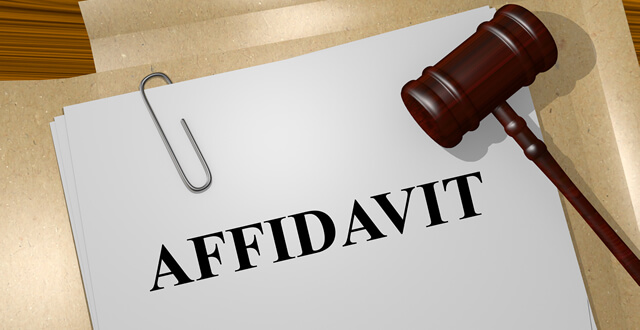
    An affidavit is a formal written statement of facts, made voluntarily under oath or affirmation, and used as evidence in various legal and administrative processes. It serves as a sworn testimony, giving weight and credibility to the information it contains.

    Whether you're dealing with property, personal matters, or legal disputes, understanding the different types of affidavits and when you might need them is essential. This SEO-optimized guide breaks down the common affidavits in Kenya, helping you navigate these legal documents with confidence.

    Common Types of Affidavits You May Need in Kenya:

    Here are some of the most frequently used affidavits in Kenya, categorized for easier understanding:

    1. Affidavits for Personal Identity & Status:

    These affidavits are crucial for establishing or clarifying personal details, especially when official documents have discrepancies or are missing.

    • Affidavit of Proof of Name: It's used when there are inconsistencies in your name across different official documents (e.g., ID card, birth certificate, academic certificates, passport). It helps clarify your legal name and prevent issues with banking, property transactions, visa applications, and employment.

    • Affidavit of Change of Name After Marriage: If you adopt your spouse's name or make other changes after marriage, this affidavit formally declares your new name.

    • Affidavit of Single Status (or Affidavit of Celibacy): Required, especially for Kenyans intending to marry a foreign national, to confirm that they are not currently married.

    • Affidavit of Paternity/Parentage: Used to formally declare paternity or parentage, often needed for birth certificate registration or inheritance matters.

    • Affidavit of Proof of Residence: Verifies your residential address, particularly when utility bills or lease agreements are unavailable. Often required for opening bank accounts, government applications, and immigration purposes.

    • Affidavit of Birth: Used to attest to a person's birth details when an official birth certificate is unavailable, useful for school enrollment or obtaining identification.

    2. Affidavits for Lost Documents:

    Losing important documents can be a hassle, but an affidavit can often facilitate their replacement.

    • Affidavit of Loss of Document: A general affidavit declaring the loss of any important document, such as a national identity card, passport, title deed, academic certificate (e.g., KCPE/KCSE), or share certificate. This is usually a prerequisite for obtaining a replacement.

    • Affidavit for Lost or Misplaced Motor Vehicle Logbook/Number Plate: Specifically for vehicle owners who have lost their logbook or number plates, required by the National Transport and Safety Authority (NTSA) for replacement.

    3. Affidavits for Legal & Procedural Matters:

    These affidavits are vital in court proceedings and other legal processes.

    • Affidavit of Service: This affidavit is critical in legal disputes. It proves that legal documents (e.g., summons, petitions) have been properly delivered to the intended parties, detailing the date, time, method, and recipient of the service.

    • Affidavit of Means (or Financial Affidavit): Often required in family law cases (e.g., divorce, child support) to disclose an individual's financial status, including income, assets, and liabilities.

    • Affidavit of Consent: Used when a person gives their formal consent to a particular action or agreement, common in family law for matters like a child's travel or adoption.

    • Affidavit of Support: Typically used in immigration cases to confirm financial support for an applicant.

    • Company Affidavits: Various affidavits related to company matters, such as affidavits for lost or damaged share certificates, or affidavits for surrender of shares.

    • Affidavit of Heirship: Used in estate matters to transfer ownership of property from a deceased person to their rightful heirs.

    • Affidavit in Support of a Complaint/Petition: Filed in court cases to provide sworn facts supporting a legal complaint or petition.

    4. Affidavits for Specific Administrative Purposes:

    Beyond general legal needs, certain affidavits cater to specific administrative requirements.

    • Affidavit for Change of NTSA TIMS Account Phone Number: For updating contact details on the Transport Integrated Management Systems.

    • Affidavit for Change of Motor Vehicle Engine Number: For officially documenting a change in a vehicle's engine number.

    • Affidavit of Guardianship: Used to declare and formalize guardianship over a minor or an individual unable to care for themselves.

    • Affidavit of Source of Funds: Often required by financial institutions to declare the origin of large sums of money for anti-money laundering purposes

    What Makes an Affidavit Valid in Kenya?

    Before diving into specific types, it's vital to know the core requirements for a valid affidavit in Kenya, as governed by the Oaths and Statutory Declarations Act (Cap 15) and the Civil Procedure Rules, 2010:

    • Voluntary Statement: The statement must be made freely, without any coercion.

    • Truthfulness: The person making the affidavit (the "deponent" or "affiant") must swear or affirm to the truthfulness of the statements. Providing false information in an affidavit can lead to charges of perjury.

    • Identification: The deponent must be clearly identified with their full name and address.

    • Authorized Witness: The affidavit must be sworn or affirmed before a person authorized by law to administer oaths. In Kenya, this is typically a Commissioner for Oaths, a Magistrate, or a Judge.

    • Signature and Stamp: The deponent must sign the affidavit in the presence of the authorized witness, who then affixes their official stamp or seal.

    • Clear and Concise Content: The affidavit should be written in the first person, using simple, precise language, and detailing the facts sworn to be true in numbered paragraphs.

    How to Get an Affidavit in Kenya:

    The process of obtaining an affidavit typically involves:

    1. Drafting: The affidavit needs to be accurately drafted, detailing the facts you are swearing to. You can draft your own with wansom.ai

    2. Signing: The deponent must sign the affidavit.

    3. Commissioning: The signed affidavit must be sworn or affirmed before a Commissioner for Oaths, Magistrate, or Judge. This official will verify your identity and witness your signature, then append their signature and official stamp.

    4. Filing (if required): Depending on the purpose, the affidavit may need to be filed with a specific court, government agency, or institution.

  • How AI powered document review speeds up M&A

    How AI powered document review speeds up M&A

    The relentless pursuit of a successful merger or acquisition (M&A) is a race against time, competition, and mounting costs. Yet, despite technological advancements, closing an M&A deal now takes approximately 31% longer than it did just a decade ago, according to industry reports IMAA Research on M&A Timelines. This lengthening timeline is bad news for all stakeholders, increasing risk and eating into the return on investment (ROI).

    The single largest bottleneck driving these delays is the due diligence process, specifically the labor-intensive, time-consuming slog of document review. Traditional methods require armies of lawyers—often billing $200-$500 per hour—to manually sift through hundreds of thousands of files, a process that can stretch transaction timelines from weeks into months.

    This is where AI document review M&A solutions enter the conversation, fundamentally changing the economics and speed of dealmaking. By leveraging advanced machine learning, firms are transforming review cycles from a marathon into a sprint, enabling a 30-40% reduction in professional fees and giving deal teams an unprecedented competitive edge. This complete guide will show M&A lawyers, corporate development teams, and private equity professionals exactly how to leverage this critical M&A due diligence automation technology to accelerate transaction speed and mitigate risk.


    Key Takeaways:

    • AI document review transforms M&A due diligence by cutting review time by 60-80% and significantly reducing associated professional fees.

    • Advanced AI leverages NLP and machine learning to automatically classify documents and extract critical terms like change-of-control clauses with speed and consistency.

    • The optimal workflow relies on human-AI collaboration, where lawyers handle strategic risk assessment and judgment while the AI efficiently processes the high volume of documents.

    • AI document review is quickly becoming a competitive imperative, enabling deal teams to close time-sensitive transactions faster and with greater confidence.

    • Successful implementation requires a phased approach, rigorous security vetting of vendors, and the creation of custom playbooks for deal-specific requirements.


    Why Is Document Review Still the Biggest Bottleneck Killing M&A Deal Speed?

    As we all know the heart of every M&A deal and the source of most delays is the Virtual Data Room (VDR). For even a mid-sized transaction, the VDR can easily hold tens of thousands of documents. Large, complex deals, particularly in regulated industries like finance or healthcare, routinely involve hundreds of thousands of documents, including:

    • Contracts: Master Services Agreements (MSAs), leases, supplier contracts, customer contracts, and critical change-of-control clauses in financing documents.

    • Financial Statements: Historical earnings, debt schedules, and off-balance-sheet liabilities.

    • Compliance and Regulatory Filings: Permits, licenses, environmental reports, and anti-corruption policies.

    • Intellectual Property (IP) Documentation: Patent filings, trademark registrations, and assignment agreements.

    • Human Resources: Employment agreements, union contracts, and executive compensation plans.

    The traditional review requires junior associates and paralegals to manually read and code these documents, leading to a process that can take 6 to 8 weeks for a large volume. With average time to close for mid-size deals at over 100 days ACG M&A Deal Statistics, this review phase consumes a significant portion of the timeline. Compounding the issue are high due diligence costs and the undeniable risk of human error that emerges when fatigued reviewers are under immense time pressure. It’s no wonder that a significant percentage of deals either fail or require substantial price adjustments due to issues unearthed (or, sometimes, missed) during due diligence. This severe document review bottleneck is the primary driver of slowed M&A transaction speed.

    Related Blog: The Complete M&A Due Diligence Checklist.


    What AI Document Review Actually Does in M&A Transactions

    AI document review is the application of machine learning (ML) and Natural Language Processing (NLP) technologies to automatically analyze, classify, and extract data from unstructured legal and business documents. In M&A, the goal is not to replace the lawyer, but to augment their capabilities, allowing them to focus on judgment-based, high-value work.

    Unlike simple keyword searches, advanced AI engines understand context, language patterns, and legal concepts. They integrate directly with Virtual Data Rooms (VDRs), immediately processing documents upon upload. This is a critical distinction: AI does the repetitive, high-volume reading, identifying and presenting key information to the deal team for verification and strategic assessment.

    Core AI Capabilities for M&A Due Diligence

    The speed advantage is delivered through automation across several core functions:

    1. Document Classification and Organization

    AI instantly reads and categorizes every document, regardless of naming convention, sorting them into taxonomies like "MSA," "NDA," "Lease," or "Patent." It also performs metadata extraction to create a structured, filterable index.

    2. Contract Analysis: AI Contract Analysis M&A

    Using sophisticated NLP, the AI identifies, extracts, and summarizes critical contractual clauses, such as:

    • Change of Control: Clauses triggered by the M&A transaction itself.

    • Termination Clauses: Provisions that allow counter parties to exit the agreement.

    • Assignment Restrictions: Limitations on transferring the contract to a new owner (the acquirer).

    • Risk Flagging: Highlighting unusual or non-standard provisions that deviate from the target’s typical contract templates or industry norms.

    3. Financial Document Processing

    The technology can extract key figures (e.g., debt amounts, revenue recognition policies) from unstructured financial texts, detect anomalies, and perform cross-document verification to ensure consistency in reported data.

    4. Compliance and Regulatory Review

    AI rapidly scans documents against defined regulatory frameworks (e.g., specific environmental statutes or anti-trust laws), verifying licenses and permits, and identifying potential policy violations that pose regulatory risk to the deal.


    Quantifying the Speed Advantage: Real Numbers Behind AI Document Review

    The case for adopting AI in due diligence moves quickly from "nice-to-have" to "must-have" when examining the metrics. The primary selling points are time reduction and the resulting M&A cost reduction.

    Traditional human review offers a ceiling on throughput. A highly efficient human reviewer might process 50-75 contracts per day. An AI platform, however, can process documents at a rate of 10,000 documents per hour or more, generating initial, structured data outputs almost immediately after the VDR is populated.

    This efficiency translates directly into a reduction of billable hours, often achieving 30-40% savings on the document review portion of professional service fees. More importantly, it improves accuracy improvements by eliminating the inconsistency and high error rates associated with manual review fatigue.

    Before and After Scenarios

    Consider a typical mid-to-large market deal involving 50,000 documents:

    Metric

    Traditional Approach

    AI-Powered Approach

    Benefit

    Review Time

    6–8 weeks with 3–4 senior associates

    3–5 days for AI processing + 1–2 weeks for focused attorney verification

    60–80% Time Reduction

    Estimated Cost

    $150,000–$250,000 (focused on review)

    $50,000–$100,000 (Tool subscription + highly focused human time)

    50–67% Cost Savings

    Risk/Accuracy

    High risk of missed clauses; inconsistent coding

    Comprehensive coverage; consistent, prioritized risk list

    Significant Risk Mitigation

    Value Focus

    Lawyers spend time on reading (low value)

    Lawyers spend time on judgment and strategy (high value)

    Strategic Shift

    This shift allows firms to bid more aggressively on timelines, drastically improving due diligence speed and client satisfaction.


    Leading AI Document Review Tools Transforming M&A

    The landscape of AI M&A tools is constantly evolving, with several platforms now offering enterprise-grade solutions specifically tailored for dealmaking. These solutions generally fall into three categories:

    Enterprise AI Platforms

    These are dedicated platforms built from the ground up to handle high-volume, complex legal document review. They are optimized for structured data extraction and risk flagging in M&A contexts.

    • Kira Systems: Widely considered a market leader, Kira uses machine learning models to identify and extract key provisions from contracts, making it the gold standard for AI contract analysis. It is highly customizable for deal-specific playbooks.

    • Luminance: This platform uses proprietary AI to automatically classify and identify anomalies in documents, often used by firms for comprehensive, rapid first-pass review. It is best suited for complex, cross-border deals where speed is paramount.

    • Diligent: While primarily a governance and board management platform, Diligent offers robust due diligence tools and an AI Assistant feature for contract review, targeting corporate counsel and board members.

    Legal AI with M&A Capabilities

    This category includes tools designed for the broader legal market but with powerful generative AI and analytical features applicable to M&A.

    • Wansom AI: Leveraging large language models (LLMs), Wansom provides a generative AI interface that allows lawyers to ask complex, contextual questions about the data room contents, such as "List all material contracts with change of control clauses requiring client consent."

    • CoCounsel (Casetext): An AI legal assistant that can summarize lengthy legal documents, perform rapid research, and, by extension, accelerate the drafting of due diligence reports.

    • LawGeex: This tool focuses on contract review, often used to benchmark target contracts against standard industry templates and immediately flag deviations.

    VDR Platforms with AI Features

    These solutions offer a Virtual Data Room (VDR AI) with integrated AI capabilities, meaning the review process begins the moment documents are uploaded, eliminating the need to transfer files to a separate platform.

    • Datasite: Known for its secure VDR, Datasite includes AI-powered tools that help dealmakers organize documents, auto-categorize files, and perform basic clause identification, enhancing document review speed directly within the VDR environment.

    • Ansarada: An AI-powered deal platform that uses machine learning to predict potential bidder behavior and offers integrated document analysis features for faster due diligence preparation.

    • Firmex: Offers secure VDR services coupled with AI insights that streamline the indexing and search functionality of the data room.

    When evaluating these options, firms should prioritize tools that offer clear data security protocols (see Security section below), deep integration with existing tech stacks, and strong vendor support during the critical M&A timeline.

    Related Blog: How to Choose the Right Virtual Data Room for Your M&A Deal


    The AI Document Review Workflow: Step-by-Step Process

    Implementing an AI-powered process isn't just about plugging in software; it requires a structured, multi-step workflow that leverages the machine for volume and the human for judgment. This M&A due diligence workflow is what separates efficient deal teams from the competition.

    Step 1: Data Room Setup and AI Configuration

    The process begins the moment the virtual data room setup is complete. Documents are uploaded and indexed. The legal team then configures the AI by:

    • Defining the Custom Playbook: Specifying the deal-specific requirements (e.g., "Look for all contracts over $1 million," "Identify all indemnification caps," "Flag any reference to jurisdiction X").

    • Training on Deal-Specific Requirements: Using a small, representative sample of documents to train the AI to recognize the target's unique language and formatting.

    • Security Settings: Ensuring access and permission protocols comply with the highest client confidentiality standards.

    Step 2: Automated Initial Review

    The AI immediately scans and classifies every file. This phase is characterized by sheer speed and volume processing. The platform:

    • Classifies and Tags: Automatically groups documents by type (e.g., Lease, Employment, Vendor).

    • Extracts Key Terms: Pulls out defined data points (dates, parties, governing law) and critical clauses.

    • Flags Anomalies: Identifies documents missing expected elements or containing unusually risky language.

    Step 3: Risk Prioritization

    This is where AI delivers immense value. Instead of reviewing documents sequentially, the AI uses learned patterns and defined risk criteria to rank documents by risk level.

    • It highlights urgent red flag summary items that require immediate senior attorney review.

    • It generates preliminary reports and exception lists for critical clauses (e.g., all contracts with termination rights upon insolvency).

    Step 4: Attorney-Led Deep Dive

    The human element takes over. Lawyers do not read 50,000 contracts; they review the 500 most critical, high-risk, or non-standard provisions flagged by the AI.

    • Verify AI Findings: Attorneys check the accuracy of the AI's extraction and classification on complex, nuanced provisions.

    • Judgment-Based Analysis: Lawyers analyze the implications of the findings—a task AI cannot perform—and assess the potential cost or liability to the post-merger entity.

    • Strategic Recommendations: Based on this focused review, strategic recommendations are made for the Share Purchase Agreement (SPA) and representations and warranties.

    Step 5: Reporting and Integration

    The final step is translating the structured data back into actionable intelligence for the deal team. The system generates consolidated due diligence reports, and the structured data can be integrated directly into financial deal models for valuation adjustments, leading to a comprehensive due diligence best practices outcome.


    What AI Can and Cannot Do: Setting Realistic Expectations

    To effectively implement AI due diligence, teams must have a clear understanding of the technology's strengths and its limitations. AI should be viewed as an augmentative tool, not a human replacement.

    What AI Excels At:

    AI technology is built for scale, consistency, and pattern recognition. It thrives on repetitive, high-volume tasks:

    • Consistency in Review: Applying the same criteria to 100,000 documents without fatigue or drift in judgment.

    • Pattern Recognition: Identifying obscure or non-obvious similarities and deviations across massive datasets.

    • Data Extraction and Structuring: Converting messy, unstructured data (documents) into clean, structured outputs (spreadsheets, databases).

    • 24/7 Processing Capability: AI tools can process data continuously, delivering results overnight or over weekends.

    • Identifying Standard Deviations: Quickly flagging any clause that is non-standard compared to a baseline template.

    What Still Requires Human Expertise:

    The application of law requires contextual understanding, strategy, and negotiation—areas where human lawyers remain indispensable. This is the realm of human AI collaboration legal:

    • Contextual Business Judgment: An AI can flag a problematic clause, but a human must decide if that contract is material to the deal's success or if the counterparty is likely to enforce the clause.

    • Strategic Risk Assessment: Assessing the cumulative risk of multiple findings and recommending corresponding adjustments to the purchase price or indemnity clauses.

    • Negotiation Implications: Understanding how a finding will impact the negotiation of the Representation and Warranties insurance policy or the final SPA.

    • Complex Legal Interpretations: Handling truly novel, ambiguous, or circuit-split legal issues.

    • Relationship and Cultural Considerations: Understanding the relationships between key executives, which is critical in post-merger integration.

    The optimal approach utilizes a collaborative human-AI workflow, where AI handles 80% of the volume and data structuring, while the human team focuses 100% of their effort on the 20% that requires legal and business acumen.

    Related Blog: AI vs the Billable Hour: How Legal Pricing Models Are Being Forced to Evolve


    Security and Confidentiality: Addressing the Elephant in the Data Room

    For M&A professionals, the security of confidential client data is non-negotiable. Introducing third-party AI tools into a VDR inevitably raises concerns about data leakage, compliance, and the training of proprietary models. AI M&A security must be the first consideration.

    Key Security Requirements in M&A

    • Confidentiality: Documents often contain trade secrets, competitive strategies, and personally identifiable information (PII). Any solution must guarantee data isolation.

    • Regulatory Compliance: M&A involving companies in different jurisdictions must comply with regulations like GDPR (Europe), CCPA (California), and various industry-specific rules (HIPAA, PCI DSS).

    • Data Retention and Deletion: There must be a clear, contractual guarantee on how and when client data is purged after the transaction closes, preventing the data from lingering on vendor servers.

    Best Practices and Vendor Vetting

    Before implementing an AI document review platform, deal teams should prioritize enterprise-grade, legally-specific AI tools and conduct rigorous vendor security assessments.

    • Certifications: Always look for AI vendors who hold internationally recognized security certifications like SOC 2 Type II (Service Organization Control) and ISO 27001.

    • Data Usage Agreements: A clear agreement must specify that client data is not used to train the vendor's underlying AI models unless explicitly consented to by the client. This prevents proprietary data from contaminating the vendor’s general knowledge base.

    • Deployment Options: Discuss on-premise vs. cloud-based solutions. While cloud solutions offer speed and scalability, some highly sensitive clients may require on-premise or private-cloud deployments.

    • Limited Data Access: Establish strict internal protocols limiting which team members—and which vendor personnel—have access to the full dataset.

    Essential Questions to Ask AI Vendors:

    • Where is our data physically stored and processed?

    • Is our data isolated from other clients and not used to train your models?

    • What happens to our data immediately after the deal closes, and what is your certified data purging process?

    • Do you hold SOC 2 Type II and ISO 27001 certifications?

    • How do you handle conflict checks related to your other clients?

    Addressing these security concerns head-on is crucial for client trust and maintaining M&A data protection integrity throughout the deal.

    Implementation Guide: Getting Started with AI Document Review

    The journey toward implement AI due diligence is a change management exercise. It should be undertaken in phases to ensure validation and internal buy-in.

    Phase 1: Assessment (Before First Deal)

    Start by quantifying the current pain.

    • Evaluate Baseline: Document the average time and cost of the last five deals’ document review phases. This creates the baseline for ROI calculation.

    • Stakeholder Buy-In: Secure support from senior partners, corporate IT, and legal operations. Explain that this is a workflow change, not a budget cut (though cost reduction is a benefit).

    Phase 2: Tool Selection

    This requires a structured approach, preferably an RFP (Request for Proposal) process.

    • RFP Considerations: Focus the RFP on M&A-specific use cases (change of control, indemnification, IP assignments) rather than general e-discovery.

    • Integration: Confirm the tool integrates seamlessly with your existing VDR and internal case management systems.

    • Vendor Support: Evaluate the vendor's ability to provide rapid, on-demand support, which is critical during high-stakes, time-sensitive deal execution.

    Phase 3: Pilot Implementation

    Start small to validate the technology and refine the workflow.

    • Scope: Run a pilot program on a small-scale deal, a specific section of a larger deal (e.g., only employment contracts), or even run the AI in parallel with a traditional human review to compare results.

    • Measure and Validate: Measure the AI's accuracy and time saved against the baseline. Gather feedback from the junior team members who will use the tool most frequently.

    • Refine Workflows: Use the feedback to create standardized internal playbooks that dictate when the AI is run, how lawyers verify findings, and the format of the final report.

    Common Pitfalls to Avoid:

    • Insufficient Training: Relying solely on the AI's out-of-the-box settings. Training the AI on the target's unique document set is essential.

    • Poor Data Room Organization: AI cannot work effectively if the VDR is a chaotic mess of mislabeled folders. Clean data in, clean results out.

    • Over-Reliance without Human Oversight: Never allow the AI to generate the final "red flag" report without rigorous human verification of the most critical findings.

    ROI Analysis: Is AI Document Review Worth the Investment?

    Determining the ROI for M&A AI tools extends far beyond simply reducing attorney hours. While tool subscription and implementation costs are real, the savings and strategic value quickly outweigh them for active dealmakers.

    Cost Considerations

    • Reduced Attorney Hours: The primary quantifiable saving. A typical deal may save hundreds of hours of associate time.

    • Cost Per Deal: Calculate your firm’s traditional cost per deal's document review and compare it directly to the combined cost of the AI tool's amortized subscription plus the significantly reduced attorney hours.

    Value Beyond Cost Savings

    The true value of legal technology investment lies in the strategic advantages:

    • Competitive Advantage: The ability to submit a bid faster and close a transaction more quickly often wins the deal, a strategic advantage that cannot be quantified in billable hours alone.

    • Risk Mitigation: Comprehensive, consistent AI review is less likely to miss a critical rep and warranty breach, potentially saving the client millions in post-closing litigation.

    • Talent Allocation: Redirecting junior attorneys from low-value "reading" to high-value "analysis" improves skill development, job satisfaction, and client advisory quality.

    • Scalability: Allows a firm to manage two or three concurrent large-volume deals without drastically hiring or increasing burnout for deal teams.

    When AI Document Review Makes Sense:

    AI due diligence is almost always worthwhile for:

    • Firms handling 10 or more M&A deals annually.

    • Deals with document volumes exceeding 10,000 documents.

    • Time-sensitive transactions (e.g., auctions or hostile bids) where speed is the competitive differentiator.

    • Cross-border deals involving multiple languages and complex regulatory structures.

    Real-World Success Stories: AI Document Review in Action

    The adoption of AI in M&A is no longer theoretical; it's driving wins in the marketplace. Here are a few anonymized scenarios illustrating the impact of due diligence success stories.

    Case Study 1: Large Technology Acquisition

    • Deal Context: $500M+ acquisition of a multinational SaaS target. Timeline pressure due to competitive bidding. Document volume: 110,000 files, mostly complex MSAs and IP licenses.

    • AI-Powered Approach: Utilized a leading AI contract analysis platform, trained specifically to flag IP assignment deficiencies, open-source compliance issues, and key customer contracts.

    • Results Achieved: The initial classification and clause extraction—a task projected to take 8 weeks—was completed by the AI in 48 hours. This allowed the deal team to identify a critical gap in IP assignments two weeks earlier than projected, enabling a timely, strategic counter-negotiation that saved the client an estimated $15 million in future remediation costs.

    Case Study 2: Mid-Market Private Equity Carve-Out

    • Deal Context: A private equity firm was carving out a non-core division from a larger corporate entity. The core challenge was separating thousands of shared contracts and identifying which required consent. Document volume: 25,000 documents.

    • AI-Powered Approach: The AI was used to execute a focused search for all contracts containing the terms "assignment," "novation," or "change of control," regardless of where they appeared in the text.

    • Results Achieved: The AI identified 450 consent requirements within two days. Traditional human review had missed 32 of them, all critical to maintaining key customer relationships. The use of AI shortened the consent verification timeline by 3 weeks, allowing the PE firm to hit a tight closing deadline and secure a favorable financing rate.

    The Future of AI in M&A: What's Coming Next

    The current generation of M&A automation trends is focused on extraction and classification. The next wave will be defined by generative AI legal capabilities, offering more sophisticated, predictive, and interactive features.

    • Generative AI for Due Diligence: Expect to see seamless, conversational interfaces that allow deal teams to ask complex, context-aware questions directly to the VDR. Instead of pulling up a report on termination clauses, a lawyer might ask: "Draft a summary of the top three contractual risks that could impact Q4 revenue, citing all source documents."

    • Predictive Analytics for Deal Outcomes: AI models will move beyond simply identifying risk to calculating the likelihood of that risk materializing and modeling its quantitative impact on the target's valuation.

    • Integration Across the Deal Lifecycle: AI will connect target identification, due diligence findings, valuation models, and even post-merger integration playbooks, creating a single, continuous data thread throughout the entire transaction.

    • Real-Time Due Diligence: AI will monitor incoming documents during the negotiation phase, instantly flagging new terms or changes in the target's financial status, enabling dynamic, real-time due diligence.

    The future of M&A will be driven by systems that not only identify information but also use that information to create actionable insights, draft protective language, and accelerate the decision-making process.

    Related Blog: Cross-Border M&A: Technology Solutions for Complex Deals.

    Conclusion: The Competitive Imperative of AI Document Review

    The argument over whether to adopt AI document review M&A is effectively over. In competitive bidding environments, speed is the ultimate weapon, and the firms and corporate development teams that can deliver high-quality due diligence in days instead of weeks are simply winning more deals.

    AI document review is no longer a competitive advantage; it is rapidly becoming table stakes. Early adopters are seeing significant reductions in cost and risk, while the strategic human element—the senior lawyers who understand the nuances of the deal—are freed to focus on what they do best: applying judgment, negotiating, and strategizing.

    If your organization is handling a significant volume of transactions or complex, time-sensitive deals, the cost of not implementing AI will soon exceed the cost of the technology itself. Start with a focused pilot program today, measure the results against your current baseline, and position your team to lead the next generation of accelerated, high-accuracy M&A.

    Blog image