Blog

  • What Is an Insurance Proposal Form and Why You Need One?

    What Is an Insurance Proposal Form and Why You Need One?

    The legal and financial landscape of life insurance is built upon one single, foundational document: the Insurance Proposal Form. Far from being a mere administrative checklist, this form is a high-stakes legal instrument that dictates the validity of the future contract, determines the premium structure, and serves as the primary legal defense for the insurer in the event of a claim dispute.

    For legal teams supporting insurance carriers, compliance officers, and wealth management attorneys, understanding the precise legal weight and inherent risk of the Life Insurance Proposal Form is paramount. Its complexity, combined with ever-shifting regulatory requirements, makes its drafting and review a critical task.

    In this authoritative guide, we will conduct an exhaustive analysis of the Insurance Proposal Form, exploring its crucial role in the underwriting process, the strict legal principles that govern its execution, the administrative burden it places on legal departments, and how advanced platforms are leveraging AI to automate compliance and mitigate significant legal exposure.


    Key Takeaways:

    • The Insurance Proposal Form is a high-stakes legal offer that becomes the foundational, legally-binding document used to judge the validity of the entire life insurance contract.

    • All insurance contracts are governed by the principle of Uberrimae Fidei (Utmost Good Faith), which legally mandates the applicant's full disclosure of every material fact in the proposal.

    • Errors, non-disclosures, or misrepresentations in the proposal form are the insurer's primary legal grounds for investigating and potentially voiding the policy during the two-year Contestability Period.

    • Manually managing state-specific regulatory compliance and version control for the proposal form creates an unacceptable level of administrative burden and legal risk for high-volume carriers.

    • AI-powered collaborative platforms like Wansom automate dynamic clause generation and audit trails, drastically mitigating the compliance and legal exposure inherent in traditional proposal drafting.


    What is an Insurance Proposal Form?

    The Insurance Proposal Form is the definitive, mandatory legal document used by an applicant to formally apply for an insurance policy. It serves as the applicant's legal offer to enter into a contract with the insurance carrier. This form is the basis upon which the carrier performs its risk assessment, known as underwriting, and decides whether to accept the risk, and if so, at what price (premium).

    Its legal significance is profound because it initiates the doctrine of Uberrimae Fidei (utmost good faith). By signing the proposal, the applicant warrants that all information provided—covering health, financial status, and lifestyle—is true and complete to the best of their knowledge. If the insurer agrees to the terms and issues of the policy, the completed and signed proposal form is permanently incorporated as a legal part of the final insurance contract. Any material misstatement or omission within this form, which would have changed the insurer's decision, provides grounds for the insurer to later challenge or void the policy during the Contestability Period. Therefore, the proposal is the most important legal instrument for establishing policy validity and determining future claim defensibility.

    Related Template: Insurance Proposal Form: Customize and Download Instantly with Wansom.ai

    What Are the High-Stakes Sections of the Proposal Form?

    In contract law, an offer must be clear, unambiguous, and communicated. The Insurance Proposal Form serves as the prospective insured’s formal offer to enter into a contract with the insurance company. The information contained within it is taken as a solemn declaration, forming the basis of the future policy.

    1. Form vs. Policy: Understanding the Offer and Acceptance

    The distinction between the Insurance Proposal Form and the resulting policy is fundamental to legal analysis:

    • The Proposal Form (The Offer): This document details the prospective insured’s information and declares their desire for specific coverage (the Sum Assured). The act of submitting the completed form, often accompanied by the first premium payment, constitutes the formal offer.

    • The Insurance Policy (The Acceptance): This is the final, executed contract. It represents the insurer’s acceptance of the proposer's offer, sometimes with modifications (e.g., charging a higher premium or excluding certain risks) based on their risk assessment (the underwriting process).

    Critically, once the policy is issued, the proposal form is legally deemed part of the contract. This incorporation means any statement within the form—even those seemingly minor—can be cross-referenced against a later claim. The law views the entirety of the form as the foundational representation upon which the insurer relied when accepting the risk.


    2. Key Sections of a Life Insurance Proposal:

    For legal and compliance professionals, managing the Life Insurance Proposal Form requires granular attention to its constituent parts, each serving a unique legal or actuarial purpose.

    i. Personal and Policy Details: Identifying the Parties and Scope

    The initial sections define the contract’s scope and participants.

    1. Identity of Proposer and Life Assured: While often the same person, clarity is required if a corporation or relative is the Proposer (the person offering to pay the premiums and enter the contract) and another person is the Life Assured (the person whose life is covered). This distinction is vital for establishing Insurable Interest (discussed below).

    2. Sum Assured and Term: These details set the limits of the insurer’s financial liability. The Sum Assured (the payout amount) and the Policy Term (duration) are direct inputs into actuarial premium calculation.

    3. Nomination and Beneficiary Information: This legally crucial section determines the recipient of the proceeds. Errors here can lead to costly probate disputes. The rules governing a valid Nomination are strictly defined by jurisdictional law and must be compliant from the outset.

    ii. Financial and Occupational Information: Assessing Risk Exposure

    Insurance is predicated on the financial stability and risk profile of the insured.

    1. Occupation: The occupation directly influences the premium. A high-risk profession (e.g., deep-sea fishing, pilot) represents a higher mortality risk than a low-risk office environment. The proposer must disclose the exact nature of their duties, not just a broad job title.

    2. Income and Financial Standing: This information, particularly important for high-value policies, is used to justify the Sum Assured. Insurers must ensure the policy is commensurate with the applicant’s financial need (a concept known as Financial Underwriting), preventing illegal speculative insurance contracts.

    3. Existing Insurance and Declined Proposals: Disclosure of existing coverage (especially disability or critical illness policies) helps prevent over-insurance. Disclosure of previously declined proposals provides underwriters with necessary context regarding undisclosed risks.

    Medical and Lifestyle History: The Foundation of Risk Assessment

    This is the most scrutinized and legally sensitive section, designed to prevent Adverse Selection—the tendency of those in poor health to seek more coverage.

    1. Current Health Status: Requires detailed answers on present illnesses, treatment, and medications.

    2. Past Medical History: Must account for serious ailments, surgeries, or hospitalizations over a specified look-back period (often 5 to 10 years).

    3. Family Health History: Details on major hereditary diseases (e.g., certain cancers, heart conditions) within immediate family members, which informs genetic risk modeling.

    4. Lifestyle Habits: Critical questions regarding smoking status, alcohol consumption, high-risk hobbies (e.g., mountaineering), and travel to volatile regions.

    The Declaration and Signature: The Point of Legal Vulnerability

    The final section transforms the document from an informational sheet into a binding legal representation.

    1. The Affirmation: The proposer affirms that all statements are true and complete to the best of their knowledge and belief.

    2. Consent Clauses: Often includes clauses granting the insurer permission to access medical records (HIPAA Authorization) and to share information with reinsurers or mortality databases.

    3. Signature: The signature legally binds the proposer to the declarations, establishing the document as the basis of the insurance contract legal basis.


    Why is the Proposal Form Non-Negotiable?

    The fundamental necessity of the Life Insurance Proposal Form is rooted in two bedrock principles of insurance law and economics: the doctrine of uberrimae fidei and the challenge of asymmetric information.

    1. The Doctrine of Utmost Good Faith (Uberrimae Fidei )

    Unlike most commercial contracts, where the principle is caveat emptor (let the buyer beware), insurance contracts are contracts of uberrimae fidei. This doctrine mandates that the applicant has an affirmative duty to disclose every material fact that they know, or ought to know, and which may influence the insurer's decision.

    This is a higher standard of disclosure than in general contract law. The Proposal Form is the instrument that satisfies this legal mandate. By signing the declaration, the proposer affirms they have acted in utmost good faith. Failure to do so—even if unintentional—can breach this essential legal principle.

    2. The Problem of Asymmetric Information in Insurance Law

    Asymmetric information occurs when one party to a transaction (the applicant) holds crucial information that the other party (the insurer) does not. In life insurance, the applicant knows their true health status and personal habits better than anyone else.

    If insurers simply took every applicant at face value, two market failures would occur:

    1. Moral Hazard: Applicants might engage in riskier behavior after obtaining the policy, knowing the payout is secured.

    2. Adverse Selection: Individuals with known, high-risk health conditions would be the most eager to purchase insurance, disproportionately increasing the risk pool and potentially collapsing the entire actuarial model.

    The Insurance Proposal Form is the underwriter’s defense against adverse selection. It forces the disclosure of material facts, allowing the insurer to accurately perform the underwriting process life insurance requires and set a fair premium for the actual risk level, thus maintaining the financial solvency of the risk pool.

    3. Financial Justification: Insurable Interest and Sum Assured

    A life insurance contract is not valid unless the proposer possesses insurable interest in the life of the person being insured. This is a critical legal requirement designed to prevent betting or speculative contracts on human life.

    The proposal form addresses this by asking about the relationship between the proposer and the life assured, and by requiring detailed financial information.

    • Establishing Interest: A spouse has an interest in their partner, and a business has an interest in a key executive. The form legally documents this relationship.

    • Proportionality: The insurer analyzes the requested Sum Assured against the proposer’s income, net worth, and liabilities. If a low-income individual applies for a vastly disproportionate death benefit (e.g., $10 million), the underwriter must legally flag it as potential speculation, fraud, or a money-laundering risk. The form provides the data for this essential due diligence.


    The Legal Side of Insurance Proposal Form

    The most significant legal risk associated with the Life Insurance Proposal Form revolves around the concept of disclosure. Mistakes in this document are not merely clerical; they are potential breaches of contract that can invalidate a policy when the beneficiaries need it most.

    1. Defining Material Misrepresentation: The Legal Standard

    Material misrepresentation in insurance is the act of providing false information, or omitting a fact, that would have changed the insurer’s decision to issue the policy or the terms on which it was issued.

    The burden of proof often lies with the insurer, who must typically demonstrate three things:

    1. Falsity: The statement made in the proposal form was, in fact, untrue.

    2. Materiality: The correct information would have significantly influenced the insurer’s decision (e.g., they would have declined the policy or charged a much higher premium).

    3. Reliance: The insurer genuinely relied on the false information when issuing the policy.

    The critical term here is material. If an applicant incorrectly stated their weight by two pounds, it is false but likely not material. However, if they failed to disclose a diagnosis of chronic heart failure three months prior, it is highly material and provides grounds for the insurer to void the contract ab initio (from the beginning).

    2. The Contestability Period: The Legal Window of Vulnerability

    Nearly all life insurance policies include a Contestability Period, typically lasting the first two years after the policy is issued. This period is the legal window during which the insurer may investigate and challenge the validity of the policy based on alleged misstatements in the Insurance Proposal Form.

    • Death During the Period: If the insured dies during this two-year window, the insurer is legally entitled—and often required—to conduct a full investigation into the representations made in the proposal form. They will scrutinize medical records, pharmacy databases, and lifestyle claims.

    • Post-Contestability: After the period expires, most policies become legally incontestable. At this point, the insurer generally loses the right to challenge the policy’s validity based on prior misrepresentations (exceptions often exist for outright fraud).

    For legal teams managing high-value policies, the integrity of the proposal form is the primary focus during this two-year period, as it represents the highest point of legal vulnerability for the policy’s payout.

    3. Implications for Legal Teams: Vetting the Initial Proposal

    Attorneys specializing in estate planning, trusts, and corporate succession often advise their clients on life insurance purchases. Their due diligence must extend to vetting the proposal itself, not just the policy terms.

    1. Disclosure Review: Legal counsel should work with the client to systematically review every declaration in the proposal form, cross-referencing against available medical and financial records to ensure absolute accuracy.

    2. Proposer Identity: Confirming that the Proposer has a legally recognized Insurable Interest in the Life Assured prevents a future challenge based on lack of legal standing.

    3. Documentation Integrity: Ensuring that the final, signed version of the form is legally executable and that all requisite jurisdictional disclosures were attached is a compliance mandate that cannot be outsourced to non-legal staff. The risk of the client's family facing a claim denial is too great.


    What Legal Professionals Need to Know about Insurance Proposal Form

    The legal complexities of the Insurance Proposal Form translate directly into massive administrative and compliance overhead for the legal departments tasked with its creation, maintenance, and deployment. This is the operational bottleneck that requires a strategic technological solution.

    1. Jurisdiction and Regulatory Compliance Challenges

    For carriers operating across multiple states or international borders, the creation and management of the master Insurance Proposal Form template is a Sisyphean task.

    • State-Specific Amendments: Contestability period lengths, required disclosure language, and anti-fraud warnings are often mandated at the state level. A carrier must maintain dozens, if not hundreds, of slightly modified, yet legally distinct, master forms.

    • Data Privacy (HIPAA/GDPR): The medical and financial data collected by the form is highly sensitive. The consent and disclosure clauses in the proposal must be perpetually updated to comply with the latest data governance mandates (such as specific language concerning patient medical record access permissions).

    • Digital Execution Compliance: As carriers shift to electronic proposals (e-Apps), the legal team must ensure that the digital signature capture process and the electronic audit trail meet the stringent legal requirements for non-repudiation and enforceability, equivalent to a physical legal document review automation process.

    2. The Cost of Manual Drafting: Human Error and Version Control Risk

    In traditional legal workflows, the management of proposal forms is slow, manual, and introduces unacceptable levels of risk.

    • Drafting Bottlenecks: When a new regulatory rule is published, legal teams must manually update the master template, which involves legal research, drafting new clauses, internal review cycles, and final approval. This process can take weeks, leaving the business exposed to compliance risk in the interim.

    • The Version Control Nightmare: A single master document can splinter into dozens of unmanaged versions as different departments (Underwriting, Sales, Compliance) make edits. The risk of an agent mistakenly using an obsolete form—one lacking a crucial, recently mandated disclosure clause—is extremely high, and the resulting non-compliant contract could jeopardize an entire portfolio.

    • Time Allocation: Legal counsel are forced to dedicate valuable time to the repetitive, low-value work of verifying boilerplate language and managing version control, diverting resources away from strategic functions like complex litigation or new product development.

    This administrative burden highlights a critical need not just for templates, but for a dynamic, intelligent system that can automatically manage the legal accuracy of high-volume documentation.


    The Future of Proposal Drafting: Security and Automation with AI

    The complexity, volume, and inherent legal risk associated with the Insurance Proposal Form make it an ideal candidate for strategic automation. This is the core problem Wansom, a secure, AI-powered collaborative workspace for legal teams, is designed to solve.

    1. Wansom’s Approach: Automating Legal Accuracy and Compliance

    Wansom transforms the creation of high-stakes documents from a static, error-prone manual process into a dynamic, compliant workflow. Our system is built to serve the legal team first, providing a secure platform to manage document intelligence.

    • Dynamic Clause Engine: The Wansom template for the Insurance Proposal Form: Customize and Download Instantly with Wansom is powered by a dynamic clause library. This engine allows the legal team to set logic-based rules: selecting "Life Insurance, Term, State: Texas" automatically generates the Texas-specific disclosure and contestability language, ensuring 100% compliance without manual intervention. This represents true AI document drafting tailored for legal precision.

    • Real-Time Regulatory Intelligence: The platform facilitates seamless integration of the latest regulatory data. When a state revises its required policy language, in-house counsel can update the master clause in Wansom, and the change is immediately propagated across all active templates, eliminating version control risk.

    • Streamlined Legal Research Integration: Wansom’s AI legal research capabilities allow legal professionals to instantly verify the statutory authority underlying a specific clause within the proposal form. Instead of leaving the drafting environment to search for case law or legislative text, the legal context is at their fingertips, accelerating the legal document review automation cycle.

    2. Beyond Templates: Secure, Collaborative Document Integrity

    The value of a platform like Wansom extends far beyond simple template generation; it addresses the critical need for security and collaborative integrity in handling highly sensitive documents.

    • Single Source of Truth: All legal documents, from the master Insurance Proposal Form to every executed policy, reside in a secure, central workspace. This eliminates fragmented files and ensures that every team member (Legal, Compliance, Underwriting) is working from the single, latest, legally approved version.

    • Enhanced Auditability and Non-Repudiation: For every proposal form drafted and finalized in Wansom, the system generates an immutable audit trail. This log records every edit, every reviewer, and the final electronic execution metadata. In the event of a claim dispute, the legal team has irrefutable evidence that the form used was legally compliant at the time of signing and that the declarations were properly presented and signed by the proposer.

    • Secure Data Handling: The platform is built with institutional-grade security protocols, ensuring that the sensitive medical and financial information collected during the proposal process is handled in a manner compliant with the highest data governance standards, mitigating exposure to data breach or privacy violation claims.


    Conclusion

    The Insurance Proposal Form is the most crucial document in the life insurance cycle. Its integrity directly impacts the solvency of the carrier and the financial security of the insured’s family. For legal teams, the manual management of these forms represents a colossal expenditure of time, a constant threat of regulatory non-compliance, and an unacceptable risk of material error that could lead to costly litigation.

    Modern legal strategy demands a shift from reactive document management to proactive, secure automation. By adopting an AI-powered collaborative workspace, legal teams can ensure that every Life Insurance Proposal Form they deploy is legally accurate, instantly compliant, and defensible in any court.

    If your legal team is still struggling with version control, manual compliance checks, or lengthy document review cycles, it’s time to modernize your workflow.

    Blog image

    The complexity of the Life Insurance Proposal Form is no match for Wansom’s secure, AI-powered document drafting capabilities.

    Customize and Download Wansom’s Authority-Grade Insurance Proposal Form Template Instantly to see how our platform transforms compliance and drastically reduces your drafting risk. Start building smarter, more secure legal documents today.

  • The Ethical Playbook: Navigating Generative AI Risks in Legal Practice

    The Ethical Playbook: Navigating Generative AI Risks in Legal Practice

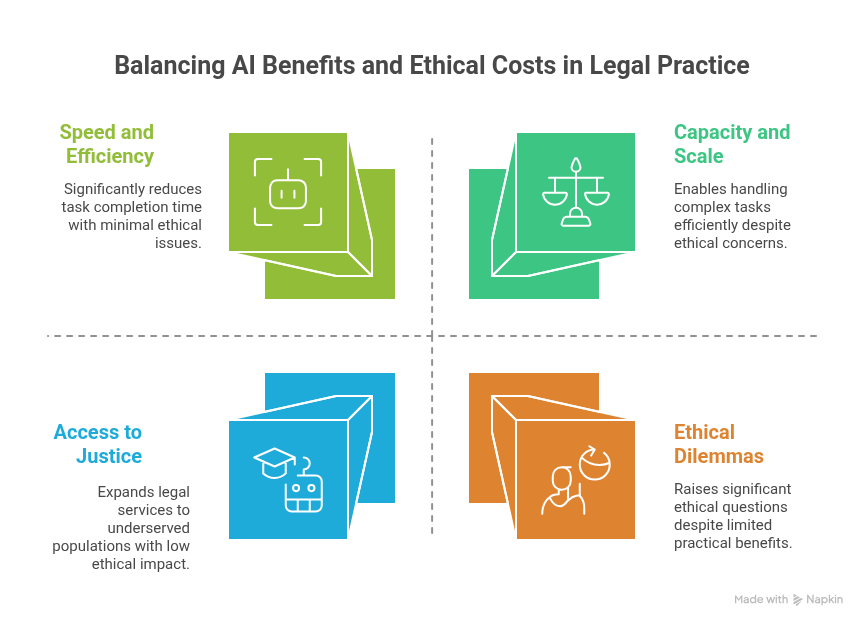
    The legal profession is defined by trust, confidentiality, and the duty of competence. For centuries, these principles have remained fixed, but the tools we use to uphold them are changing at warp speed. Generative AI represents the most significant technological disruption the practice of law has faced since the advent of the internet. It promises unprecedented efficiency in document drafting, legal research, and contract review, yet it simultaneously introduces profound new risks that touch the very core of professional responsibility.

    For every legal firm and in-house department, the question is no longer if they should adopt AI, but how they can do so ethically and compliantly. Failure to integrate these tools responsibly risks not only a breach of professional conduct rules but also the permanent erosion of client trust. This comprehensive guide, informed by the principles outlined by bar associations nationwide, provides a practical playbook for establishing an ethical AI framework and discusses how secure platforms like Wansom are purpose-built to meet these new standards.


    Key Takeaways:

    • The lawyer's duty of Competence (Model Rule 1.1) requires mandatory, independent verification of all AI-generated legal research to mitigate the profound risk of hallucination (falsified case citations).

    • Preserving Client Confidentiality (Model Rule 1.6) mandates the exclusive use of secure, walled-off AI environments that guarantee client data is never retained or used for model training.

    • Firms must establish clear policies requiring Transparency and Disclosure to the client when AI substantially contributes to advice or documents to preserve attorney-client trust.

    • The risk of Algorithmic Bias requires attorneys to actively monitor and audit AI recommendations to ensure the tools do not perpetuate systemic unfairness, violating the duty to the administration of justice (Model Rule 8.4).

    • To uphold ethical billing, firms must implement automated audit trails to log AI usage, supporting a transition from the billable hour to Value-Based Pricing (VBP).


    Does AI Demand a New Playbook in the New Ethical Frontier?

    Traditional rules of professional conduct—such as Model Rules 1.1 (Competence), 1.6 (Confidentiality), and 5.3 (Supervision)—remain binding. However, their application must be interpreted through the lens of machine intelligence. Generative AI in law introduces three unique variables that challenge conventional oversight:

    1. Velocity: AI can generate thousands of words of legal analysis or draft clauses in seconds, compressing the time available for human review and supervision.

    2. Opacity (The Black Box): The underlying mechanisms of large language models (LLMs) are often opaque, making it difficult to trace why an output was generated or to definitively spot hidden biases.

    3. Data Ingestion: Most publicly available AI models (the ones used by consumers) are trained by feeding user prompts back into the system, creating a massive, inherent risk to client confidentiality.

    Navigating this frontier requires proactive technological and governance solutions. The ethical use of legal AI is fundamentally about establishing a secure, auditable, and human-governed workflow.


    Pillar 1: Maintaining Absolute Confidentiality and Privilege (Model Rule 1.6)

    The bedrock of the legal profession is the promise of attorney-client privilege and the absolute duty to protect confidential information. In the age of generative AI, this duty faces its most immediate and critical threat.

    The Risk of Prompt Injection and Data Leakage

    The most common ethical pitfall involves lawyers using publicly available AI models (like general consumer chatbots) and pasting sensitive client data—including facts of a case, contract details, or proprietary information—into the prompt box.

    • The Problem: Most public models explicitly state that user inputs are logged, retained, and potentially used to further train the AI. A legal professional submitting a client's secret business strategy or draft complaint is effectively releasing that confidential data to a third-party company and its future users.

    • The Ethical Breach: This constitutes a direct violation of the duty to protect confidential information (Model Rule 1.6). Furthermore, it could breach the duty of technological competence (Model Rule 1.1) by failing to understand how the chosen tool handles sensitive data.

    The Solution: Secure, Walled-Off Environments

    Ethical adoption of AI hinges on using systems where data input is guaranteed to be secure and non-trainable.

    1. Private LLMs: Utilizing AI models that are hosted in a secure cloud environment where your data is never used for training the foundational model. This is the difference between contributing to a public knowledge pool and using a dedicated, private workspace.

    2. Encryption and Access Controls: All data transmitted for AI processing must be encrypted both in transit and at rest. Access should be restricted only to authorized personnel within the firm or legal department.

    3. Prompt Sanitization: Establishing protocols to ensure attorneys only submit anonymized or necessary data to the AI.

    How Wansom Eliminates Confidentiality Risk

    Wansom is architected around this non-negotiable principle. When you use Wansom for AI document review or document drafting:

    • Zero-Retention Policy: We utilize private API endpoints that enforce a strict zero-retention policy on all client inputs. Your data is processed for the immediate task and then discarded—it is never stored, logged, or used to improve the underlying model.

    • Secure Workspace: Wansom provides a collaborative workspace that acts as a digital vault, separating client data from the public internet. This ensures that all legal document review and drafting remains fully privileged and confidential.


    Pillar 2: The Duty of Competence and the Hallucination Risk (Model Rule 1.1)

    Model Rule 1.1 mandates that lawyers provide competent representation, which includes the duty to keep abreast of changes in the law and its practice, including the benefits and risks associated with relevant technology. When using AI, the primary threat to competence is the phenomenon of AI hallucinations.

    The Peril of Falsified Outputs

    AI hallucinations are outputs that are generated with confidence but are entirely fabricated, incorrect, or based on non-existent sources. The now-infamous examples of lawyers submitting briefs citing fake case law have highlighted this risk.

    • The Problem: An attorney may ask an AI to summarize relevant case law or draft a specific contractual clause. The AI, designed to predict the most probable next word, may invent a case, cite an irrelevant statute, or misstate existing legal precedent. If the attorney fails to verify the legal research through independent sources, they violate their duty of competence.

    • The Ethical Breach: The supervising attorney remains liable for the work product, regardless of whether it was generated by a junior associate or an algorithm. Delegating work to AI does not delegate accountability.

    The Solution: Grounded AI and Mandatory Verification

    Competent use of AI requires a structured, multi-step process that places the human lawyer as the final, necessary check.

    1. Grounded AI: AI must be "grounded" in reliable, authoritative sources. For legal research, this means the AI should only pull information from verified legal databases, firm precedents, or jurisdiction-specific rules, providing a direct, auditable citation trail for every claim.

    2. Human-in-the-Loop: Every single output from a generative AI model—whether it’s a proposed clause for a merger agreement or a summary of a regulatory change—must be manually reviewed, verified against its source citations, and approved by a competent attorney.

    3. Prompt Engineering Competence: Lawyers must develop the skill to write highly precise, contextualized prompts that minimize the possibility of hallucination and maximize the relevance of the output.

    How Wansom Enforces Competence

    Wansom is built to transform high-risk, ungrounded AI tasks into low-risk, verifiable workflows:

    • Grounded Legal Research: Wansom’s research features are explicitly engineered to reference your firm’s private knowledge base or verified external legal libraries. The output doesn't just provide a summary; it provides traceable, direct links to the source documents, making human verification swift and mandatory.

    • Mandatory Review Gates: Our AI document review tools integrate with firm-wide workflows, allowing compliance teams to require a documented sign-off on any document drafted or substantially revised by AI before it can be finalized or exported.


    Pillar 3: Billing, Transparency, and Attorney-Client Trust (Model Rules 1.4 & 1.5)

    The integration of AI automation into legal services impacts how attorneys charge for their time (Rule 1.5) and how they communicate with clients about the work being done (Rule 1.4).

    The Risks of Block Billing and Ghostwriting

    If a task that previously took an attorney two hours—like reviewing a stack of leases—now takes five minutes using AI, billing the client for the full two hours is ethically questionable, potentially violating the prohibition against unreasonable fees.

    • The Problem: Clients are paying for the lawyer's judgment, experience, and time. If the time component is drastically reduced by technology, billing practices must reflect that efficiency. Transparency around the use of AI is paramount to preserving the attorney-client relationship.

    • The Ethical Breach: Failing to disclose the use of AI when the work product is essential to the representation can be viewed as misleading (ghostwriting). Over-billing for tasks largely performed by a machine can violate the duty of reasonable fees.

    The Solution: Disclosing, Logging, and Value-Based Pricing

    The ethical path forward involves embracing transparency and shifting the focus from time-based billing to value creation.

    1. Informed Consent: Firms should develop a clear, standardized policy on when and how to disclose the use of AI to clients. This ensures the client provides informed consent to the technical methods being used.

    2. Automated Audit Trails: Every interaction with the AI—the input, the output, and the human modifications—must be logged. This provides an indisputable audit trail for billing inquiries and compliance checks.

    3. Value-Based Model: Instead of charging by the minute for tasks performed by AI, firms can adopt fixed fees or value-based pricing, translating AI efficiency into predictable, competitive rates for the client.

    How Wansom Ensures Transparency and Trust

    Wansom is designed to track AI usage with the same rigor traditionally applied to human billable hours:

    • Usage Logging: The platform automatically logs which user executed which AI command (e.g., “Summarize document,” “Draft arbitration clause”) on which document and the precise time it took. This provides the data necessary for granular, ethical billing.

    • Auditability: Every document created or reviewed in Wansom includes metadata showing when and how AI was utilized, allowing compliance teams to easily generate a full accountability report for internal and external auditing. This level of detail builds attorney-client trust.


    Pillar 4: Bias, Fairness, and Access to Justice (Model Rule 8.4)

    Model Rule 8.4 prohibits conduct prejudicial to the administration of justice. In the context of AI, this relates to the risk of algorithmic bias perpetuating historical inequalities in the legal system.

    The Risk of Embedded Bias

    Generative AI models are trained on massive datasets of historical legal documents, court opinions, and legislation. If those historical documents reflect systemic biases—for example, language used in criminal sentencing or immigration rulings that disproportionately affects certain demographic groups—the AI will learn and amplify those biases.

    • The Problem: When an AI is used to predict case outcomes, assess flight risk, or assist in jury selection, a biased model can lead to discriminatory legal advice and perpetuate unfair outcomes, thereby prejudicing the administration of justice.

    • The Ethical Duty: Legal professionals have a duty to ensure that the tools they use do not exacerbate existing inequities. This means understanding the training data, seeking out AI solutions committed to fairness in AI, and validating outputs for biased language or recommendations.

    Mitigation Strategies

    The fight against bias in AI for legal teams is ongoing, but clear strategies exist:

    1. Audited Training Data: Opt for AI vendors (like Wansom) that prioritize clean, diverse, and verified legal datasets, actively working to filter out discriminatory or irrelevant historical data that could skew results.

    2. Human Oversight and Override: Ensure that any AI-driven decision or prediction is treated as a recommendation, not a mandate. The human lawyer must always retain the authority and mechanism to override an algorithmically biased recommendation.

    3. Continuous Monitoring: Establish internal committees or procedures to regularly review the outcomes of AI use cases, looking specifically for disproportionate impacts across different client segments or case types.


    Building the Ethical AI Workspace: Wansom's Blueprint

    The ethical risks of generative AI are not abstract problems; they are architectural challenges that demand architectural solutions. Wansom was designed from the ground up to solve these four ethical pillars, offering a secure environment where legal professionals can leverage AI’s power without compromising their professional duties.

    1. The Confidentiality Solution: Isolated Cloud Infrastructure

    Wansom operates entirely within a secure, single-tenant or segregated cloud environment. This means:

    • Data Separation: Your client files and prompts are isolated. They never mix with data from other firms or the public internet.

    • Secure Prompting: The moment an attorney asks the AI to review a document or conduct research, that interaction stays within the Wansom "walled garden," ensuring compliance with Model Rule 1.6.

    2. The Competence Solution: Grounded and Verifiable Outputs

    By focusing on Grounded AI, Wansom transforms the risk of hallucination into a verifiable workflow:

    • Private Knowledge Base: The AI is grounded in your firm’s approved precedents, style guides, and validated legal libraries, dramatically reducing the potential for external, fabricated information.

    • Citation Confidence Scores: For every piece of generated legal analysis or contract review insight, Wansom provides a clear confidence score and the source link, requiring the attorney to actively click and verify the foundational material before finalizing the work.

    3. The Transparency Solution: Mandatory Audit Trails

    To support ethical billing and supervisory duties (Model Rule 5.3):

    • Usage Logs and Reporting: Wansom provides supervisors with a comprehensive dashboard that tracks which AI tools were used, on which matters, and by whom. This supports meticulous and honest billing.

    • Version Control: Every AI-assisted edit, from a minor clause revision to a major document draft, is logged in the document’s version history, providing full traceability and accountability for the final work product.

    4. The Fairness Solution: Focused and Audited Models

    Wansom focuses its AI models on specific, high-value legal tasks (drafting, review, research). This focused approach allows for smaller, more thoroughly audited training datasets, reducing the systemic bias that plagues general-purpose models.

    • Mitigating Bias: By restricting the AI’s operating domain to specific document types, we can actively test for and mitigate biased outcomes, ensuring the platform supports the impartial administration of justice.


    Conclusion

    The adoption of generative AI in legal practice is not merely an efficiency measure; it is a fundamental shift in professional conduct. Lawyers must now be tech-literate fiduciaries, responsible not only for the law but for the algorithms they use to practice it. The ethical mandate is clear: Embrace innovation, but do so with architectural rigor.

    Firms that recognize that AI compliance requires secure infrastructure, grounded research, and transparency tools will be the ones that thrive. They will reduce risk, build deeper client trust, and ultimately provide faster, better service.

    If you’re ready to move beyond the fear of hallucinations and confidentiality breaches and implement a secure, ethical AI-powered collaborative workspace, it's time to explore Wansom.

    Blog image

    To see how Wansom provides the auditability and security needed to meet the highest standards of professional conduct in AI document drafting and legal research, book a private demo today.

  • Should Lawyers Fear AI or Embrace It?

    The top AI Legal Trends defining LegalTech 2025 prioritize secure governance and strategic financial restructuring over mere efficiency gains. Firms are migrating Generative AI usage from public models to secure, integrated workspaces to uphold the ethical duty of client confidentiality and mitigate data leakage risks. This necessitates strengthening data governance and creating roles focused on Legal Data Engineering. Furthermore, AI's ability to automate core tasks like E-Discovery makes hourly billing competitively non-viable, accelerating the mandatory market shift to Value-Based Pricing (VBP). Ultimately, the successful firm of 2025 will adopt a unified technology stack that ensures compliance and provides the necessary data for confidently setting profitable VBP fees.


    Key Takeaways:

    • In 2025, firms must transition from public, fragmented AI tools to secure, closed-loop systems to uphold the ethical and professional duty of client confidentiality.

    • The internal risk of unsupervised AI use makes data governance a top litigation concern, necessitating the development of new roles focused on Legal Data Engineering.

    • Technological competence is now an ethical requirement, meaning that failing to use AI for efficient tasks like E-Discovery exposes the firm to malpractice liability.

    • AI's ability to automate core functions forces an immediate market shift away from the billable hour toward more competitive Value-Based Pricing (VBP) models.

    • Successfully navigating these AI Legal Trends requires the consolidation of fragmented technology into a single, secure, unified collaborative workspace.


    Is 2025 The Year of Operational Strategy?

    The integration of Artificial Intelligence (AI) into the legal profession has officially moved past the experimental phase. 2023 was defined by fascination, and 2024 by fragmented adoption. 2025 will be the year of strategic consolidation. The competitive advantage will no longer lie in having AI tools, but in how securely and comprehensively a firm integrates them into its core workflows and financial model.

    For law firm leaders, the challenge is shifting from simply understanding the technology to successfully mitigating the associated ethical risks, managing data security, and fundamentally restructuring compensation models. The top AI Legal Trends to watch in 2025 are not purely technological; they are organizational, ethical, and financial.

    This comprehensive guide, designed for strategic leaders, breaks down the critical shifts expected in the coming year. We will explore how Generative AI transitions into regulated environments, why legal data management becomes a boardroom issue, and how this convergence will finalize the move toward Value-Based Pricing (VBP). Ultimately, these trends underscore the critical need for a secure, unified workspace—a solution provided by platforms like Wansom—to maintain compliance, profitability, and competitive advantage.

    Trend 1: Generative AI Shifts from Novelty to Governance

    Generative AI (GenAI)—the technology behind automated drafting, research synthesis, and idea generation—has proven its power. However, 2025 will mark the mandatory migration of this power from open-source, generalist platforms (which carry unacceptable risks) to closed-loop, governed systems.

    The Ethical Imperative of Closed-Loop AI

    The most significant headwind facing GenAI adoption in legal practices is the unnegotiable duty of client confidentiality (ABA Model Rule 1.6). Using public-facing models exposes confidential client data, risks privilege waiver, and invites sanctions.

    The Rise of the Secure, Integrated Workspace

    In 2025, firms will not survive with fragmented AI tools. They will require a single, secure collaborative workspace that satisfies three criteria:

    1. Data Isolation: All client data must remain within the firm's private cloud, ensuring that no confidential information is inadvertently used to train a public model.

    2. Integrated Workflow: The AI must be embedded directly into the drafting and research process, eliminating the security risk of manually copying and pasting information between external tools.

    3. Auditability and Explainability: The system must provide a clear audit trail showing how the AI processed and generated content, satisfying client and regulatory scrutiny.

    This strategic pivot is the core value of Wansom. By offering a secure, AI-powered collaborative environment, Wansom enables firms to utilize the drafting and research efficiency of GenAI without violating the foundational principles of legal practice. The trend for 2025 is clear: Secure, integrated GenAI will replace fragmented, public models.


    Trend 2: Legal Data Security Becomes a Top Litigation Risk

    Historically, the biggest threat to client data was external (hacks, phishing). In 2025, the internal risk associated with unsupervised AI usage—the unintentional leaking of privileged information—will dominate the litigation risk profile of law firms.

    Data Governance and the Legal Data Engineer

    As AI models become custom-trained on a firm’s proprietary data (its precedents, successful motions, and unique client agreements), that data transforms from passive archival material into the firm’s most valuable intellectual property. Managing this training data—ensuring its accuracy, security, and proper partitioning—will be a strategic function.

    In 2025, law firms will see the emergence of roles focused purely on Legal Data Engineering and AI governance. These professionals will be responsible for:

    • Data Vetting: Ensuring that only high-quality, non-privileged, and firm-approved documents are used to train the internal AI models.

    • Security Segmentation: Partitioning client-specific data to prevent cross-contamination or unauthorized access within the workspace.

    • Regulatory Alignment: Monitoring evolving data privacy laws (like CCPA, GDPR) and ensuring the AI’s handling of personal identifiable information (PII) remains compliant.

    The Wansom Platform Advantage

    This trend highlights a major operational challenge: traditional document management systems (DMS) are not built for AI governance. Wansom’s architecture solves this by providing native data-tagging and access controls built specifically for machine learning inputs, ensuring security and compliance from the ground up.


    Trend 3: AI-Driven Litigation Risk and the Ethical Duty of Competence

    The integration of AI into litigation will create two massive challenges in 2025: the rise of defensive litigation technology and a renewed scrutiny of the lawyer's ethical duty of technological competence.

    AI Litigation: Defending Against the Machine

    As AI-generated content (emails, contracts, social media posts, deepfake videos) enters the discovery process, the verification of authenticity becomes complex. New litigation challenges in 2025 will focus on:

    1. Authentication of AI-Generated Evidence: How does a firm prove an AI-generated document was authorized or intended by a human client?

    2. Detection of Deepfakes: The proliferation of AI-generated audio and video evidence will require specialized forensic tools to verify authenticity, adding a new layer of complexity to the discovery process.

    3. Proportionality and TAR: Judges will continue to enforce the proportionality requirements of the Federal Rules of Civil Procedure (FRCP Rule 26(b)(1)). Failing to use Technology-Assisted Review (TAR) or other forms of E-Discovery Automation will increasingly be viewed as an inefficient, disproportionate, and costly practice.

    The Inescapable ABA Mandate

    The ABA Model Rule 1.1, Comment

    states that lawyers must remain competent regarding the benefits and risks of "relevant technology." In 2025, this duty will expand. Firms that lose a case because they failed to use AI-powered research tools to find key precedent, or because they incurred excessive costs due to manual E-Discovery, face potential malpractice liability or fee disputes.

    The trend is that technological competence is no longer optional; it is an ethical requirement. Firms must invest in training and provide mandatory, secure platforms like Wansom, which guide lawyers in the appropriate and ethical application of AI tools within their daily workflow.


    Trend 4: Alternative Fee Arrangements (AFAs) Become the Default

    The most profound financial trend driven by AI is the permanent shift away from the billable hour toward Value-Based Pricing (VBP) and other AFAs. AI dissolves the time-cost calculation, making the hourly fee ethically problematic and competitively dangerous.

    Using AI Metrics to Predictably Price Legal Work

    VBP's primary challenge has always been risk management: how can a firm confidently set a fixed price without accurately knowing the internal cost of delivery?

    This is where AI becomes indispensable in 2025:

    1. Standardized Cost Metrics: AI automation provides stable, predictable data on the true internal cost of service delivery. For example, if AI Contract Review consistently reduces the review time for a standard M&A document set from 80 hours to 4 hours of human QA, the firm can confidently set a fixed price based on the value delivered, capturing a much larger profit margin.

    2. Scope Precision: AI's ability to quickly and accurately scope out complex projects (e.g., assessing the volume of documents for E-Discovery, identifying complex contractual anomalies) reduces the risk of scope creep, enabling more secure flat-fee proposals.

    3. Client Alignment: In 2025, firms will use AI-generated efficiency reports to justify AFAs, assuring clients they are paying for rapid outcomes and strategic advice, not inefficiency.

    The Financial Mandate: Profitability Through Value

    The firms that thrive in 2025 will be those that realize the value is in the result and the speed, not the hours. They will leverage integrated platforms that automate the back end (like Wansom) to confidently set profitable AFAs, securing better client relationships and superior margins.


    Trend 5: Consolidation of the Legal Technology Stack

    In the early stages of adoption (2023–2024), many firms adopted a patchwork of single-function AI tools: one for research, one for contract review, one for time-tracking. This fragmented approach creates data silos, security vulnerabilities, and workflow friction.

    The Demand for the Unified Collaborative Workspace

    The top AI legal trends to watch in 2025 dictate that firms will move away from this fragmented stack toward unified, secure collaborative workspaces. Firms need one platform that handles the entire legal lifecycle:

    Fragmented Tool

    Unified Wansom Functionality

    Benefit in 2025

    External GenAI Tool

    Secure Drafting & Research Synthesis

    Eliminates privilege risk and external data exposure.

    Time Tracking App

    Billable Time Tracking AI

    Captures 100% of billable time for accurate VBP modeling.

    Separate Contract Reviewer

    Integrated Contract Review AI

    Streamlines due diligence within the secure matter file.

    Basic DMS

    AI-Powered Knowledge Retrieval

    Turns firm precedent into an instantly searchable asset.

    Consolidating the technology stack under a secure, integrated umbrella drastically reduces compliance overhead, increases attorney adoption rates due to a better user experience, and provides the centralized data required for operational reporting and VBP strategy.

    Relate Blog: This is the ultimate trend for 2025: Integration is the new Innovation.


    Conclusion.

    The top AI legal trends to watch in 2025 are not predictions of futuristic sci-fi; they are the strategic mandates that will define who leads the legal market and who falls behind. The shift is systemic: moving from manual labor to machine efficiency, from data risk to data governance, and from time-based billing to value-based outcomes.

    Law firm leadership must treat these trends not as IT projects, but as core business transformation initiatives. Successfully navigating 2025 requires immediate investment in:

    1. A secure, integrated AI workspace that satisfies ethical and data security obligations.

    2. Training and policy updates to ensure the ethical competence of all lawyers.

    3. A clear, data-driven strategy for transitioning key practice groups to Value-Based Pricing.

    Wansom is purpose-built to be the secure, collaborative intelligence layer for the modern law firm. We provide the unified environment and essential automation tools required to manage the risks and capitalize on the efficiency gains of GenAI, empowering your firm to confidently lead the legal landscape of 2025.

    Blog image

    Don't wait for your competition to redefine value. Take the first step today to secure your firm's profitability and competitive edge.

  • Top AI Legal Trends to Watch in 2025: A Guide for Strategic Law Firm Leaders

    The top AI Legal Trends defining LegalTech 2025 prioritize secure governance and strategic financial restructuring over mere efficiency gains. Firms are migrating Generative AI usage from public models to secure, integrated workspaces to uphold the ethical duty of client confidentiality and mitigate data leakage risks. This necessitates strengthening data governance and creating roles focused on Legal Data Engineering. Furthermore, AI's ability to automate core tasks like E-Discovery makes hourly billing competitively non-viable, accelerating the mandatory market shift to Value-Based Pricing (VBP). Ultimately, the successful firm of 2025 will adopt a unified technology stack that ensures compliance and provides the necessary data for confidently setting profitable VBP fees.


    Key Takeaways:

    • In 2025, firms must transition from public, fragmented AI tools to secure, closed-loop systems to uphold the ethical and professional duty of client confidentiality.

    • The internal risk of unsupervised AI use makes data governance a top litigation concern, necessitating the development of new roles focused on Legal Data Engineering.

    • Technological competence is now an ethical requirement, meaning that failing to use AI for efficient tasks like E-Discovery exposes the firm to malpractice liability.

    • AI's ability to automate core functions forces an immediate market shift away from the billable hour toward more competitive Value-Based Pricing (VBP) models.

    • Successfully navigating these AI Legal Trends requires the consolidation of fragmented technology into a single, secure, unified collaborative workspace.


    Is 2025 The Year of Operational Strategy?

    The integration of Artificial Intelligence (AI) into the legal profession has officially moved past the experimental phase. 2023 was defined by fascination, and 2024 by fragmented adoption. 2025 will be the year of strategic consolidation. The competitive advantage will no longer lie in having AI tools, but in how securely and comprehensively a firm integrates them into its core workflows and financial model.

    For law firm leaders, the challenge is shifting from simply understanding the technology to successfully mitigating the associated ethical risks, managing data security, and fundamentally restructuring compensation models. The top AI Legal Trends to watch in 2025 are not purely technological; they are organizational, ethical, and financial.

    This comprehensive guide, designed for strategic leaders, breaks down the critical shifts expected in the coming year. We will explore how Generative AI transitions into regulated environments, why legal data management becomes a boardroom issue, and how this convergence will finalize the move toward Value-Based Pricing (VBP). Ultimately, these trends underscore the critical need for a secure, unified workspace—a solution provided by platforms like Wansom—to maintain compliance, profitability, and competitive advantage.

    Trend 1: Generative AI Shifts from Novelty to Governance

    Generative AI (GenAI)—the technology behind automated drafting, research synthesis, and idea generation—has proven its power. However, 2025 will mark the mandatory migration of this power from open-source, generalist platforms (which carry unacceptable risks) to closed-loop, governed systems.

    The Ethical Imperative of Closed-Loop AI

    The most significant headwind facing GenAI adoption in legal practices is the unnegotiable duty of client confidentiality (ABA Model Rule 1.6). Using public-facing models exposes confidential client data, risks privilege waiver, and invites sanctions.

    The Rise of the Secure, Integrated Workspace

    In 2025, firms will not survive with fragmented AI tools. They will require a single, secure collaborative workspace that satisfies three criteria:

    1. Data Isolation: All client data must remain within the firm's private cloud, ensuring that no confidential information is inadvertently used to train a public model.

    2. Integrated Workflow: The AI must be embedded directly into the drafting and research process, eliminating the security risk of manually copying and pasting information between external tools.

    3. Auditability and Explainability: The system must provide a clear audit trail showing how the AI processed and generated content, satisfying client and regulatory scrutiny.

    This strategic pivot is the core value of Wansom. By offering a secure, AI-powered collaborative environment, Wansom enables firms to utilize the drafting and research efficiency of GenAI without violating the foundational principles of legal practice. The trend for 2025 is clear: Secure, integrated GenAI will replace fragmented, public models.


    Trend 2: Legal Data Security Becomes a Top Litigation Risk

    Historically, the biggest threat to client data was external (hacks, phishing). In 2025, the internal risk associated with unsupervised AI usage—the unintentional leaking of privileged information—will dominate the litigation risk profile of law firms.

    Data Governance and the Legal Data Engineer

    As AI models become custom-trained on a firm’s proprietary data (its precedents, successful motions, and unique client agreements), that data transforms from passive archival material into the firm’s most valuable intellectual property. Managing this training data—ensuring its accuracy, security, and proper partitioning—will be a strategic function.

    In 2025, law firms will see the emergence of roles focused purely on Legal Data Engineering and AI governance. These professionals will be responsible for:

    • Data Vetting: Ensuring that only high-quality, non-privileged, and firm-approved documents are used to train the internal AI models.

    • Security Segmentation: Partitioning client-specific data to prevent cross-contamination or unauthorized access within the workspace.

    • Regulatory Alignment: Monitoring evolving data privacy laws (like CCPA, GDPR) and ensuring the AI’s handling of personal identifiable information (PII) remains compliant.

    The Wansom Platform Advantage

    This trend highlights a major operational challenge: traditional document management systems (DMS) are not built for AI governance. Wansom’s architecture solves this by providing native data-tagging and access controls built specifically for machine learning inputs, ensuring security and compliance from the ground up.


    Trend 3: AI-Driven Litigation Risk and the Ethical Duty of Competence

    The integration of AI into litigation will create two massive challenges in 2025: the rise of defensive litigation technology and a renewed scrutiny of the lawyer's ethical duty of technological competence.

    AI Litigation: Defending Against the Machine

    As AI-generated content (emails, contracts, social media posts, deepfake videos) enters the discovery process, the verification of authenticity becomes complex. New litigation challenges in 2025 will focus on:

    1. Authentication of AI-Generated Evidence: How does a firm prove an AI-generated document was authorized or intended by a human client?

    2. Detection of Deepfakes: The proliferation of AI-generated audio and video evidence will require specialized forensic tools to verify authenticity, adding a new layer of complexity to the discovery process.

    3. Proportionality and TAR: Judges will continue to enforce the proportionality requirements of the Federal Rules of Civil Procedure (FRCP Rule 26(b)(1)). Failing to use Technology-Assisted Review (TAR) or other forms of E-Discovery Automation will increasingly be viewed as an inefficient, disproportionate, and costly practice.

    The Inescapable ABA Mandate

    The ABA Model Rule 1.1, Comment

    states that lawyers must remain competent regarding the benefits and risks of "relevant technology." In 2025, this duty will expand. Firms that lose a case because they failed to use AI-powered research tools to find key precedent, or because they incurred excessive costs due to manual E-Discovery, face potential malpractice liability or fee disputes.

    The trend is that technological competence is no longer optional; it is an ethical requirement. Firms must invest in training and provide mandatory, secure platforms like Wansom, which guide lawyers in the appropriate and ethical application of AI tools within their daily workflow.


    Trend 4: Alternative Fee Arrangements (AFAs) Become the Default

    The most profound financial trend driven by AI is the permanent shift away from the billable hour toward Value-Based Pricing (VBP) and other AFAs. AI dissolves the time-cost calculation, making the hourly fee ethically problematic and competitively dangerous.

    Using AI Metrics to Predictably Price Legal Work

    VBP's primary challenge has always been risk management: how can a firm confidently set a fixed price without accurately knowing the internal cost of delivery?

    This is where AI becomes indispensable in 2025:

    1. Standardized Cost Metrics: AI automation provides stable, predictable data on the true internal cost of service delivery. For example, if AI Contract Review consistently reduces the review time for a standard M&A document set from 80 hours to 4 hours of human QA, the firm can confidently set a fixed price based on the value delivered, capturing a much larger profit margin.

    2. Scope Precision: AI's ability to quickly and accurately scope out complex projects (e.g., assessing the volume of documents for E-Discovery, identifying complex contractual anomalies) reduces the risk of scope creep, enabling more secure flat-fee proposals.

    3. Client Alignment: In 2025, firms will use AI-generated efficiency reports to justify AFAs, assuring clients they are paying for rapid outcomes and strategic advice, not inefficiency.

    The Financial Mandate: Profitability Through Value

    The firms that thrive in 2025 will be those that realize the value is in the result and the speed, not the hours. They will leverage integrated platforms that automate the back end (like Wansom) to confidently set profitable AFAs, securing better client relationships and superior margins.


    Trend 5: Consolidation of the Legal Technology Stack

    In the early stages of adoption (2023–2024), many firms adopted a patchwork of single-function AI tools: one for research, one for contract review, one for time-tracking. This fragmented approach creates data silos, security vulnerabilities, and workflow friction.

    The Demand for the Unified Collaborative Workspace

    The top AI legal trends to watch in 2025 dictate that firms will move away from this fragmented stack toward unified, secure collaborative workspaces. Firms need one platform that handles the entire legal lifecycle:

    Fragmented Tool

    Unified Wansom Functionality

    Benefit in 2025

    External GenAI Tool

    Secure Drafting & Research Synthesis

    Eliminates privilege risk and external data exposure.

    Time Tracking App

    Billable Time Tracking AI

    Captures 100% of billable time for accurate VBP modeling.

    Separate Contract Reviewer

    Integrated Contract Review AI

    Streamlines due diligence within the secure matter file.

    Basic DMS

    AI-Powered Knowledge Retrieval

    Turns firm precedent into an instantly searchable asset.

    Consolidating the technology stack under a secure, integrated umbrella drastically reduces compliance overhead, increases attorney adoption rates due to a better user experience, and provides the centralized data required for operational reporting and VBP strategy.

    Related Blog: This is the ultimate trend for 2025: Integration is the new Innovation.


    Conclusion: Preparing Your Firm for the Legal Landscape of 2025

    The top AI legal trends to watch in 2025 are not predictions of futuristic sci-fi; they are the strategic mandates that will define who leads the legal market and who falls behind. The shift is systemic: moving from manual labor to machine efficiency, from data risk to data governance, and from time-based billing to value-based outcomes.

    Law firm leadership must treat these trends not as IT projects, but as core business transformation initiatives. Successfully navigating 2025 requires immediate investment in:

    1. A secure, integrated AI workspace that satisfies ethical and data security obligations.

    2. Training and policy updates to ensure the ethical competence of all lawyers.

    3. A clear, data-driven strategy for transitioning key practice groups to Value-Based Pricing.

    Wansom is purpose-built to be the secure, collaborative intelligence layer for the modern law firm. We provide the unified environment and essential automation tools required to manage the risks and capitalize on the efficiency gains of GenAI, empowering your firm to confidently lead the legal landscape of 2025.

    Blog image

    Don't wait for your competition to redefine value. Take the first step today to secure your firm's profitability and competitive edge.

  • AI and the Billable Hour: is this The End of Traditional Practice?

    AI and the Billable Hour: is this The End of Traditional Practice?

    Legal AI Automation is ending the traditional billable hour by completing tasks like e-discovery, contract drafting, and time tracking in minutes, rendering hourly billing competitively non-viable. This technological disruption forces law firms to pivot to Value-Based Pricing (VBP). VBP, enabled by the data precision of secure AI platforms like Wansom, allows firms to capture the full economic value of their strategic expertise, not just their labor time.


    Key Takeaways:

    • AI automation is ethically and competitively dissolving the billable unit by completing manual tasks in minutes, rendering hourly billing non-viable for many core legal services.

    • The billable hour's flawed foundation—rewarding inefficiency and creating an inherent client trust deficit—forces firms to seek alternative economic models.

    • The technology necessitates a strategic pivot to Value-Based Pricing (VBP), which captures the economic value of strategic expertise and guaranteed outcomes, not just raw time.

    • AI enables successful VBP by providing the standardized, predictable cost data needed to confidently set profitable flat fees and fixed-fee retainers.

    • Firms must adopt secure, integrated platforms like Wansom to manage time-to-cost data and ensure security and compliance during the VBP transition.


    Is the Billable Hour Finally Dead?

    For decades, the billable hour has been the undisputed bedrock of legal finance. It provided a simple, predictable metric for both the firm’s revenue generation and the client’s cost expenditure. But this century-old foundation is crumbling under the weight of modern economic reality and, critically, the pressure of exponential technological capability.

    The question "Is the Billable Hour Dead?" is no longer rhetorical. It is a strategic imperative.

    Clients are demanding transparency, predictable fees, and faster results. The traditional hourly model, which financially rewards inefficiency and time spent, is fundamentally misaligned with these modern demands. Enter Artificial Intelligence (AI). AI is not just a tool; it is the ultimate disruptive force, capable of compressing weeks of manual labor into minutes. When AI can complete a task in 60 seconds, how does a firm ethically or competitively justify billing for 60 hours?

    This transformation goes far beyond mere efficiency. It is a fundamental shift in value perception, moving the legal profession away from selling raw time toward selling guaranteed outcomes and strategic expertise. For law firms, this transition is the fork in the road: those who embrace AI and the Billable Hour’s inevitable collision will restructure for profitability and retention; those who cling to the old model risk obsolescence.

    This deep dive examines the fatal flaws of the traditional hourly model, details exactly how AI automation dissolves the billable unit, and provides a strategic roadmap for law firms to transition to a more competitive, client-aligned, and profitable future powered by platforms like Wansom.

    The Flawed Foundation: Why the Billable Hour Creates a Crisis

    The hourly fee structure is suffering from an intrinsic conflict of interest. While a lawyer’s ethical duty is to resolve a client matter efficiently (Model Rule 1.3), the financial imperative of the firm is to maximize hours spent. This tension breeds internal inefficiency, client distrust, and burnout.

    The Systemic Failure of Traditional Timekeeping

    The flaws of the billable hour manifest in several critical areas that directly erode the firm’s integrity and profitability:

    Inefficiency and Leakage

    In a billable hour environment, there is no direct financial penalty for taking longer to complete a task. Furthermore, manual time logging is notoriously flawed. Studies indicate that firms routinely lose between 10% and 20% of billable time due to lawyers delaying logging their hours or relying on fuzzy memory. This Billable Time Tracking AI deficiency, known as "time leakage," directly impacts a firm’s realized revenue. AI automation not only eliminates the time spent on the tasks themselves but also perfects the documentation of remaining time, providing the clear data needed for future fixed pricing.

    The Client Trust Deficit

    Clients, especially sophisticated corporate legal departments, view high hourly bills with skepticism. They are often less concerned with the time taken and more concerned with the result and the cost predictability. A large, surprising bill that correlates to no clear progress damages the client relationship and incentivizes clients to move work in-house or seek alternative fee arrangements (AFAs).

    Associate Burnout and Turnover

    The pressure to meet increasingly high annual billable targets (often 1,800 to 2,200 hours) forces associates to spend vast amounts of time on repetitive, low-value work like document review and standard drafting. This monotony is a primary driver of associate burnout and high turnover, representing a massive loss in recruiting and training costs for the firm.

    Ethical and Jurisdictional Pressure

    Ethical rules (such as Model Rule 1.5) require that fees must be "reasonable." When AI can perform E-Discovery Automation in an hour that once took a paralegal 40 hours, billing the client for the manual 40 hours becomes ethically dubious, if not outright fraudulent. The courts and bar associations are increasingly aware of these technological capabilities, placing external pressure on firms to adjust their practices.


    AI as the Irresistible Catalyst: Dissolving the Billable Unit

    The billable hour is predicated on the scarcity of human attention and manual effort. AI fundamentally removes this scarcity. When a machine can perform the core cognitive tasks that once comprised the bulk of billable time, the hourly fee loses its foundational logic. AI automation is not just about doing things faster; it is about providing the data necessary to transition to a Value-Based Pricing (VBP) model.

    How AI Annihilates the Billable Hour in 4 Key Areas

    AI directly attacks the time-sucking processes that have long padded hourly invoices, providing the real-world cost-of-delivery data required for VBP.

    1. E-Discovery: From Weeks to Minutes

    The Traditional Billable Model: E-Discovery review is a high-volume process billed hourly, often involving rooms full of contract attorneys reviewing millions of documents for relevance and privilege. This is a massive, time-based expense center.

    The AI Disruption: Technology-Assisted Review (TAR), powered by machine learning, is now judicially accepted as superior to human review. AI models are trained on a small sample set and then execute the classification across the entire dataset instantly. This transition from labor-intensive review to automated classification means the time billed for document review is cut by to 90%.

    2. Contract Review and Due Diligence

    The Traditional Billable Model: Due diligence, M&A, and large-scale Contract Review require teams of lawyers to manually abstract key clauses (indemnification, termination dates, governing law) and identify risk. This is a time-consuming, highly error-prone process billed hourly.

    The AI Disruption: Specialized Contract Review AI processes thousands of agreements in seconds. It automatically flags risky deviations against a firm's predefined "playbook" and abstracts all metadata. The work shifts from manual extraction to strategic review of AI-identified risks, making the old due diligence hourly model completely non-viable.

    3. Research, Citation, and Knowledge Synthesis

    The Traditional Billable Model: Junior associates spend hours crafting specific search queries across expensive databases, followed by additional time verifying citations (Shepardizing) and synthesizing the findings into a concise memo. This is a primary sink for junior billable time.

    The AI Disruption: Generative AI, trained on secure legal data, enables natural language querying ("What is the current standard for personal jurisdiction in California regarding NFT sales?"). It returns synthesized answers with verified, current citations instantly. The time billed for finding the law disappears; the time billed for applying the law remains.

    4. First Draft Document Automation

    The Traditional Billable Model: Lawyers constantly adapt prior templates for routine documents (NDAs, complaints, standard motions), manually ensuring cross-referencing and consistent terminology. This repetitive process is billed hourly.

    The AI Disruption: Document automation platforms leverage NLG and firm-vetted templates to generate ready-to-use first drafts from a few input parameters. The lawyer's role shifts from writing the first 70% of the document to merely reviewing the final 30%. This drastically reduces the billable time spent on drafting and dramatically improves document quality and consistency.


    The New Frontier: Why Value-Based Pricing (VBP) is AI's Natural Partner

    AI does not eliminate the firm's profitability; it merely necessitates a change in how that profitability is captured. The technology facilitates the pivot from the billable hour to Value-Based Pricing (VBP), which aligns the firm’s financial success directly with the client’s success.

    VBP models, such as flat fees, fixed-fee retainers, subscription services, and success fees, require one thing the billable hour never could: accurate, predictive data on the true cost of service delivery.

    VBP: Shifting Focus from Effort to Data-Driven Outcome

    The VBP Calculation Enabled by AI

    The fundamental VBP formula is simple:

    Price=Value to Client+Premium for Risk+Profit Margin (where Cost=AI Automation

    Before AI, accurately calculating the Cost component was impossible, as human time varied wildly. Now, AI provides the stable, predictable data necessary:

    1. Standardized Cost of Delivery: AI determines how long a task should take (e.g., 15 minutes of review and 5 minutes of human QA), establishing a consistent, low internal cost.

    2. Scope Definition: AI's precision in tasks like contract review allows the firm to better scope the engagement, reducing the risk of unexpected cost overruns for a flat fee.

    3. Real-Time Metrics: Automated systems, like Wansom, track the efficiency gains and the actual time spent on non-automated tasks, providing the intelligence needed to continually refine VBP pricing for maximum margin.

    The Profit Advantage of VBP

    When a firm charges a flat fee of $15,000 for a project that AI enables them to complete profitably in $3,000 worth of internal cost, the firm has captured a massive margin. Under the billable hour, the firm would have been capped at the $3,000 in time spent. VBP, enabled by efficiency, allows the firm to capture the full value of the result delivered, leading to superior profitability and revenue stability.


    Wansom: The Technology Bridge to Value-Based Practice

    The transition from a billable-hour model to a VBP model requires more than just a pricing change; it requires a foundational operational shift. Firms need a single, secure, and integrated platform that not only automates tasks but also provides the compliance and data security demanded by the legal industry.

    Security and Data Integrity are Paramount

    Using fragmented, general-purpose AI tools for VBP is inherently risky because client confidentiality can be compromised, violating ethical and regulatory duties. Wansom’s architecture is designed specifically for the legal sector, ensuring client data remains secure, compliant, and partitioned. This security is the non-negotiable prerequisite for integrating AI into the heart of client engagements.

    Wansom's Role in a VBP Ecosystem

    Wansom acts as the central hub necessary for a VBP firm by addressing three key areas:

    1. Perfecting Time-to-Cost Data

    Wansom integrates Billable Time Tracking AI into its collaborative workspace, automatically capturing time spent on the remaining high-value tasks. This provides the most accurate internal cost data possible, allowing partners to confidently set flat fees knowing their true delivery cost.

    2. Enhancing Collaboration for Efficient Delivery

    VBP success relies on streamlined team coordination to hit deadlines efficiently. Wansom integrates AI automation (like contract review and first-draft generation) directly into a secure, collaborative workspace, eliminating time wasted on email chains, version control, and manual handoffs.

    3. Client Reporting Focused on Value, Not Volume

    With Wansom, firms can pivot client reporting from a detailed list of hours (which clients distrust) to a dashboard of progress, milestones, and results. This reinforces the VBP model, building client confidence and proving the value delivered, not the time spent.


    Conclusion

    The question "AI and the Billable Hour: The End of Traditional Practice?" is ultimately a question of opportunity. Legal AI Automation has irrevocably dismantled the foundational economic premise of billing by the hour. The scarcity of time and labor—the billable unit—no longer exists for many common legal tasks.

    The most successful, profitable, and client-aligned law firms are not the ones fighting this change, but the ones strategically leveraging AI to transition to a more competitive financial model. VBP, powered by the operational efficiency and data integrity of platforms like Wansom, represents a massive leap in profitability, client trust, and associate retention. The future of practice is here, and it’s value-driven, secure, and automated.

    The time to begin the structural audit of your firm's processes and financial model is now. Don't let your competition use AI to set profitable fixed fees while you are still manually tracking hours for tasks that could be completed in seconds.

    Discover how Wansom can provide the secure automation and data precision required to transition your firm to a successful Value-Based Pricing model today.

  • The Definitive Guide: How AI Enhances Contract Lifecycle Management for Legal Teams

    The Definitive Guide: How AI Enhances Contract Lifecycle Management for Legal Teams

    AI for Contract Lifecycle Management (CLM) is the application of machine learning (ML) and natural language processing (NLP) to automate, accelerate, and de-risk every stage of the contract workflow, from drafting to execution and renewal. The technology acts as a force multiplier for legal operations by instantly analyzing vast volumes of text to extract key metadata, identify specific clauses, and ensure compliance against organizational standards. This transformation provides three core benefits: dramatic efficiency gains (often reducing review time by up to 80%), superior risk mitigation by flagging hidden or non-compliant terms, and improved accuracy in contract data. By handling routine, repetitive tasks, AI for CLM frees legal teams to focus on strategic, high-value decision-making, converting the legal department into a faster, more accurate business partner.

    This process is vital, yet it remains a persistent bottleneck, diverting talented lawyers from strategic advisory work to administrative tasks. The sheer volume of modern contracts, coupled with increasing global compliance demands, has pushed traditional CLM methods past their breaking point.


    Key Takeaways

    • Scope: AI for Contract Lifecycle Management (CLM) automates and de-risks every stage of the contract workflow, from negotiation to renewal.

    • Efficiency: The technology delivers significant efficiency gains, commonly cutting manual contract review time by up to 80%.

    • Core Mechanism: AI uses Natural Language Processing (NLP) to instantly analyze large volumes of text, extracting key metadata and specific clauses.

    • Risk Mitigation: AI ensures superior compliance and reduces risk by automatically flagging hidden or non-compliant contractual terms.

    • Strategic Value: By handling routine, repetitive tasks, AI empowers legal teams to shift their focus toward strategic, high-value decision-making.


    Can AI Cut Contract Review Time by 80%?

    AI isn't just an efficiency tool; it’s a foundational shift, transforming CLM from a reactive, cost-center burden into a proactive, strategic advantage. By leveraging sophisticated models trained on millions of legal documents, AI automates the mundane, flags critical risks, and provides unprecedented insight into a company’s contractual data.

    This guide will serve as the definitive resource for legal teams and operational leaders, detailing exactly how AI technology enhances every stage of the contract lifecycle. We’ll explore the precise functionalities that move the needle on speed, compliance, and risk mitigation, ultimately demonstrating how secure, AI-powered collaborative workspaces—like Wansom—are essential for the modern legal department to secure a competitive edge.

    The Crisis of Traditional Contract Lifecycle Management

    To appreciate the profound impact of AI, we must first understand the challenges inherent in the traditional, manual CLM process. The legal profession, often slow to adopt new technology, faces institutionalized friction when dealing with contracts:

    1. Slow, Inconsistent Drafting

    Relying on past versions, manual copy-pasting, and tribal knowledge for new contract creation leads to delays, version control issues, and inconsistencies. Every contract draft starts with inherent risk of error. Delays deal closure and increases the cycle time, directly impacting sales and revenue recognition.

    2. High Risk of Missing Key Terms

    In post-execution, key obligations, renewal dates, indemnity clauses, and change-of-control provisions are often buried deep within hundreds of pages. Monitoring these terms manually is prone to human error. A missed renewal deadline or a failure to trigger a critical obligation can lead to significant financial loss or regulatory non-compliance.

    3. Inefficient Negotiation and Review

    Legal teams waste time on routine tasks—comparing versions, ensuring consistency against corporate standards (playbooks), and manually calculating risk exposure for every deviation. Protracted negotiations frustrate business partners and the time spent reviewing low-risk clauses prevents lawyers from focusing on complex, high-value disputes.

    4. Poor Contract Visibility and Data Silos

    Contracts are stored in filing cabinets, shared drives, or fragmented legacy systems, making portfolio-wide analysis impossible. When M&A due diligence, litigation, or regulatory audits occur, finding relevant clauses or understanding exposure across the entire contract base becomes a Herculean, time-sensitive, and costly effort.

    AI directly addresses these friction points by injecting speed, precision, and centralized data management across the entire lifecycle.


    AI’s Transformative Role Across the CLM Stages

    The contract lifecycle is typically broken down into two main phases: Pre-Execution (Drafting, Negotiation, Approval) and Post-Execution (Management, Compliance, Renewal). AI delivers distinct, powerful enhancements at every single stage.

    Phase 1: Pre-Execution — Speed, Consistency, and Risk Control

    The goal in the pre-execution phase is to create and finalize a high-quality contract as quickly as possible while adhering strictly to the organization’s risk profile.

    A. Contract Drafting and Initiation

    In this stage, AI moves from merely providing templates to performing Generative Legal Drafting and ensuring standardization from the very first word.

    • Intelligent Template Generation: Instead of lawyers selecting a static template, AI, informed by the user’s input (e.g., counterparty, jurisdiction, deal size), instantly suggests the most relevant and secure template or past successful contract. It can pre-populate fields with metadata pulled from connected CRM or ERP systems, eliminating manual data entry.

    • Clause Library and Guided Drafting: AI maintains a central, up-to-date Clause Library of approved, battle-tested language. As a lawyer drafts, the AI monitors the content in real-time. If the lawyer types a clause that deviates from the corporate standard (the "playbook"), the system issues an immediate flag and suggests the approved alternative. This drastically reduces "rogue" contracting and ensures consistency across the enterprise.

    • Risk Scoring during Draft: Advanced AI CLM solutions don’t just check for keywords; they understand the context and relationship between clauses. During the initial draft, the system can assign a preliminary Risk Score based on the chosen templates and any high-risk elements included, prompting early intervention before negotiation even begins.

    B. Negotiation and Review

    This is historically the most time-consuming stage. AI drastically cuts the cycle time here by automating comparison, redlining, and deviation analysis.

    • Automated Redlining and Comparison: When a counterparty returns a redlined document, AI tools instantly compare the revised version against the company’s gold-standard version and its legal playbook. The system highlights not just the changes, but the significance of those changes—identifying specific risks introduced by the counterparty’s edits.

    • Deviation and Conformance Analysis: AI uses Natural Language Processing (NLP) and Machine Learning (ML) to identify whether a proposed change impacts a critical clause (e.g., liability cap, indemnity) or is merely stylistic. This allows the legal team to instantly focus their attention on high-value, high-risk deviations, often automating the acceptance of non-material changes.

    • Response Recommendations: Truly intelligent systems offer Response Recommendations. For example, if a counterparty requests a modification to the governing law, the AI might suggest an approved fallback position or a pre-vetted counter-offer, pulling the recommendation directly from the legal team’s established negotiation history.

    • Wansom’s Collaborative Edge: In a secure collaborative workspace like Wansom, all negotiation history is centralized. Legal, sales, and finance teams can view the AI’s risk assessment simultaneously, ensuring everyone is working from a single, current source of truth, eliminating the need for email attachments and version chaos.

    C. Approval and Execution

    Once the negotiation is complete, AI ensures that the contract follows internal corporate governance rules before being signed.

    • Automated Workflow Routing: AI determines the necessary approval chain based on the contract’s value, jurisdiction, and risk score. A high-value contract involving international jurisdiction might be automatically routed to the CFO and General Counsel, while a standard low-value NDA requires only department head approval. This eliminates manual tracking and speeds up the sign-off process.

    • Final Compliance Check: Before the execution button is pressed, the AI performs a final, instantaneous check to ensure all required elements (e.g., mandatory regulatory disclosures, necessary annexures, complete signatures) are present. This prevents the execution of "imperfect" contracts that could be voided later.

    • Seamless Integration with Digital Signature: The final contract is executed within the secure AI workspace, immediately linking the signature record to the contract metadata for indisputable evidence of execution and creating an audit trail.

    Phase 2: Post-Execution — Optimization, Compliance, and Intelligence

    The real value of AI in CLM often emerges after the signature is dry. This phase transforms the contract from a static document into a dynamic, intelligent data asset.

    D. Contract Repository and Obligation Management

    This is where AI acts as a continuous legal auditor and data extraction specialist.

    • Intelligent Data Extraction (IDP): Upon execution, the AI system reads the entire contract and automatically extracts all crucial metadata and key terms, regardless of where they are located. This includes:

    • Commercial Terms: Pricing models, payment schedules, and performance metrics.

    • Critical Dates: Renewal dates, termination notice periods, effective dates.

    • Key Clauses: Indemnity caps, warranty periods, governing law, and liquidated damages.

    • Dynamic Repository: The extracted data is stored in a searchable, structured database, instantly classifying the document (e.g., MSA, SOW, Lease). Lawyers can search not just by filename, but by actual contract content and intent—for example, "Show all supplier contracts with a liability cap under $1M in the state of Texas."

    • Obligation and Entitlement Tracking: AI identifies specific "actionable" language within the contracts (the ‘musts’ and ‘shalls’). It then converts these into trackable tasks, assigning them to the correct internal teams (e.g., "The Engineering team must deliver Q3 report by September 30th"). Automated alerts trigger well in advance of the deadline, ensuring proactive compliance and entitlement realization.

    E. Auditing, Risk Mitigation, and Renewal

    AI shifts the legal team from reacting to problems to proactively predicting future risks and opportunities.

    • Portfolio-Wide Risk Identification: AI allows the legal team to perform large-scale portfolio analysis. If a new regulation (e.g., data privacy law) is introduced, the AI can scan the entire repository of thousands of contracts in minutes to identify every single agreement that contains the affected clause or language, instantly quantifying the company’s exposure and prioritizing remediation efforts.

    • M&A Due Diligence Automation: During a merger or acquisition, AI is invaluable. It can ingest thousands of target company contracts and use its pre-trained models to instantly flag high-risk items like change-of-control clauses, unvested obligations, or pending litigation risks. This process, which used to take teams of lawyers weeks, is reduced to hours, providing massive time and cost savings.

    • Auto-Renewal Forecasting: AI monitors notice periods and alerts legal and business owners of impending renewals with a defined window (e.g., 90 days out). Even more strategically, it can apply business intelligence to suggest whether the contract should be renewed, renegotiated, or terminated based on historical performance data extracted from the document and external inputs.


    Strategic Benefits: Moving Legal from Cost Center to Strategic Partner

    The operational enhancements of AI-powered CLM translate directly into significant business advantages. Legal departments utilizing these tools move beyond simply mitigating risk to actively driving revenue and business velocity.

    1. Enhanced Speed and Cycle Time Reduction

    By automating drafting, comparison, and approval routing, AI drastically reduces the time from contract request to execution. Legal teams can handle higher volumes of contracts without scaling staff, making the legal function a partner in the sales cycle rather than a roadblock.

    2. Superior Risk Mitigation and Compliance

    AI provides a uniform, objective layer of control over all contractual risk.

    • Eliminating Human Error: Reduces the risk of non-standard language and missed obligations.

    • Instant Visibility: Allows legal to respond to audits, litigation discovery, or regulatory inquiries with lightning speed and absolute precision, as all relevant clauses are instantly searchable and categorized.

    3. Cost Savings and Improved ROI

    The time saved by lawyers is the most direct cost saving. By shifting lawyers’ focus away from manual review (often 60-80% of their time) to strategic advisory work, the legal department’s return on investment (ROI) drastically improves. Furthermore, the proactive identification of favorable renewal terms and unfulfilled entitlements can unlock new revenue streams.

    4. Knowledge Management and Institutionalization

    Traditional CLM relies on individual lawyer expertise. AI-powered CLM systems centralize this knowledge. The approved clause library, the successful negotiation history, and the risk mitigation strategies are embedded directly into the platform, ensuring that even junior team members draft and review contracts at an institutionalized, expert level.


    Implementing AI in CLM: What to Look For

    Implementing an AI-powered CLM solution requires careful selection, focusing on security, integration, and the sophistication of the AI models.

    1. Legal-Specific AI Models

    The best solutions, like those powering the Wansom platform, utilize Large Language Models (LLMs) specifically fine-tuned for legal data. Look for models trained on vast corpuses of diverse legal documents, ensuring they understand the subtle difference between, say, a covenant and a condition precedent, or the nuances of representations and warranties. Generic LLMs often fail at this level of precision.

    2. Security and Data Governance

    For legal teams, data security is non-negotiable. Any CLM solution must offer enterprise-grade security, ensuring data is encrypted, access is restricted (role-based permissions), and that it complies with relevant legal standards like ISO 27001. A secure, collaborative workspace is paramount to prevent data leakage and maintain client confidentiality.

    3. Seamless Integration and Collaboration

    A CLM tool cannot exist in a vacuum. It must integrate seamlessly with the tools already used by the business:

    • CRM (Salesforce, etc.): To pull deal data for automated drafting.

    • ERP (SAP, Oracle, etc.): To link contracts to financial performance and payments.

    • Productivity Suites (Microsoft 365, Google Workspace): For review and redlining in familiar environments.

    4. User Experience (UX) and Adoption

    The most powerful AI tool is useless if lawyers won't use it. The interface must be intuitive, minimizing the learning curve. Features must feel like an enhancement to existing workflows, not a disruption. A good platform is a secure, AI-powered collaborative workspace—a central hub where legal teams actually want to work.


    Wansom: The Next Generation Legal Workspace

    At Wansom, we understand that the future of legal practice is one where technology augments the lawyer, not replaces them. Our platform is engineered from the ground up to solve the CLM crisis by combining enterprise-level security with sophisticated, proprietary AI designed specifically for legal teams.

    Wansom is not just a document repository; it is an AI-powered collaborative workspace that focuses on the core tasks that bog down modern legal teams: document drafting, review, and legal research.

    1. Drafting Automation and Standard Playbooks

    Wansom automates the creation of high-quality legal documents. Our AI utilizes your firm’s historical data and pre-approved clause libraries to instantly generate contracts that are 90% finalized and fully compliant with your internal playbooks, saving days on initial draft creation.

    2. Intelligent Review and Risk Scoring

    Our proprietary AI models analyze inbound and third-party paper, providing instantaneous, objective risk scoring. Instead of manually comparing every change, Wansom flags non-standard clauses and provides context-specific alternatives directly within the document, accelerating negotiation while minimizing exposure.

    3. Integrated Legal Research

    Beyond CLM, Wansom integrates powerful AI-driven legal research capabilities. As you review a contract, you can instantly query the platform regarding similar clauses in past litigation, specific jurisdictional compliance issues, or related case law—all without leaving the secure workspace. This closes the loop between contract drafting and legal intelligence.

    4. Secure, Centralized Collaboration

    Wansom ensures that contracts, redlines, and related communications are all housed in one secure environment. Teams collaborate in real-time with granular permissions, ensuring that sensitive contractual data never leaves the controlled Wansom environment, providing the necessary data governance and audit trails required by today’s regulatory environment.

    By choosing a solution like Wansom, legal teams are not just adopting technology; they are adopting a new, faster, more secure way to manage their most critical assets. They are trading administrative hours for strategic impact.


    Conclusion

    The journey to modernize Contract Lifecycle Management is no longer optional—it is a competitive necessity. The introduction of AI into CLM represents the most significant operational advancement for legal departments in decades.

    From speeding up initial drafting by 80% to identifying enterprise-wide risk exposures in seconds, AI enhances every single stage of the contract lifecycle. It frees legal talent from the tyranny of the redline and the drudgery of data entry, allowing them to step fully into their role as strategic business advisors.

    The convergence of advanced AI, secure data governance, and collaborative workspace functionality, as delivered by platforms like Wansom, defines the new standard for legal operations. The time to transition from reactive contract administration to proactive contractual intelligence is now.

  • The Ethical Implications of AI in Legal Practice

    The Ethical Implications of AI in Legal Practice

    AI is rapidly transforming from a futuristic concept into an indispensable tool in the modern legal workflow. For law firms and in-house legal teams, systems powered by large language models (LLMs) and predictive analytics are driving efficiency gains across legal research, document drafting, contract review, and even litigation prediction. This technological shift promises to alleviate drudgery, optimize costs, and free lawyers to focus on high-value strategic counsel.

    However, the powerful capabilities of AI are inseparable from serious ethical responsibilities, risks, and professional trade-offs. The legal profession operates on a foundation of trust, competence, and accountability. Introducing a technology that can make errors, perpetuate biases, or compromise client data requires proactive risk management and a commitment to professional duties that supersede technological convenience.

    At Wansom, our mission is to equip legal teams with the knowledge and the secure, auditable tools necessary to navigate this new landscape, build client trust, and avoid the substantial risks associated with unregulated AI adoption.


    Key Takeaways:

    • Competence demands that lawyers must always verify AI outputs against the risk of the tool fabricating legal authorities or "hallucinating."

    • Legal teams have a duty of Fairness requiring them to actively audit AI tools for inherent bias that can lead to discriminatory or unjust outcomes for clients.

    • Maintaining Client Confidentiality necessitates using only AI platforms with robust data security policies that strictly guarantee client data is not used for model training.

    • To ensure Accountability and avoid malpractice risks, law firms must implement clear human oversight and detailed record-keeping for every AI-assisted piece of legal advice.

    • Ethical adoption requires prioritizing Explainability and Transparency by ensuring clients understand when AI contributed to advice and how the resulting conclusion was reached


    Why Ethical Stakes Are Real

    The ethics of AI in law is not a peripheral concern; it is central to preserving the integrity of the profession and the administration of justice itself. The consequences of ethical missteps are severe and multifaceted:

    1. Client Trust and Professional Reputation

    An AI-driven mistake, such as relying on a fabricated case citation can instantly shatter client trust. The resulting reputational damage can be irreparable, leading to disciplinary sanctions, loss of business, and long-term damage to the firm's standing in the legal community. Lawyers are trusted advisors, and that trust is fundamentally based on the verified accuracy and integrity of their counsel.

    2. Legal Liability and Regulatory Exposure

    Attorneys are bound by rigorous codes of conduct, including the American Bar Association (ABA) Model Rules of Professional Conduct. Missteps involving AI can translate directly into malpractice claims, sanctions from state bar associations, or other disciplinary actions. As regulatory bodies catch up to the technology, firms must anticipate and comply with new rules governing data use, transparency, and accountability.

    3. Justice, Fairness, and Access

    The most profound stakes lie in the commitment to justice. If AI systems used in legal workflows (e.g., risk assessment, document review for disadvantaged litigants) inherit or amplify historical biases, they can lead to unfair or discriminatory outcomes. Furthermore, if the cost or complexity of high-quality AI tools exacerbates the resource gap between large and small firms, it can negatively impact access to competent legal representation for vulnerable parties. Ethical adoption must always consider the societal impact.

    Related Blog: The Ethical Playbook: Navigating Generative AI Risks in Legal Practice


    Key Ethical Challenges and Detailed Mitigation Strategies

    The introduction of AI into the legal workflow activates several core ethical duties. Understanding these duties and proactively developing mitigation strategies is essential for any firm moving forward.

    1. Competence and the Risk of Hallucination

    The lawyer’s fundamental duty of Competence (ABA Model Rule 1.1) requires not only legal knowledge and skill but also a grasp of relevant technology. Using AI does not outsource this duty; it expands it.

    The Problem: Hallucinations and Outdated Law

    Generative AI’s primary ethical risk is the phenomenon of hallucinations, where the tool confidently fabricates non-existent case citations, statutes, or legal principles. Relying on these outputs is a clear failure of due diligence and competence, as demonstrated by several recent court sanctions against lawyers who submitted briefs citing fake AI-generated cases. Similarly, AI models trained on static or general datasets may fail to incorporate the latest legislative changes or jurisdictional precedents, leading to outdated or incorrect advice.

    Mitigation and Best Practices

    • The Human Veto and Review: AI must be treated strictly as an assistive tool, not a replacement for final legal judgment. Every AI-generated output that involves legal authority (citations, statutes, contractual language) must be subjected to thorough human review and verification against primary sources.

    • Continuous Technological Competence: Firms must implement mandatory, ongoing training for all legal professionals on the specific capabilities and, critically, the limitations of the AI tools they use. This includes training on recognizing overly confident but false answers.

    • Vendor Due Diligence: Law firms must vet AI providers carefully, confirming the currency, scope, and provenance of the legal data the model uses.

    2. Bias, Fairness, and Discrimination

    AI tools are trained on historical data, which inherently reflects societal and systemic biases—be they racial, gender, or socioeconomic. When this biased data is used to train models for tasks like predictive analysis, risk assessment, or even recommending litigation strategies, those biases can be baked in and amplified.

    The Problem: Amplified Inequity

    If an AI model for criminal defense risk assessment is trained predominantly on data reflecting historically disproportionate policing, it may unfairly predict a higher risk for minority clients, thus recommending less aggressive defense strategies. This directly violates the duty of Fairness to the client and risks claims of discrimination or injustice.

    Mitigation and Best Practices

    • Data Audit and Balancing: Firms should audit or, at minimum, request transparency from vendors regarding the diversity and representativeness of the training data. Where possible, internal uses should employ fairness checks on outputs before they are applied to client work.

    • Multidisciplinary Oversight: Incorporate fairness impact assessments before deploying a new tool. This requires input not just from the IT department, but also from ethics advisors and diverse members of the legal team.

    • Transparency in Input Selection: When using predictive AI, be transparent internally about the data points being fed into the model and consciously exclude data points that could introduce or perpetuate systemic bias.

    3. Client Confidentiality and Data Protection

    The practice of law involves handling highly sensitive, proprietary, and personal client information. This creates a critical duty to protect Client Confidentiality (ABA Model Rule 1.6) and to comply with rigorous data protection laws (e.g., GDPR, CCPA).

    The Problem: Data Leakage and Unintended Training

    Using generic or public-facing AI tools carries the risk that proprietary client documents or privileged data could be inadvertently submitted and then retained by the AI provider to train their next-generation models. This constitutes a profound breach of confidentiality, privilege, and data protection laws. Data processed by third-party cloud services without robust encryption and contractual safeguards is highly vulnerable to breaches.

    Mitigation and Best Practices

    • Secure, Privacy-Preserving Tools: Only use AI tools, like Wansom, that offer robust, end-to-end encryption and are explicitly designed for the legal profession.

    • Vendor Contractual Guarantees: Mandate contractual provisions with AI providers that prohibit the retention, analysis, or use of client data for model training or any purpose beyond servicing the client firm. Data ownership and deletion protocols must be clearly defined.

    • Data Minimization: Implement policies that restrict the type and amount of sensitive client data that can be input into any third-party AI system.

    4. Transparency and Explainability (The Black Box Problem)

    If an AI tool arrives at an outcome (e.g., recommending a settlement figure or identifying a key precedent) without providing the clear, logical steps and source documents for that reasoning, it becomes a "black box."

    The Problem: Eroded Trust and Accountability

    A lawyer has a duty to communicate effectively and fully explain the basis for their advice. If the lawyer cannot articulate why the AI recommended a certain strategy, client trust suffers, and the lawyer fails their duty to inform. Furthermore, if the output is challenged in court, lack of explainability compromises the lawyer's ability to defend the advice and complicates the identification of accountability.

    Mitigation and Best Practices

    • Prefer Auditable Tools: Choose AI platforms that provide clear, verifiable rationales for their outputs, citing the specific documents or data points used to generate the result.

    • Mandatory Documentation: Law firms must establish detailed record-keeping requirements that document which AI tool was used, how it was used, what the output was, and who on the legal team reviewed and signed off on it before it was presented to the client or court.

    • Client Disclosure: Implement a policy for disclosing to clients when and how AI contributed materially to the final advice or document, including a clear explanation of its limitations and the extent of human oversight.

    5. Accountability, Liability, and Malpractice

    When an AI-driven error occurs—a missed precedent, a misclassification of a privileged document, or wrong advice—the question of Accountability must be clear.

    The Problem: The Blurry Line of Responsibility

    The regulatory and ethical framework is still catching up. Who is ultimately responsible for an AI error? The developer? The firm? The individual lawyer who relied on the tool? Current ethical rules hold the lawyer who signs off on the work fully accountable. Over-reliance on AI without proper human oversight is a direct pathway to malpractice claims.

    Mitigation and Best Practices

    • Defined Roles and Human Oversight: Clear internal policies must define the roles and responsibilities for AI usage, ensuring that a licensed attorney is designated as the "human in the loop" for every material AI-assisted task.

    • Internal Audit Trails: Utilize tools (like Wansom) that create a detailed audit trail and version control showing every human review and sign-off point.

    • Insurance Review: Firms must confirm that their professional liability insurance policies are updated to account for and cover potential errors or omissions stemming from the use of AI technology.

    Related Blog: Why Wansom is the Leading AI Legal Assistant in Africa


    Establishing a Robust Governance Framework

    Ethical AI adoption requires more than good intentions; it demands structural governance and clear, enforced policies that integrate ethical requirements into daily operations.

    1. Clear Internal Policies and Governance

    A comprehensive policy manual for AI use should be mandatory. This manual must address:

    • Permitted Uses: Clearly define which AI tools can be used for which tasks (e.g., okay for summarizing, not okay for final legal advice).

    • Review Thresholds: Specify the level of human review required based on the task’s risk profile (e.g., a simple grammar check needs less review than a newly drafted complaint).

    • Prohibited Submissions: Explicitly prohibit the input of highly sensitive client data into general-purpose, non-auditable AI models.

    • Data Handling: Establish internal protocols for client data deletion and data sovereignty, ensuring compliance with global privacy regulations.

    2. Mandatory Team Training

    Training should be multifaceted and continuous, covering not just the mechanics of the AI tools, but the corresponding ethical risks:

    • Ethics & Risk: Focused sessions on the duty of competence, the nature of hallucinations, and the risks of confidentiality breaches.

    • Tool-Specific Limitations: Practical exercises on how to test a specific AI tool’s knowledge limits and identify its failure modes.

    • Critical Evaluation: Training junior lawyers to use AI outputs as a foundation for research, not a conclusion, thus mitigating the erosion of professional judgment.

    3. Aligning with Regulatory Frameworks

    Law firms must proactively align their internal policies with emerging regulatory guidance:

    • ABA Model Rules: Ensure policies adhere to Model Rule 1.1 (Competence) and the corresponding comments recognizing the need for technological competence.

    • Data Protection Laws: Integrate GDPR, CCPA, and other national/state data laws into AI usage protocols, particularly regarding cross-border data flows and client consent.

    • Bar Association Guidance: Monitor and follow any ethics opinions or guidance issued by the local and national bar associations regarding the use of generative AI in legal submissions.


    Balancing Benefits Against Ethical Costs

    The move toward ethical AI is about enabling the benefits while mitigating the harms. When used responsibly, AI offers significant advantages:

    Blog image

    The ethical strategy is to leverage AI for efficiency and scale (routine tasks, summarization, first drafts) while preserving and enhancing the human lawyer’s strategic judgment and accountability (final advice, court submissions, client counseling).

    Related Blog: The Future of Legal Work: How AI Is Transforming Law


    Conclusion: The Moral Imperative of Trustworthy Legal Technology

    AI is a potent force that promises to reshape legal services. Its integration into the daily work of lawyers is inevitable, but its success hinges entirely on responsible, ethical adoption. For legal teams considering or already using AI, the path forward is clear and non-negotiable:

    • Prioritize Competence: Always verify AI outputs against primary legal authorities.

    • Ensure Fairness: Proactively audit tools for bias that could compromise client rights.

    • Guarantee Confidentiality: Demand secure, auditable, and privacy-preserving tools that prohibit client data retention for model training.

    • Enforce Accountability: Maintain clear human oversight and detailed record-keeping for every AI-assisted piece of work.

    Choosing a secure, transparent, and collaborative AI workspace is not merely a performance enhancement; it is a moral imperative. Platforms like Wansom are designed specifically to meet the high ethical standards of the legal profession by embedding oversight checkpoints, robust encryption, and auditable workflows.

    Blog image

    By building their operations on such foundations, law firms can embrace the power of AI without compromising their professional duties, ensuring that this new technology serves not just efficiency, but the core values of justice, competence, and client trust.

  • 10 Everyday Law Firm Tasks AI Can Automate

    The practice of law has long been defined by the meticulous application of human expertise—hours dedicated to deep research, document drafting, and complex analytical thinking. However, the sheer volume of data, coupled with increasing client demands for efficiency and transparent pricing, has created an unsustainable pressure point. This pressure primarily falls on the routine, high-volume tasks that consume associates' time but add minimal strategic value.

    AI is not just a futuristic concept for Silicon Valley firms; it is a suite of tools currently deployed in law firms of all sizes worldwide, fundamentally reshaping the legal workflow. By taking over the tedious, repetitive, and often error-prone tasks that clog up capacity, AI allows lawyers to shift their focus from information gathering to strategic analysis—the work clients truly value. Firms that embrace this technological shift are experiencing competitive advantages, reduced costs, and a significant improvement in work quality.

    This revolution centers on automation. We are moving past simple digitization and into intelligent workflows powered by machine learning (ML) and natural language processing (NLP). The adoption of sophisticated Legal AI is becoming a matter of survival, not just innovation. It’s about leveraging technology to deliver faster, cheaper, and more accurate legal services.


    Key Takeaways:

    1. AI functions as a powerful co-pilot, automating repetitive, low-value legal tasks like e-discovery and document review, allowing lawyers to focus on high-value strategic analysis and client judgment.

    2. Automation provides massive efficiency gains, with AI tools reducing the time and cost associated with high-volume processes like document review and contract triage by up to 80%.

    3. AI transforms decision-making by using litigation analytics to provide data-driven predictions on case outcomes, judge profiling, and opposing counsel strategy, moving beyond traditional legal intuition.

    4. The increased efficiency driven by AI is forcing a strategic shift away from the traditional billable hour model toward predictable, value-based pricing that rewards results.

    5. Successful AI adoption requires rigorous human oversight, strong data security protocols, and verification checks to prevent 'hallucinations' and maintain ethical and professional compliance.


    Is AI Here to Replace the Legal Professional, or Simply Refocus Their Talent?

    This is the most common and critical question facing the industry today. The answer is clear: AI is not designed to replace the nuanced judgment, client empathy, or creative argumentation of a seasoned lawyer. Instead, it is acting as a powerful co-pilot, automating the tasks traditionally performed by junior staff, which previously served as the base of the billable hour pyramid. By eliminating the necessity of countless hours spent on data-intensive processes, AI clears the path for lawyers to dedicate their finite energy to high-value activities: client advisory, complex negotiation, and appellate strategy.

    The law firm of the future is not run by AI, but augmented by it. Automation allows firms to invert the traditional 80/20 rule, where 80% of time was spent collecting information and 20% on strategy. Today’s AI-enhanced firms aim to flip those numbers, dedicating the vast majority of time to strategic advice and client relationship building.

    Further Reading:


    Here are 10 everyday law firm tasks that AI can, and should, automate immediately:

    1. Document Review and E-Discovery: Finding the Needle in the Digital Haystack

    In litigation, M&A, and regulatory compliance matters, firms often face hundreds of thousands, or even millions, of electronic documents (e-discovery). Manually reviewing these documents to identify relevance, privilege, and key information is a time sink that can dwarf the strategic costs of a case.

    How AI Automates It: AI uses machine learning models, trained on millions of legal documents, to quickly categorize, tag, and prioritize documents. After a human lawyer reviews a small seed set of documents, the AI learns what is "hot" (relevant) and what is "cold." It then applies that learning across the entire corpus, accurately identifying relevant documents with vastly superior speed and consistency than a team of human reviewers.

    • Impact: Document review, which historically consumed countless associate hours and budget, can now be reduced by 40% to 80%. Lawyers report that AI systems can find and categorize relevant files in minutes that would take junior lawyers weeks. This efficiency is critical for meeting tight discovery deadlines and significantly cutting client costs. This massive automation is why effective use of AI Tools for Lawyers is now a fundamental competency.

    2. Legal Research and Case Summarisation: Instant Precedent Analysis

    Traditional legal research involves searching large databases, reading through lengthy judgments, and synthesizing complex case law—a process that is both expensive and time-consuming.

    How AI Automates It: Generative AI, combined with proprietary legal databases, allows lawyers to ask complex, natural-language questions (e.g., “Under New York State law, what is the maximum punitive damage cap for a breach of contract case involving fraudulent inducement?”) and receive concise, citable answers grounded directly in case law and statutes.

    Furthermore, AI can summarize entire court opinions, statutes, or regulatory filings in seconds, highlighting the ratio decidendi (the rationale for the decision) and dissenting opinions. This speeds up the research phase dramatically, moving the lawyer quickly into the analysis phase. Tools can also check legal authority citations for validity in real-time, greatly contributing to Reducing Human Error in Drafting before a filing is submitted to the court.

    3. Contract Triage, Review, and Negotiation Prep: Risk Identification at Scale

    In transactional and in-house practices, lawyers must constantly deal with a high volume of contracts, often standard agreements like NDAs, MSAs, and vendor agreements. The task is to quickly identify deviations from standard clauses and assess risk.

    How AI Automates It: AI Contract Lifecycle Management (CLM) systems are game-changers here.

    • Triage: AI automatically identifies the type of agreement and extracts key metadata (parties, effective date, term length) instantly.

    • Risk Review: The system compares the draft contract against the firm’s or client’s pre-approved clause library and policy guidelines. It flags non-standard or risky clauses (like unlimited liability, or a forced arbitration clause in the wrong jurisdiction), allowing a lawyer to focus only on the red flags.

    • Efficiency: A manual contract review and intake process that might take an hour can be executed by AI in under 5 minutes, focusing on high-risk issues like the triage and review of NDAs at massive scale. Studies show up to 80% time savings on standard contract review tasks.

    4. Generation of First Drafts and Routine Legal Documents

    The blank page is the enemy of efficiency. While no AI should generate a final legal product, it is exceptionally good at creating high-quality, boilerplate first drafts, memos, and simple correspondence.

    How AI Automates It: Using approved firm templates and vast data libraries, generative AI can produce drafts that require minimal human editing.

    • Correspondence: Generating routine letters to opposing counsel or clients based on a matter summary.

    • Standard Agreements: Producing initial drafts of a residential lease agreement or a standard confidentiality agreement based on user inputs regarding jurisdiction and parties.

    • Internal Memos: Summarizing meeting transcripts or initial investigation findings into a structured, internal memo format.

    Tools like ChatGPT for Lawyers (when used responsibly and under strict human review) and dedicated legal LLMs can execute this task, allowing the lawyer to use their time editing and refining the content, rather than starting from scratch.

    5. Regulatory Monitoring and Compliance Audits: Staying Ahead of the Curve

    For practices involving financial, healthcare, or environmental law, keeping up with constantly shifting regulatory landscapes is a colossal administrative burden. Missing an update can result in massive fines and non-compliance issues.

    How AI Automates It: AI systems can continuously monitor global legislative and regulatory databases. They identify, track, and flag changes relevant to specific client profiles or industries.

    • Alerting: AI provides instant alerts when new rules are published in a specific jurisdiction (e.g., changes to data privacy laws like GDPR or CCPA).

    • Impact Analysis: The system can analyze a firm’s entire contract portfolio or a client’s internal policy documents against the new regulation, immediately highlighting which documents need revision. This is vital for managing insurance documentation and compliance checks, ensuring all policies adhere to the latest state and federal laws.

    6. Due Diligence and Data Classification in M&A

    Mergers and Acquisitions due diligence involves reviewing thousands of documents—financial records, IP filings, internal memos, and prior litigation records—to assess the target company’s health and risk profile.

    How AI Automates It: AI automates the entire document flow, from ingestion to categorization.

    • Classification: It uses supervised machine learning to classify documents into pre-defined categories (e.g., "Material Contracts," "Employment Records," "IP Agreements").

    • Anomaly Detection: AI flags outliers, such as contracts that lack proper sign-offs, unusually high indemnity clauses, or litigation history involving specific former employees mentioned in employment procedure documents (Procedure for Termination). This ability to rapidly classify and identify critical information is equally vital in litigation preparation, such as analyzing complex medical records and filings necessary for disability appeals (Top 10 Mistakes Attorneys Make in Disability Appeals), where a missed detail can be fatal to the claim.

    Related Blog: How AI powered document review speeds up M&A

    7. Invoice Review and Billable Hour Compliance: Eliminating Billing Friction

    Billing is one of the biggest sources of tension between law firms and corporate clients. Clients demand transparent and compliant billing practices, often rejecting entries that are too vague or outside the scope of the engagement letter.

    How AI Automates It: AI tools analyze time entries against pre-agreed billing guidelines and outside counsel policies.

    • Compliance Checks: The system automatically flags descriptions that are too generic (“Review documents”) or entries that exceed approved rates or maximum daily hours.

    • Prediction: Predictive analytics can estimate the likely cost and time required for a case based on historical data, allowing firms to offer more attractive fixed-fee or value-based arrangements. This automation drastically reduces administrative write-downs and shortens the billing cycle, improving cash flow.

    8. Litigation Analytics and Predictive Strategy: The Data-Driven Advantage

    Lawyers often rely on intuition and past experience when advising clients on whether to settle or proceed to trial, and what motions to file. AI introduces quantitative certainty.

    How AI Automates It: AI analytics platforms ingest vast amounts of public litigation data—court records, judge rulings, opposing counsel performance, and previous case outcomes—and use machine learning to generate predictions.

    • Judge Profiling: It can analyze a specific judge’s history of ruling on similar motions (e.g., summary judgment, Daubert challenges) and even predict likely damages awards.

    • Opposing Counsel Tactics: The system can profile the tendencies and success rates of opposing firms and specific lawyers.

    • Case Outcome Prediction: Based on the facts of the current case and the historical outcomes of similar matters, AI provides a probability range for success, giving clients a data-driven basis for high-stakes decisions. This shifts the lawyer from providing a "gut feeling" to delivering a statistical likelihood.

    9. Client Intake and Conflict Checks: Securing the Engagement Faster

    The process of bringing a new client into the firm—from initial contact to signing the engagement letter and clearing conflicts of interest—is essential but administratively heavy.

    How AI Automates It:

    • Intelligent Forms: AI-powered client intake forms use Natural Language Processing (NLP) to parse unstructured client responses, auto-populate internal matter management systems, and ensure all mandatory disclosures are captured.

    • Conflict Checks: This is a crucial area. AI systems can rapidly cross-reference the names of all related parties, subsidiaries, and counter-parties against the firm's historical client database and internal matter lists to detect any potential conflicts of interest instantaneously. This process, which can take hours of manual database searching, is reduced to seconds, mitigating ethical risks and accelerating the start of the engagement.

    10. Abstracting and Summarizing Depositions and Transcripts

    In complex litigation, depositions can generate thousands of pages of transcripts. Finding key statements, tracking contradictions, or preparing comprehensive summaries for trial preparation is tedious and time-intensive.

    How AI Automates It: Generative AI and NLP tools can analyze these large textual datasets to extract key information automatically.

    • Key Fact Extraction: AI identifies mentions of key dates, names, exhibits, and crucial admissions.

    • Summary Generation: The system generates a condensed, executive summary of the deposition transcript, highlighting the deponent's main assertions and points of vulnerability.

    • Topic Modeling: It can group related sections of the transcript by topic, making it easy for a trial lawyer to quickly jump to all references regarding "product defect" or "knowledge of risk," saving countless hours of manual highlighting and note-taking.


    Beyond Automation: The Fundamental Revaluation of Legal Service

    The automation of these 10 tasks is doing more than just saving time; it is forcing a strategic re-evaluation of what clients are actually purchasing. When machines handle the low-value, repetitive work, the lawyer’s value proposition shifts entirely to judgment, strategy, and empathy.

    This fundamental change is driving the inevitable move away from the Billable Hour. As AI compresses the time required to complete tasks—turning a four-hour research project into a 15-minute verification exercise—the hourly billing model becomes indefensible. Clients are increasingly demanding predictable, value-based, or fixed-fee pricing that rewards results and efficiency, not effort and time logged.

    Managing the Risks: Human Oversight and Ethics

    The rapid adoption of AI is not without critical caveats. The legal profession, bound by strict rules of confidentiality and professional conduct, must approach AI with discipline. Ensuring The Ethical Implications of AI are properly managed is a non-negotiable requirement.

    Every single output from a generative AI model—whether it’s a draft memo, a legal summary, or a conflict check result—must be subjected to human review. Firms must invest heavily in:

    • Data Security: Ensuring client data used to train or run AI models is protected with bank-grade encryption and strict Zero Data Retention policies.

    • Verification: Preventing "hallucinations" (AI generating false or non-existent case citations) by using proprietary, trusted legal data sets.

    • Transparency: Being clear with clients about where and how AI is used in their matter to ensure trust and compliance.

    The Time to Act is Now

    The era of AI in law is no longer theoretical; it is operational. The firms that are winning—attracting top talent, retaining key clients, and demonstrating superior efficiency—are those that have strategically integrated AI automation into their everyday practice.

    By automating tasks like e-discovery, contract review, and routine drafting, law firms are not just streamlining their operations; they are maximizing the strategic potential of their most valuable resource: their lawyers. The shift is already underway, and the competitive gap between firms that embrace automation and those that delay will only widen.

    Blog image

    If you are looking to understand how to systematically implement these efficiencies in your practice, or how AI can specifically transform tasks like contract review and intake, exploring proven platforms is the essential next step.

  • What is Legal AI? Everything Lawyers Need to Know About AI in Legal Practice

    What is Legal AI? Everything Lawyers Need to Know About AI in Legal Practice

    The legal profession is experiencing its most profound transformation since the advent of the internet. Once confined to science fiction, artificial intelligence has rapidly moved from novelty to a practical, high-value set of capabilities that reshape daily workflow across law firms, corporate legal teams, and courts. For lawyers today, the question is no longer if they should use AI, but how to implement it securely, strategically, and ethically—a topic covered extensively in The Ultimate Guide to Legal AI for Law Firms.

    Market estimates vary, but most forecasts agree the Legal AI market is already in the billions of dollars in 2025 and is projected to expand substantially by 2035. Whether the baseline is cited at $1.4 billion or $2.1 billion in 2025, the projected end-state of roughly $7.4 billion by 2035 makes one point obvious: adoption is accelerating, and strategic investment is now a competitive necessity.


    Key Takeaways

    • Legal AI adoption is accelerating, making enterprise-grade AI a strategic priority for competitive firms. Market estimates in 2025 range in the low billions, with projections rising to approximately $7.4 billion by 2035.

    • The lawyer’s primary duty when using AI is verification. Every AI output must be reviewed and validated before it informs advice, filings, or client deliverables.

    • Generative AI shifts the lawyer’s role from drafting to editing and analysis, with conservative estimates suggesting firms can save up to 240 hours per lawyer annually on routine tasks. This efficiency challenge often pits AI vs the billable hour: How legal pricing models are being forced to evolve.

    • Protect client confidentiality by using enterprise-grade, isolated AI workspaces that guarantee non-retention of data and strong encryption.

    • Core high-value applications include automated document review, semantic legal research, first-pass drafting, contract lifecycle management, and centralized institutional knowledge.


    What is Legal AI in practical terms?

    Legal AI is the application of machine learning, natural language processing, and large language models to legal tasks. In practice it performs three distinct functions:

    • Interpretation: reading and extracting meaning from legal text such as cases, contracts, and statutes.

    • Prediction: using historical data to forecast tendencies, outcomes, or risks.

    • Generation: creating legal text such as draft clauses, summaries, or research memos. Unlike earlier rule-based tools or keyword search utilities, modern Legal AI reasons over context, synthesizes multiple sources, and can generate coherent first drafts using generative models. Crucially, it amplifies human judgment rather than replacing it.

    Core components of Legal AI and how they work

    Understanding the technology avoids vendor hype and helps set correct expectations.

    • Natural language processing (NLP): NLP enables the system to parse legal sentences, identify parties, obligations, conditions, restrictions, and to classify documents by type.

    • Machine learning (ML): ML identifies patterns in labeled data and improves performance through supervised feedback. In e-discovery, for example, ML learns relevance from human-coded samples and scales that judgment across millions of documents.

    • Generative AI and large language models (LLMs): GenAI creates new text based on learned patterns. It can draft clauses, summarize opinions, or propose negotiation language. Its power also introduces the risk of confident but false outputs, commonly called hallucinations.


    High-impact use cases and measurable benefits of Legal AI

    The most successful AI initiatives in law firms focus on repeatable, high-volume workflows where precision and turnaround time directly affect outcomes. The following categories represent the strongest ROI across modern legal practice.

    1. Document review and due diligence

    Use case: M&A transactions, litigation discovery, regulatory audits, and large-scale investigations.
    Technologies: Technology-assisted review, clustering engines, predictive coding.
    Value: Review volumes can drop by 50 percent or more while improving the speed at which privileged, confidential, or high-risk materials are identified.
    Implementation tip: Combine AI-generated predictions with human sampling and continuous re-training until your recall and precision scores reach acceptable thresholds.

    2. Semantic legal research and analysis

    Use case: Issue spotting, argument refinement, rapid case synthesis, doctrinal mapping.
    Technologies: Semantic search, citation graph analysis, automated summarization.
    Value: Accelerates access to controlling authorities and strengthens the analytical foundation for strategic decisions.
    Implementation tip: Always verify AI-generated case citations against trusted primary databases. For tool selection guidance, see Best Legal AI Software for Research vs Drafting: Where Each Shines.

    3. First-pass drafting and clause management

    Use case: NDAs, routine commercial agreements, initial drafts of memos or letters.
    Technologies: GenAI drafting systems, clause libraries built on firm precedents.
    Value: Lawyers shift from typing to editing; quality becomes more consistent and drafting cycles shrink significantly.
    Implementation tip: Maintain a curated, approved clause library and configure your AI workspace to prioritize firm-preferred language.

    4. Contract lifecycle management and monitoring

    Use case: Tracking post-execution obligations, renewals, client commitments, and compliance requirements.
    Technologies: Rule-based engines, obligation extraction models, automated alerts.
    Value: Prevents missed deadlines, reduces compliance exposure, and supports automated remediation workflows.
    Implementation tip: Sync CLM outputs with internal calendars or matter management systems to ensure clear ownership of each follow-up action. AI for Corporate Law: Enhancing Compliance and Governance.

    5. Knowledge management and collaborative AI workspaces

    Use case: Transforming firm knowledge into a searchable, queryable internal asset.
    Technologies: Private model fine-tuning, secure search layers, metadata-preserving ingestion pipelines.
    Value: Unlocks institutional expertise, reduces dependence on specific individuals, and improves work consistency across teams.
    Implementation tip: Retain original documents and metadata during ingestion to maintain auditability and avoid knowledge drift. For broader workflow examples, see 10 Everyday Law Firm Tasks AI Can Automate.


    Quantifying the ROI: time, accuracy, and focus

    Adopting AI in your legal workflow, yields three measurable outcomes:

    • Time savings: Routine tasks shrink from hours to minutes. Conservative internal estimates show savings of 1 to 5 hours per user per week for drafting and summarization tasks, which scales to roughly 240 hours per lawyer per year in high-adoption practices. This helps answer the debate: Will AI make lawyers lose their jobs or make them richer?

    • Accuracy gains: Automated clause detection and cross-checking reduce human error in large datasets where manual review is infeasible.

    • Strategic time reallocation: Time reclaimed from repetitive work is redeployed to higher-value counseling and business development.

    The ethical and security imperatives you cannot ignore

    Regulatory and professional obligations place the burden of safe AI use squarely on legal practitioners. There are three critical risk areas.

    Hallucinations and the duty of verification: Generative models can produce plausible-sounding but incorrect citations or analyses. The duty to verify is both ethical and practical. Action checklist:

    Require human review of all AI outputs before client or court use. Confirm primary-source citations in an authoritative legal database. Maintain a mandatory sign-off workflow for any filing or advice based on AI output. For a complete guide on responsible use, read The Ethical Playbook: Navigating Generative AI Risks in Legal Practice [Link: The Ethical Playbook: Navigating Generative AI Risks in Legal Practice].

    5.2 Client confidentiality and data security Feeding client data into consumer-grade AI or public LLMs can risk exposure and unauthorized retention. This falls under the broader topic of The Ethical Implications of AI in Legal Practice [Link: The Ethical Implications of AI in Legal Practice]. Vendor vetting checklist:

    Contractual clause preventing data retention or reuse for model training. Encryption in transit and at rest, including key management. SOC 2 or ISO 27001 attestation. Data isolation or private model hosting options. Clear data deletion and audit capabilities.

    5.3 Algorithmic bias and fairness AI models reflect training data. When that data includes historical bias, models can reproduce or amplify it. Mitigation steps:

    Require vendors to provide bias testing results and fairness metrics. Limit use of predictive models in high-stakes contexts unless proven equitable. Implement human oversight and appeal pathways for AI-driven decisions.


    6. A practical adoption playbook for law firms

    Integrating AI is a program, not a purchase. Use this phased plan to minimize risk and maximize benefit.

    Phase 0:

    Pre-adoption assessment Identify priority use cases with measurable ROI. Map current workflows and data sources. Form a cross-functional adoption committee including partners, IT, compliance, and a legal technologist.

    Phase 1:

    Pilot (30 to 90 days) Select a single use case (e.g., M and A document review or automated NDAs). Choose one vendor and one practice team. Define metrics, success criteria, and review cadence. Train staff and document governance protocols.

    Phase 2:

    Scale Expand to adjacent teams and add 2 to 3 more use cases. Build an internal clause library and validated prompts. Integrate with existing matter management or document repositories.

    Phase 3:

    Institutionalize Incorporate AI use into engagement letters, billing guidelines, and training curriculum. Maintain a vendor review schedule and continuous bias/accuracy audits. Add AI adoption metrics into partner compensation where appropriate.

    9. Prompts and templates: a short prompt primer for lawyers

    Good prompts make outputs reliable and efficient. Start with structured prompts that include context, constraints, and output format.

    Example prompt for a first-pass NDA:

    You are a legal drafting assistant. Using the firm clause library labeled "Standard NDA v3", draft a one-page mutual nondisclosure agreement for a software licensing negotiation governed by Kenyan law. Include a 60-day term for confidentiality obligations, an exception for compelled disclosure with notice to disclosing party, and an arbitration clause in Nairobi. Provide a short explanation of two negotiation risks at the end.

    Example prompt for case summarization:

    Summarize the following judgment into a 300-word executive summary that highlights the facts, ratio, dissenting points if any, and any procedural bars. List key citations with paragraph references and suggest three argument angles for the claimant.

    These structured prompts reduce hallucination risk and create more consistent outputs. For more examples, check out our detailed guide of the Top 13 AI Prompts Every Legal Professional Should Master.

    10. Measuring success and ongoing governance

    Measure both adoption and outcomes. Key metrics to track:

    • Percentage of matters using AI-enabled workflows.

    • Average time to first draft. Error rate in automated clause filling.

    • Client satisfaction scores on matters using AI.

    • Number of AI-related incidents or near misses.

    • Cost savings per matter and change in realization rates.

    • Run quarterly audits to validate performance and a yearly governance review to update policies, training, and vendor agreements.


    The future: new roles and durable competitive advantage

    AI creates new legal roles: legal data scientists, AI compliance managers, and prompt engineers. Firms that invest in these capabilities will not only be more efficient but will be better at turning institutional knowledge into repeatable commercial products and services. In the African context, regionally tuned AI that respects local law, language, and practice patterns will be especially valuable. This is exactly why Why Wansom is the Leading AI Legal Assistant in Africa.

    Conclusion

    Legal AI is not optional. It is an infrastructure shift that requires deliberate strategy, secure platforms, and disciplined governance. Start small, validate quickly, scale deliberately, and keep ethics front and center. Immediate action plan for the next 90 days:

    Select one low-risk, high-volume pilot (document review, NDAs, or research). Pick a vendor that meets your security checklist and sign a limited pilot agreement. Train one practice team and establish the verification workflow. Update the retainer template with an AI disclosure clause. Measure, learn, and expand.

    Blog image

    By following these steps you safeguard professional responsibility while unlocking the productivity and strategic benefits that define the next decade of legal practice.

  • The Future of Legal Work: How AI Is Transforming Law

    The Future of Legal Work: How AI Is Transforming Law

    The legal world is experiencing a seismic shift, one far more profound than the arrival of the internet or the desktop computer. This transformation is driven by Generative AI, and it is fundamentally redefining the relationship between time, expertise, and value.

    For decades, the practice of law relied heavily on manual processes: sifting through mountains of documents, performing arduous legal research, and drafting contracts from scratch. These necessary, but often repetitive, tasks formed the profitable foundation of the billable hour and the traditional law firm pyramid. Today, that foundation is dissolving under the immense power of intelligent automation.

    Law firm partners and Legal Operations managers are no longer asking if AI will change their business; they are scrambling to understand how quickly they must adopt it to remain competitive and profitable. The change is not about replacing lawyers; it’s about augmenting legal intelligence, liberating high-value talent from drudgery, and positioning the modern firm as a truly strategic, efficient, and data-driven partner.

    This article serves as a strategic roadmap for every legal professional navigating this inflection point. We will dissect the three phases of AI adoption, examine the crucial role of secure and collaborative legal tech—like Wansom—and outline the structural changes required to thrive in the new era of law.


    Key Takeaways:

    • Discover how AI is creating an inescapable "efficiency arbitrage" that is forcing law firms to abandon the billable hour and pivot toward profitable value-based pricing.

    • Learn why failing to adopt Generative AI immediately risks the loss of high-value associate talent and the marginalization of your firm by more efficient, modern competitors.

    • Understand how the lawyer's primary role is rapidly evolving from performing manual drudgery to becoming an AI-augmented strategist focused solely on judgment and complex client counsel.

    • Find out how a secure, collaborative legal tech platform is non-negotiable for safeguarding client data while maximizing automation in drafting, review, and legal research.

    • Review the four-step strategic roadmap necessary to successfully implement AI, secure partner buy-in, and redefine compensation structures within your firm for sustained profitability.


    The Unavoidable Collision: Why AI Adoption Is Not Optional

    The decision to integrate AI is no longer a matter of technological curiosity; it is an economic necessity driven by pressure from both the market and the competition. Firms that hesitate risk being marginalized by those that embrace the change.

    The Economic Mandate: Efficiency as the New Arbitrage

    The first pressure point is cost. Corporate legal departments are now run like precision-engineered business units, with Legal Operations professionals demanding cost predictability and efficiency. If a competing firm uses Wansom’s AI-powered document review to complete a due diligence task in 10 hours instead of the traditional 100, the firm charging 100 hours (even if they use the billable hour) loses the work.

    AI creates a massive efficiency arbitrage. The firm that can deliver the same, or better, quality of work for a fraction of the time input wins the business. This economic pressure forces firms away from the volume-based model of the past and toward a value-based pricing structure, where clients pay for the outcome and the expertise, not the time spent clicking.

    The Competitive Mandate: The Race for Talent

    The future of legal work also hinges on talent acquisition and retention. Younger, highly skilled legal professionals, raised in a digital-first world, expect modern tools. They do not want to spend their time performing soul-crushing, high-volume, low-value tasks that they know an AI tool can handle.

    Firms that fail to integrate technology like Legal Automation into their workflows risk losing their best associates to more innovative competitors. AI tools, far from being a threat to jobs, are becoming a key recruiting benefit—a signal that the firm respects its professionals' time and prioritizes sophisticated, strategic work.

    Related Blog: Why


    Phase 1: Automation — Eliminating the Drudgery

    The initial phase of the AI transformation focuses on the elimination of repetitive, predictable, and high-volume tasks. This is where firms see the fastest return on investment and where the majority of billable hour risk resides.

    Legal Document Automation and Review

    The sheer volume of documents generated in modern litigation and transactions is staggering. Traditionally, paralegals and junior associates would manually review tens of thousands of documents for relevancy, privilege, and key clauses—a process that was expensive, error-prone, and slow.

    AI’s Impact: AI-powered document review systems, which are foundational to collaborative workspaces like Wansom, transform this process:

    • Pace and Scale: AI can ingest and process millions of documents in hours, identifying patterns and relationships that a human would take weeks to spot.

    • Relevance Prediction: The system learns from human tagging to predict the relevance and sensitivity of untagged documents, focusing human reviewers only on the most critical files.

    • Wansom’s Advantage: Wansom ensures that this high-speed review occurs within a secure, collaborative workspace. Attorneys can tag, annotate, and share insights on documents reviewed by the AI in real time, dramatically improving team velocity and maintaining data integrity.

    Contract Analysis and Standardization

    For transactional practices (M&A, corporate), contract analysis is the lifeblood. AI now provides comprehensive, instant analysis of complex agreements.

    • Clause Identification: AI can instantly locate, extract, and compare specific clauses (e.g., indemnification, termination, governing law) across hundreds of contracts.

    • Risk Flagging: Advanced AI models can flag deviations from standard or preferred language, identifying potential risks faster than human eyes.

    • Template Generation: This automated analysis feeds directly into legal document automation. Wansom allows legal teams to convert their firm’s best-practice contracts into dynamic templates, ensuring consistency, reducing errors, and accelerating the drafting of initial agreements from days to minutes. This is critical for scaling high-quality, standardized legal output.

    Legal Research Automation

    Traditional legal research, characterized by complex Boolean searches and endless hours spent cross-referencing case law, is rapidly becoming obsolete.

    • Synthesis, Not Search: Modern Generative AI Legal Research tools don’t just return links; they synthesize complex legal doctrines, provide concise summaries of applicable precedents, and identify potential conflicts in case law.

    • Predictive Analytics: AI goes a step further, using massive data sets to predict litigation outcomes, anticipate judicial leanings, and guide strategy—moving research from a search function to a strategic planning tool.


    Phase 2: Augmentation — The Rise of the AI-Powered Lawyer

    While Phase 1 focused on automation (the 'doing' of law), Phase 2 centers on augmentation (the 'thinking' of law). AI becomes a sophisticated co-pilot, enhancing the lawyer’s judgment, strategy, and creative output.

    Generative AI for Drafting and Strategy

    The ability of Generative AI to produce high-quality, context-aware text is the most disruptive force in legal practice today.

    • First-Draft Generation: Lawyers spend an inordinate amount of time on first drafts of motions, memos, and client communications. Wansom’s secure AI features allow lawyers to input a brief prompt—"Draft a motion to dismiss based on lack of personal jurisdiction, referencing these five cases"—and receive a structured, well-cited starting point instantly. This shifts the lawyer's work from creating text to editing and refining strategy.

    • Knowledge Consolidation: For any Collaborative Legal Tech platform, the key is securely leveraging a firm’s internal knowledge. Wansom’s AI can be trained on a firm's own successful motions, proprietary templates, and best-practice advice, making the output instantly relevant to the firm’s specific client base and style. This harnesses institutional knowledge that was once trapped in hard drives and silos.

    Strategic Case Analysis and Simulation

    AI is moving from summarization to simulation, providing powerful tools for strategic decision-making.

    • Issue Spotting and Risk Assessment: For litigation, AI can review all pleadings, discovery, and deposition transcripts to identify latent or hidden issues, contradictions in witness statements, or overlooked procedural requirements that could change the case trajectory.

    • Scenario Planning: By analyzing historical case data and current facts, advanced AI tools can run simulations, estimating the probability of various outcomes (settlement, trial win/loss) under different legal theories or jurisdictions, allowing lawyers to advise clients with data-driven confidence.

    Real-Time Client and Team Collaboration

    The sheer volume of data and the speed of modern legal practice demand instant, secure teamwork.

    • Shared Workspace: Collaborative platforms like Wansom eliminate email chains and version control chaos. All team members—partners, associates, and Legal Operations staff—work on the same live documents and research notes simultaneously, accelerating project delivery.

    • Secure External Access: Crucially, Wansom extends this collaborative efficiency to the client, providing controlled, secure access for in-house counsel to review drafts, track progress, and provide feedback, boosting transparency and client satisfaction.


    The New Imperative: Security and Ethical Use in the AI Era

    For law firms, the adoption of AI is tethered to profound ethical and security responsibilities. The use of generic, consumer-grade AI tools poses unacceptable risks to client confidentiality and data integrity.

    Data Security: The Non-Negotiable Requirement

    Client data is the lifeblood and highest liability of any law firm. The use of large language models (LLMs) requires assurances that sensitive information is not exposed or used to train external, public models.

    • Wansom’s Approach: Secure by Design: Wansom is built specifically for the legal domain, operating within a secure perimeter that ensures client data remains private, encrypted, and isolated. This commitment to security prevents the inadvertent sharing of confidential matter details or trade secrets, which is a major risk when using public AI interfaces.

    Addressing Hallucinations and the Duty of Verification

    Generative AI, while powerful, is not infallible. It is prone to "hallucinations"—generating confident, but false, information, including fake case citations.

    • The Lawyer’s Role: AI does not remove the lawyer’s ultimate duty of care to the client. The AI-powered lawyer must treat AI output (research, drafts) as a sophisticated junior associate’s work—it must be verified, checked against the source, and validated for accuracy and jurisdiction-specific relevance.

    • Wansom’s Solution: By integrating AI directly within the firm's controlled, internal environment, Wansom links AI outputs directly to the source documents or established internal knowledge bases, making the verification process faster and more reliable than using external, ungrounded tools.

    Preserving Institutional Knowledge

    As AI handles more routine work, the firm must ensure the insights gleaned from that work are captured, not lost.

    • Knowledge as a Resource: The legal profession’s ultimate asset is its accumulated experience. The future of legal work relies on platforms that automatically tag, categorize, and synthesize the collective outcomes of thousands of matters, ensuring that the firm's efficiency increases over time. This turns a firm's data into a valuable, proprietary resource.


    The Impact on Law Firm Business Models and Talent Strategy

    The technological shift mandates an equal revolution in the firm’s structure, financial models, and approach to human capital.

    The Financial Pivot: From Hours to Value

    The conflict between AI efficiency and the billable hour is driving an inevitable pivot toward new legal pricing models.

    • Value-Based Pricing: Firms must transition to pricing based on the value delivered, the risk mitigated, or the successful outcome achieved, rather than the effort expended. This requires sophisticated predictive analytics to accurately scope and price fixed-fee or capped-fee arrangements.

    • The Role of Legal Operations (LegalOps): LegalOps professionals are the architects of this change, focusing on process standardization, data quality, and the implementation of technologies that guarantee profitability within the fixed-fee structure. They bridge the gap between legal expertise and business efficiency.

    Talent Strategy: Upskilling the Legal Workforce

    AI fundamentally changes the required skill set for the modern lawyer.

    • The New Junior Associate: The associate’s primary value will no longer be in the execution of discovery or first-drafting. Instead, they will be valued for prompt engineering (knowing how to ask the AI the right questions), data analysis, and strategic editing of AI-generated work.

    • The Partner’s Evolution: Partners will rely on AI to enhance their strategic output and client advisory role. Their focus will shift almost entirely to high-value, non-routine strategic counsel, client relationship management, and complex litigation—the areas where human judgment remains paramount.

    • The Upskilling Imperative: Firms must invest heavily in training programs that teach lawyers how to interact with and validate AI output. The goal is to move from being timekeepers to being high-leverage knowledge workers.


    A Strategic Roadmap for AI Adoption: Four Steps to Transformation

    Implementing AI is a strategic journey that requires methodical planning and dedicated commitment from firm leadership. Here is a practical four-step roadmap for a successful transition.

    Step 1: Define and Standardize Data Workflows

    Before deploying any AI, a firm must standardize the inputs. AI is only as good as the data it is trained on and the structure of the task it is given.

    • Audit and Cleanup: Identify and clean up existing data—client matter histories, firm templates, and successful pleadings. This ensures the AI has a reliable, high-quality knowledge base to draw upon.

    • Template Discipline: Mandate the use of standardized templates for common documents. Wansom facilitates this by making it easy to convert proprietary documents into dynamic, firm-wide templates, guaranteeing consistency in both input and output.

    Step 2: Implement Targeted Pilot Programs

    Avoid the temptation to deploy AI across the entire firm at once. Start with high-volume, low-risk, and predictable tasks where the benefits are easily measurable.

    • Focus Areas: Begin with a pilot in contract review (using AI to identify specific clauses) or due diligence (using AI for first-pass document tagging). These tasks yield quantifiable results (time saved, cost reduced) that can be used to build internal enthusiasm.

    • Measure Margin: The metric should be internal efficiency and margin improvement on fixed-fee work, demonstrating how AI increases profitability.

    Step 3: Gain Partner Buy-in and Redefine Compensation

    No AI initiative will succeed if it is perceived as a threat to partner income. Firm leadership must champion the change.

    • Shift Metrics: Amend partner compensation and associate bonus structures to reward efficiency, profitability (margin), client satisfaction, and technological mastery, moving away from a strict hourly metric.

    • Showcase Success: Use the data from the pilot programs (Step 2) to clearly demonstrate to partners how AI enables higher revenue generation from a smaller, more focused team—freeing up high-value human time for high-margin strategic counsel.

    Step 4: Choose the Right Platform — Security and Collaboration First

    The platform choice determines the success of the long-term strategy. The technology must be secure, integrated, and designed for legal workflow.

    • Beyond Generic LLMs: Avoid reliance on public, general-purpose LLMs that compromise client confidentiality. Select a secure, collaborative legal tech environment built specifically for sensitive legal data.

    • Integration and Future-Proofing: The platform, like Wansom, must integrate seamlessly with existing matter management and financial systems, and be designed to evolve as AI capabilities advance. Wansom is the foundation for an AI-augmented legal future, providing the secure workspace where lawyers can automate, collaborate, and advise with confidence.


    Conclusion: Seizing the Opportunity of AI

    The future of legal work is not coming; it is here. The age of the human lawyer acting as a high-priced robot is over, replaced by the AI-augmented legal strategist.

    Law firms that embrace AI in law now are not simply adopting a new tool; they are fundamentally restructuring their economic model to align with client demands for predictability, transparency, and value. This transformation demands not just a new software subscription, but a secure, collaborative workspace that respects the confidential nature of legal work while maximizing efficiency.

    By implementing a trusted platform like Wansom, your firm can move immediately to automate the drudgery, secure client data, and liberate your most talented lawyers to focus on the high-value strategic counsel that defines the modern, profitable practice. The question isn't whether your firm can afford to adopt AI, but whether it can afford not to.

    Blog image

    Ready to start your journey into the AI-augmented legal future? Check out Wansom